Thanksgiving-Napoli style

My first November in Naples was cold and wet. We lived in the basalt-dark center of the city. Our tiny apartment had no refrigerator to hold a turkey, no oven to cook it in, no American friends to invite us for a taste of home. I didn’t know how much I loved Thanksgiving until it was impossible. Maurizio, with loving persistence, found a restaurant that did offer turkey breast and although it was white meat (I like dark), and just there on the plate, no stuffing, no sweet potatoes, no nothing, well I had Maurizio and was thankful for that.

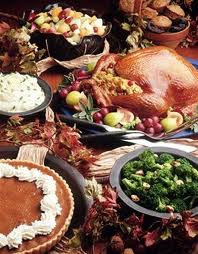
Soon, though, I got work teaching for the University of Maryland at a naval base. With this post came the right to shop in the PX for  turkey (large, hormone-enhanced), cranberries and orange sweet potatoes (the Italian versions are white), and so forth. Neighbors brought their children to see “the animal” defrosting in my refrigerator. We invited friends, pushed two tables together, and made a feast. And it was good. Still, if you look at the two images, it’s clear why for our Italian friends, Thanksgiving was culinary ethnography, an affront to the rules of la cucina italiana.
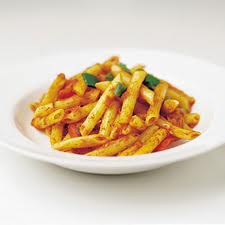
First, there’s the whole beast, roasted, in its nearly natural state, plunked down on a table. It must have seemed so . . . carnivorous. Then there’s the mixing of salty food (turkey) with clearly sweet food (cranberries) which just, well, isn’t done. And all those foods with different tastes and textures, the aforementioned salty and sweet, touching each other on the same plate. Not done. Then the fact that you see the whole meal right in front of you, no ceremonial presentation of course after course: the pasta course, the meat or fish course, the salad, all the delightful expectation gone. No eggplant in sight. All the time and confusion of passing serving plates back and forth until a  dozen people are served nearly a dozen items. So tedious, such a long wait  before the sacred words of grace from the hosts: Buon appetito.

Our friends were good sports, indulgent of my little fantasy. By the dessert course, all was forgiven, all culinary oddity overlooked with the appearance of pecan pie, a stunning revelation, soon to be affixed to every dinner invitation: “And could you bring a torta di pecan”? Within a few years, casual comments began in September: “So, Pamela, are you making that dinner again, the one with turkey and marmalade and torta di pecan?” Thanksgiving — it’s a portable feast.
Tagged with:
Posted in WWWS

Queen Joan’s Lurid Tastes

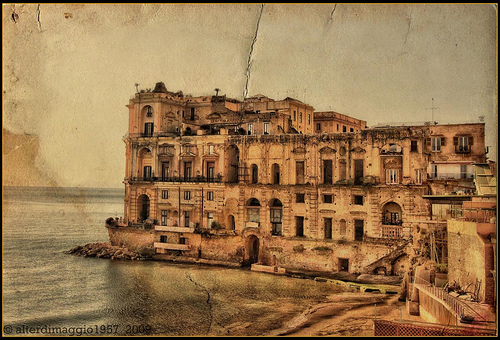
Here is the Villa Donn’Anna, lapped by the Bay of Naples. It was built on or around a palace where Queen  Joan I (1326–1382) reputedly had beautiful young fishermen brought to her boudoir for nights of medieval passions, then thrown from the window at dawn. Or perhaps it was Queen Joan II (1373–1435) who did this. Or, perhaps it was Anna Stigilano who inherited the villa in 1630. Or all three. Or none of them. Good story though. For centuries it loomed in ruins, the empty rooms occupied by squatters or fishermen, perhaps used by gentlefolk for less gentle purposes.

When I knew the villa it was because my first Italian teacher, Masa Lamberti, grew up there in a palatial apartment, strangely built with rooms inside rooms, vast oil paintings, ponderous Venetian chandeliers, Roman vases, marble busts, exquisite 18th C figures for Nativity scenes and high windows looking out to Vesuvius. In the grand salon a gilt picture frame encased the window, the most beautiful “painting” a mind could conceive. Once Maurizio and I spent a weekend with Masa when there was no water in our town.

The Villa Donn’Anna is visible from the palazzo of my book in progress, which is why it comes so vividly to mind. Also Masa, a marvelous teacher and sociable, generous friend who never did wrong to a fisherman.

Posted in WWWS

The Ellis Island name myth

“They changed my family’s name at Ellis Island.” You hear that often. It’s a myth, an urban-immigrant legend. The Ellis Island clerks operated from passenger lists created by the ship captains or their agents at the port of origin who spoke the immigrant’s language or had translators who did.  When people came to Ellis Island, the intake interviews were done by an army of clerks who were required to speak at least two languages fluently. There was no need for guessing with talent like future New York mayor Fiorello LaGuardia who spoke English, German, Italian, Croatian, Hebrew and Yiddish. He understood the people he dealt with and wasn’t allowed to doctor documents. Actually, the whole operation, pre-computer, was astonishingly professional and exact, even with the  rivers of people flowing through the doors.

Once settled in the U.S. there was plenty of reason and pressure for new arrivals to fit in, Americanize their name or even make up a new one. Children enrolled in school might be registered with a more Anglo version of their first names, Joseph for Giuseppe, for instance, Henry for Enrico. Funny little marks, like the German umlaut, got lost on the street. Too much home baggage. But all that baggage did get through Ellis Island.

Tagged with:
Posted in WWWS

Vaudeville online!

Ladies and gentlemen, live from the great, gilded theaters of vaudeville and my own computer, hear authentic acts! Thrill to the song, the comedy, the gripping (sort of) drama of yesteryear! All free, all perfectly pure for the most delicate of sensibilities.

I am researching vaudeville for my next book, mandating (myself) 500 words/day, and discovering amazing things. Like . . . the great, the spectacular impresario Benjamin Franklin Keith, father of American Vaudeville. More on Maestro Keith in another blog.

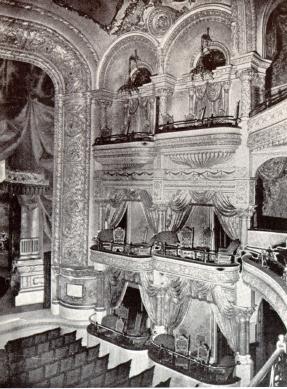
Here’s what you’d find in his Boston New Theatre:  elaborate wrought iron decorations, stained glass, incandescent (yes!!) lighting, gargoyles and marble pillars, burnished brass, leather upholstered furniture, enormous paintings by the “eminent artist Tojetti,” a gilded proscenium arch, ornate white and gold balconies, twelve private boxes and walls in brocaded silk effect, hand-painted ceiling. And more: “the finest toilet and retiring rooms in the country,” fragrant floral displays, free gold pens with sterling silver handles, monogrammed paper and envelopes. In the boiler room, yes, ladies and gentlemen, thick carpets and a whitewashed coal bin.

Next time you go to a Multi-plex, look around, compare and contrast, ladies and gentlemen.

Posted in WWWS

Naples by moonlight

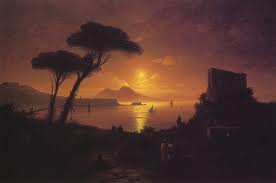
My novel in progress begins in Naples around 1900, in a palazzo on the bay. So I’m looking at images of the time and found this by Ivan Aivazovsky, an astonishingly prolific Armenian landscape painter who lived from 1817-1900. In my years in Naples I never saw quite such a sunset, but it doesn’t matter. The Tahitian sky, the romance of ruined castle, the plane trees leaning, the sun-fires on Vesuvius, sail boats skimming the silky sea, they’re all things to dream on. And those dimly seen people in the foreground, what’s their story?

Tagged with:
Posted in WWWS

Spanish flying incense

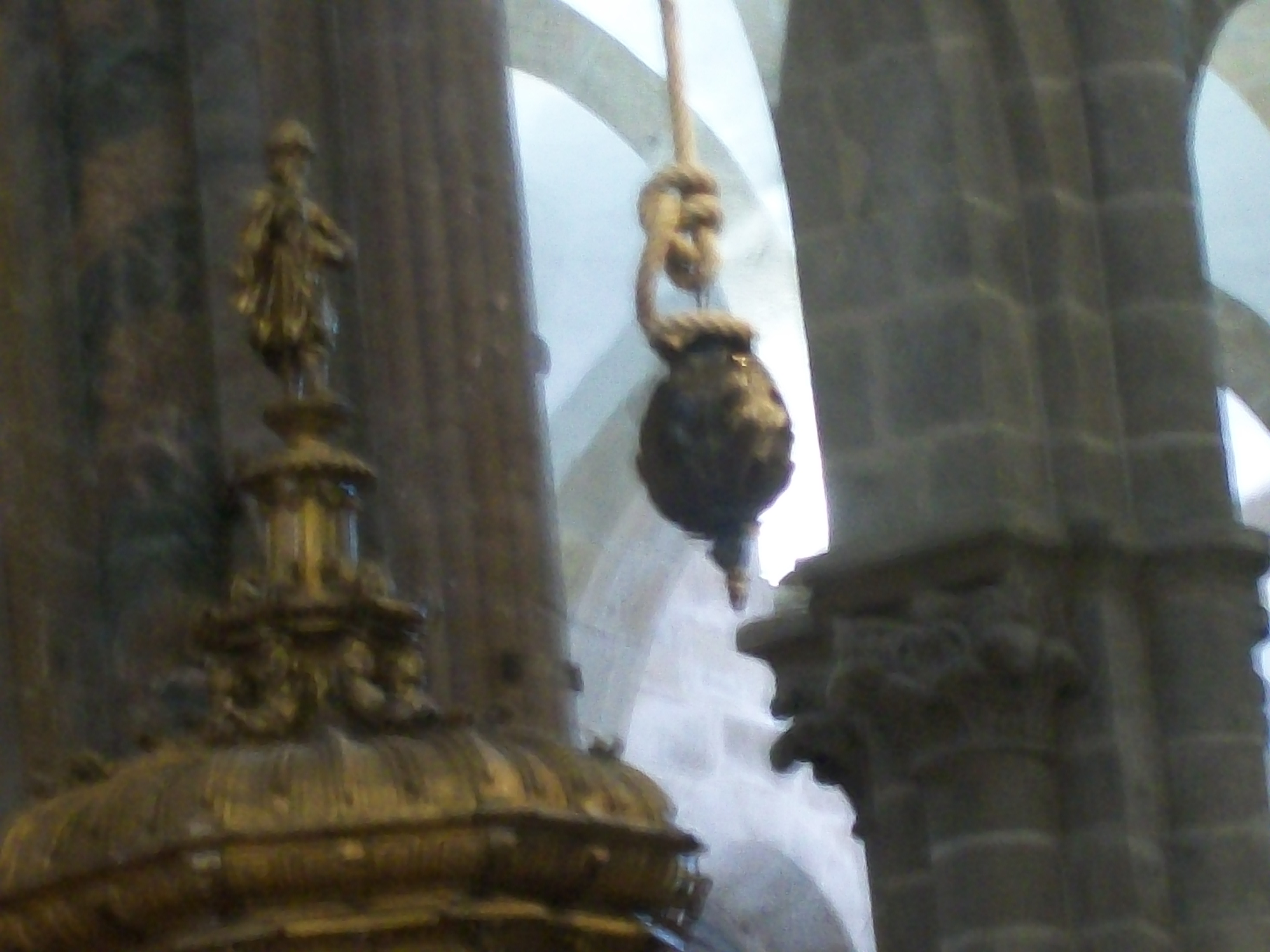
This has no connection whatsoever with my next novel. Just a cool fact. Here is the world’s largest incense holder. It’s in the Cathedral of Santiago and weighs 119 lbs. More precisely, it’s a botafumeiro, to be swung into motion by eight lusty men, making an arc of sparks and incense streaking across the transept. We didn’t see this, since we didn’t go on a holy day, but imagine. Imagine particularly a high mass in 1499 when Catherine of Aragon was innocently attending (innocent also of how England’s King Henry VIII would come to do her wrong) and the butafumeiro cord broke, sending the whole contraption crashing through one of the high windows. Don’t you just hate when that happens?

Anyway, the moral is, be careful of renegade butafumeiros but if you are in Santiago on a holy day, go to the cathedral and watch plumes of incense arc over your head.

Tagged with:
Posted in WWWS

In Galicia, with miracles

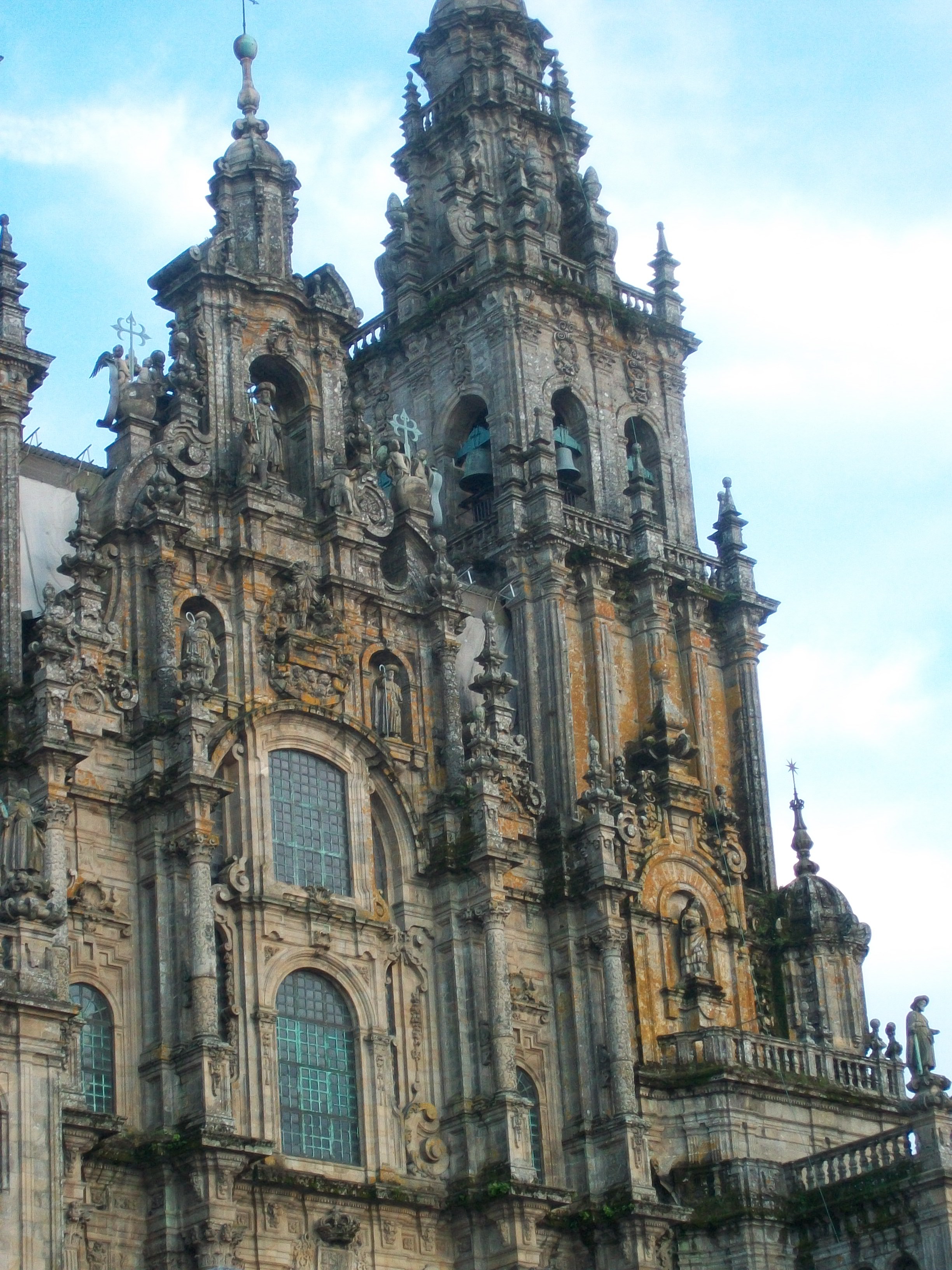
We just went to Galicia, on the north-west coast of Spain, where the rain falls (mainly) and pilgrims have come for centuries to the cathedral of Santiago de Compostela. The draw is the body of St. James, which was being transported by ship in the first century AD. The ship sunk on the rocky coast, but the body was miraculously washed ashore covered in scallops, buried, and then miraculously discovered centuries later by a shepherd following a star to a certain field. Happily, the saint’s body was uncorrupted by time and also happily this discovery came just as Christians in Spain needed a sign of triumph over Islamic occupation. Various other chronologies exist, all miraculous. Commemorative scallops for current consumption are delicious. Maurizio was able to ingest a truly impressive quantity of octopus confections with the lovely Galician wines.

We so wanted to see a nearby church in Muxia on la Costa da Morte (the “Death Coast,” famed for many shipwrecks), because it honored the miraculous stone ship on which the Virgin Mary tooled along the coast, but after slogging through the rain we found the church closed.

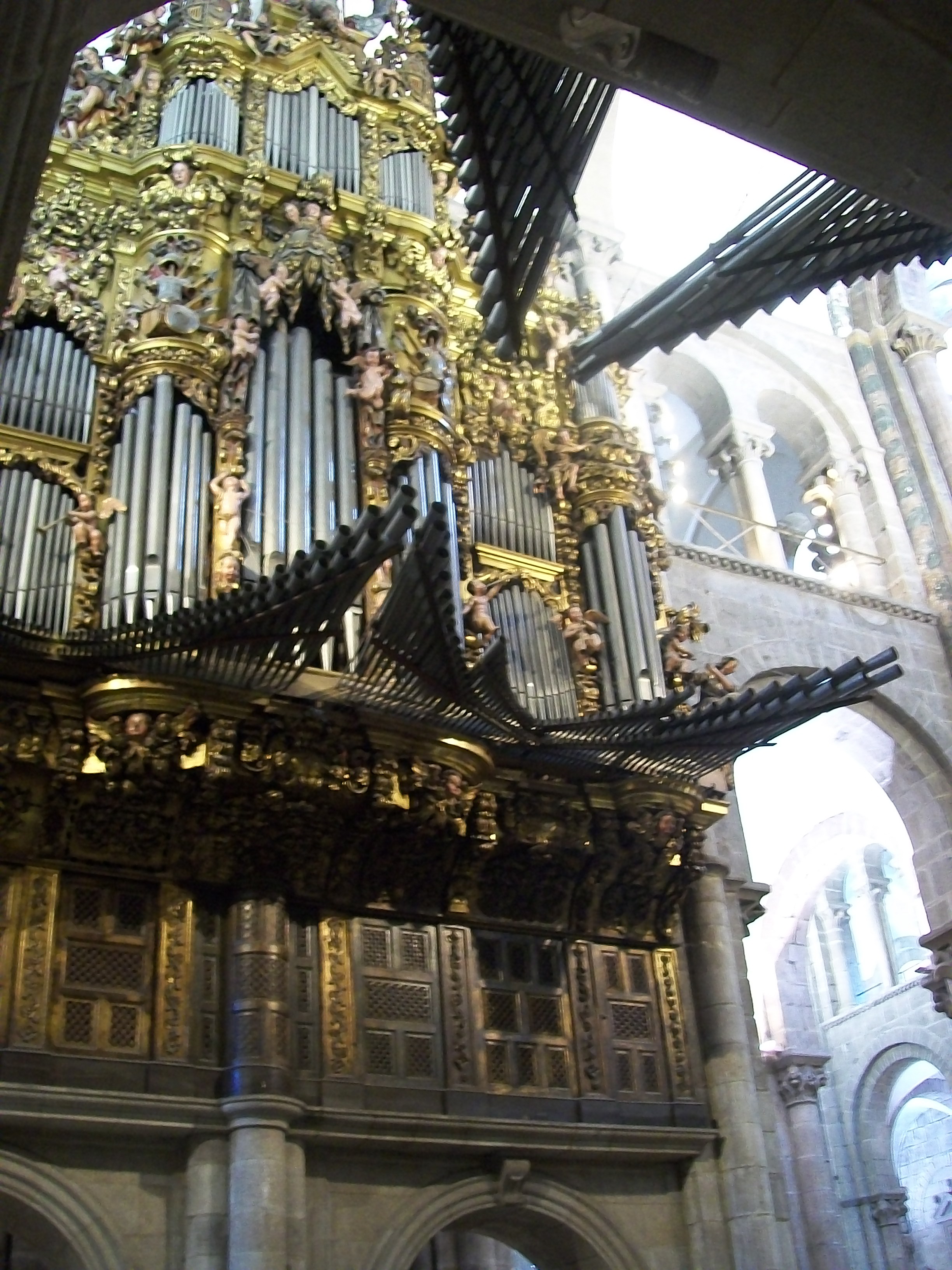
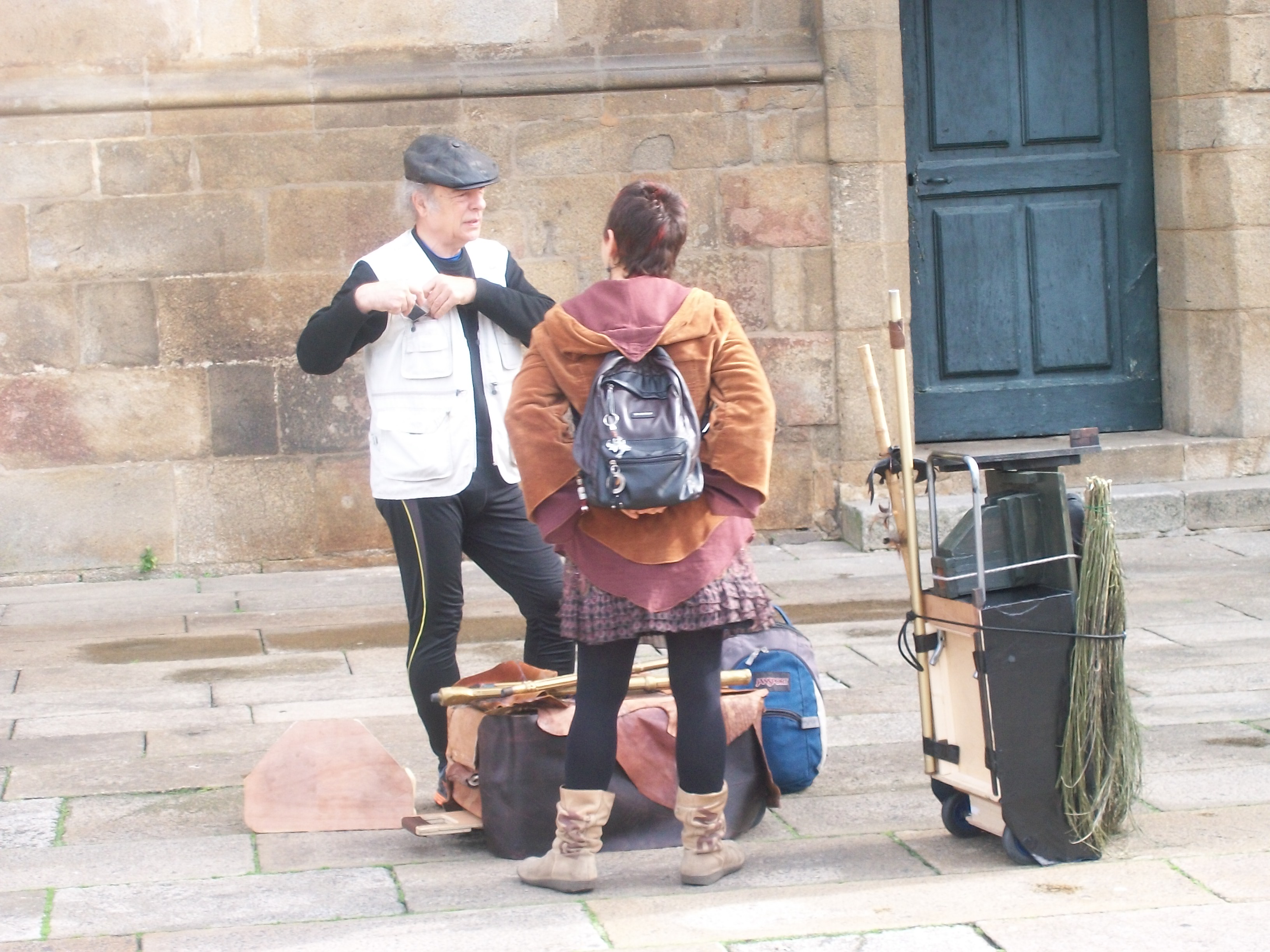
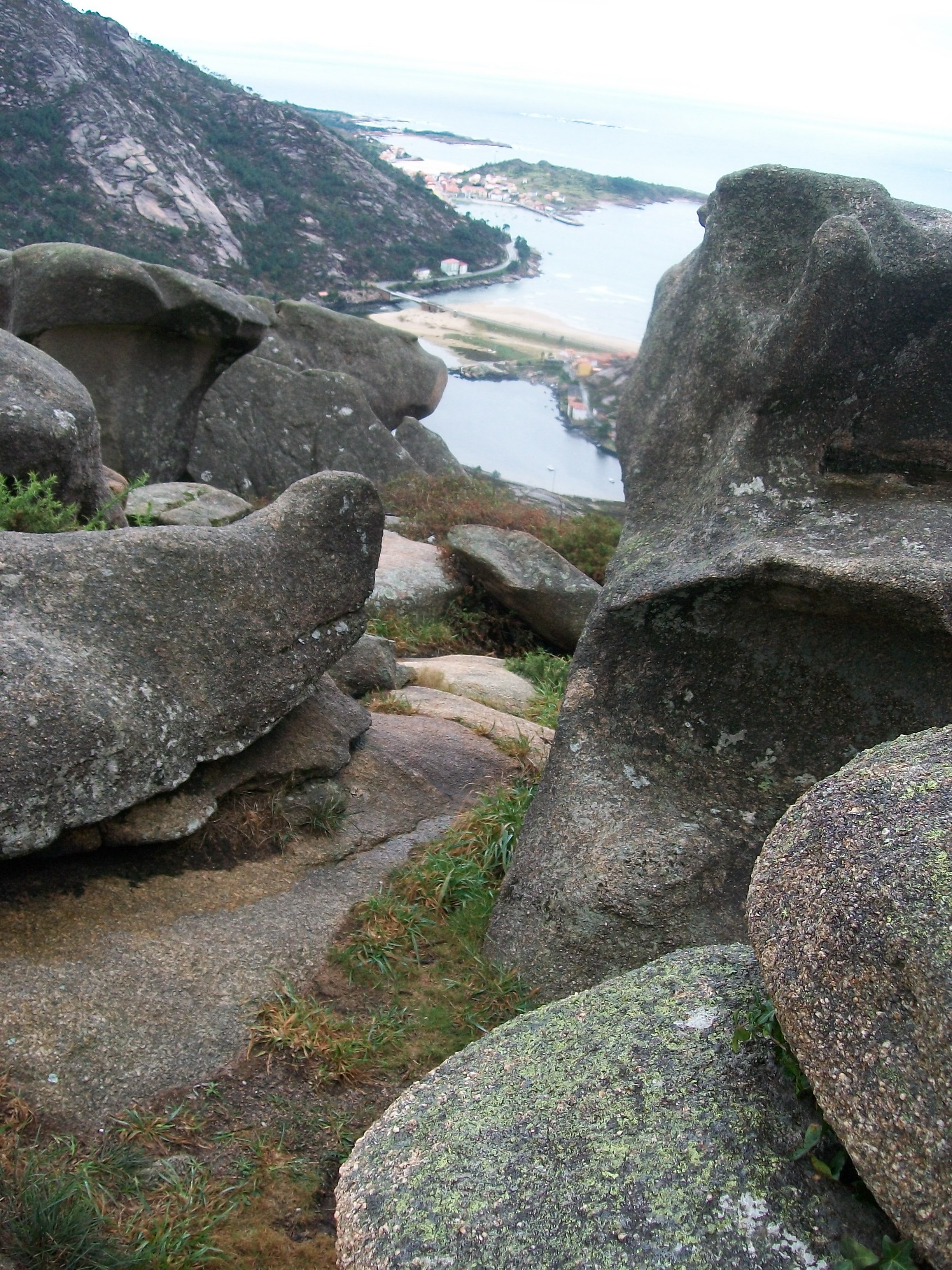
Here are some photographs: the exterior of the cathedral of Santiago, the organ, two pilgrims who looked strangely medieval, the rocky coast  near Finisterre (lit: the end of the earth). Note the windmills behind Maurizio. I’ll post more images in later posts. A lovely land.


Tagged with:
Posted in WWWS

Millennia of pasta

Marco Polo’s claim to have imported the pasta concept from China is pretty much sauced with ego. For thousands of years, flour, water, salt and ingenuity have made pasta-like foods for the poor. In the first century BCE, Horace wrote of proto-lasagna, fried sheets of dough. The Jerusalem Talmud celebrates itrium, a boiled dough made in the Holy Land after the 3rd century ACE.
The illustration shows a 15th C Latin translation of an Arabic text, showing women making long pasta. As you see, it’s labor intensive. A solitary cook with a hungry family put hours into pasta-making. Culinary technology crept along.
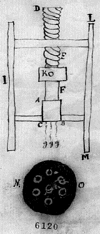
Three centuries later, the great technician Thomas Jefferson drew a mechanism for making macaroni, which you see here.

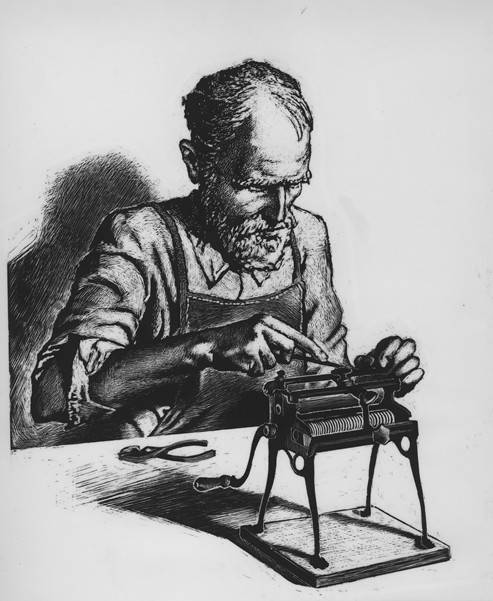
Somewhat later (1906) in Cleveland, Italian immigrant Angelo Vitantonio invented the first hand crank pasta machine, cheap and easy to use in the home. Pasta no longer needed to be flattened and cut by hand, allowing a single cook to quickly produce large quantities of uniform pasta. From the Holy Land to Cleve-Land, pasta endures. Shapes change, sauces change, but flour, water, salt, sometimes a few other additives, and cooks’ ingenuity keep abundantly satisfying families.

Tagged with:
Posted in WWWS

Wanted: 50 hr. work week

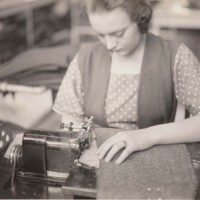
In June, 1911, the Cleveland garment workers, mostly immigrant women, struck for a series of demands the owners considered outrageous: a 50 hour work week; a “short Saturday” (7:30am to 1:30pm); Sundays off; not being charged for use of the owners’ machines and materials and a closed shop.
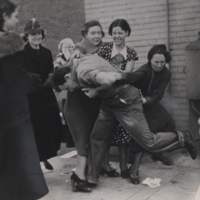
Strikebreakers, police and infiltrators incited violence, women fought back and were massively imprisoned. Traditional allies like women’s suffragettes and the progressive community, for various reasons, did not support the strike. After four months the strike ended with no concessions by management. Elsewhere, unions had more support and eventually the 50 hour workweek was gained. Notice: fifty. If you are not paying your employer for use of your computer, thank a striker.

My reason for sharing this is that I was just in Cleveland for a reading at the Western Reserve Historical Society and research on labor conditions in the garment industry which will be the background of my next novel, also with an immigration theme. The switch from medieval to early 20th C setting is quite recent, but I’m excited about it. The middle ages can wait.

Tagged with:
Posted in WWWS

The anti-Statue of Liberty

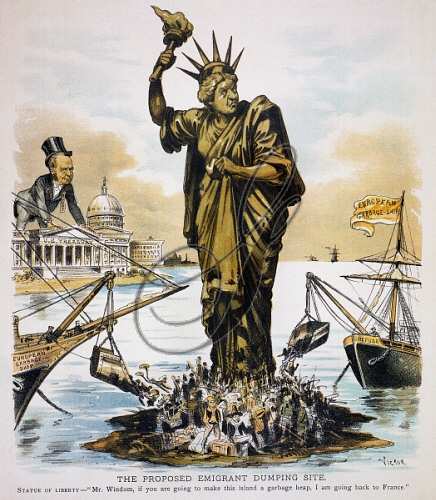
In the midst of virulent anti-immigration legislation rampant in so many states now, I came upon this cartoon from the time of President Woodrow Wilson (1913-1921). Miss Liberty is complaining: “Mr. Wilson, if you are going to make this island a garbage heap, I am going back to France.” The Statue of Liberty was less than 25 years old at the time. The torch lifted at the golden gate had already dimmed.

Tagged with:
Posted in WWWS
Recent Review
“Absorbing and layered with rich historical details, in Under the Same Blue Sky, Schoenewaldt weaves a tender and at times, heartbreaking story about German-Americans during World War I. With remarkable compassion, the author skillfully portrays conflicted loyalties, the search for belonging, the cruelty of war, and the resilience of the human spirit.”—Ann Weisgarber, author of The Promise and The Personal History of Rachel Dupree

Enter your email address to subscribe to this blog and receive notifications of new posts.

Join 122 other subscribers