The real Rosie the Riveter

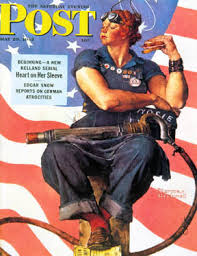
Unknown-1I’m thinking lots of people knew this but it’s new to me. The woman featured in the iconic “We Can Do It!” wartime poster is not Rosie the Riveter. More on her later. The “We Can Do It!” poster was an internal job in a series for Westinghouse employees grumbling about wartime work hours and union suppression. Most of the posters in the series featured men and it’s unlikely that viewers in the one week this poster was scheduled to be on display in Feb. 1943 would have seen it as a call for women to join the war effort. They were already in the effort.

Unknown-2Norman Rockwell’s Rosie is a real gal, chowing down. Notice her foot on Hitler’s Mein Kampf. Don’t mess with this Rosie. She’ll chew you up for breakfast and spit out the pits. It sure is fashionable to put down Rockwell but you just can’t beat him for pictures that tell a story.

Tagged with:
Posted in WWWS

A fatal shibboleth and a fine pasta

250px-Francesco_Hayez_023Today’s word in Word.A.Day in my inbox, referencing a Sicilian uprising in 1282 led me to a recipe for one of my favorite easy pastas, pasta con ceci [aka chickpeas/garbanzos]. It happened this way. The word was shibboleth, which as you know, is “the use of a word or pronunciation that distinguishes a group of people.”
So. . . in 1282, Sicilians around Palermo had had more than enough of their French overlords. The Sicilian Vespers ensued, an uprising that started on the vigil before Easter when, it’s said, a French soldier took liberties with a Sicilian woman. Her husband objected, eliminating the Frenchman with extreme prejudice. His comrades objected, but were wildly outnumbered. Mass killing followed, with French soldiers, priests, friars, monks, possibly French anybodys were hauled into the street and made to pronounce the word “ciciri,” Sicilian for chickpeas (“ceci” in modern Italian). True French just couldn’t manage the “ch” sound and Sicilian “r” even, literally, to save their lives. Contemporary accounts list 3,000 French dead, all for the want of a “ch” and an “r.” A fatal shibboleth. Don’t let this happen to you.

Unknown-1Moving on from this sad tale, we have
Pasta con Ceci. Easy and comforting, with many variants.
For 4 people
about 200 gr. short pasta
2 cans chick peas
2 cloves garlic
1/2 to 1 onion, finely chopped
olive oil
salt
oregano
parsley
Optional:
heavy or half and half
hot pepper
Washed,chopped spinach
Chopped tomatoes

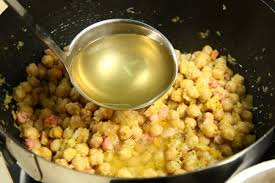
Saute onion and garlic until soft. Add drained chick peas and water to barely cove. Salt and cover, checking often and adding water as needed until the chick peas begin to break down. You can also mash them to help the process along. Meanwhile cook the pasta, adding a bit of pasta water to the chickpeas. You are aiming for a lumpy, near-paste. Check salt, add oregano. You may add a bit of chopped hot pepper. Heavy or half and half is an option and a handful of washed, chopped spinach adds color, as will chopped tomatoes.
Drain the pasta, add to the pan with chickpeas, cook a minute to blend flavors. Dish out, top with parsley. Be grateful you’re not French in Palermo in 1282


Tagged with:
Posted in WWWS

Okra and the Belgians

UnknownAfter World War II, my mother moved north from a truck farm then outside of Houston, Texas with a taste for kidney and lima beans, okra and Fritos, a Texas cash crop since 1933. My father was from Brooklyn and his taste in vegetables ran to potatoes.
Okra was available in the north primarily in cans. I believe the brand was Dixie Revenge, slime added for Yankees. My mother tried canned okra on us once. The chorus of “yucks” raised by my brother and me was greeted by reminders of the poor starving Belgians. I really don’t why my mother was so obsessed about Belgians when all the other mothers had moved on to starving Chinese. The starving okra-less Belgians might have been the end of the story had my father not been more articulate that he had no intention of even considering “this stuff” as food. So we never had “this stuff” again at home, although it was unavoidable when we visited my grandparents.

I grew up and stopped worrying about Belgians.Okra had nothing to do with Maurizio’s Italian childhood (or starving Belgians either) and were happily okra-less for years.

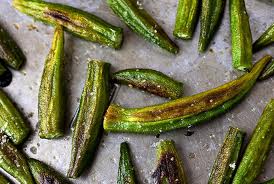
However, recently dear friends and fine cooks, Chuck and Melody, suggested we try again, grow up, in other words. The idea is to slit the okra lengthwise, arrange on a tray, add salt, paprika, and olive oil and grill. They swore, they absolutely swore we’d love it. Hum. Sounded like a candidate for shipment to Brussels, but Maurizio bought okra, slit and gutted each pod  (we weren’t sure the gutting was part of Melody’s plan but you can’t be too careful with slime). Oil, salt, paprika (lots), grill. And it was pretty good. Not crazy good, but no slime, and none left over for Belgians. Too bad for them. Let them eat chocolate.

Tagged with:
Posted in WWWS

Blueberry Octopus Pie

1355_10151829946532193_991897108_n-1Who would have imagined such a thing/beast? One more evidence of the irresistible force of human creativity. Or octo-obsession. This masterpiece was posted by my friend Antigone Pantanizopoulos, a master baker who might have made it but didn’t. There’s an octopus incident in the first chapter of Swimming in the Moon: hence my posting here. And a gustatory memory.

I learned to be mildly fond of marinated octopus antipasti during my years in Italy but only after getting over the offerings of the late night boiled and fried octopus stand outside our first apartment in Naples, very near the train station, not a lovely part of town. A caldron sat on the basalt sidewalk with octopi heaped under the sun. I’d never found myself at two in the morning yearning for tentacles boiled in rancid oil, but lots of people did. All day and into the early hours, young men and couples zoomed up in motor scooters to buy scoops on paper plates. We finally tried and got mildly sick. Something to do with the sun, the old oil or the admixture of car exhaust. No accounting for taste. Go to a restaurant is my advice, or buy fresh by the port of Naples where octopus dealers line up, constantly herding the critters back their baskets. They’ll kill your pick for you on request.

But back to representational bakery art. I never imagined blueberry octopus pie. It’s amazing, isn’t it, how you can live your whole life and never put two ideas together? Now try not to think of warm octopus pie a la mode.

Tagged with:
Posted in WWWS

When enemies sing together

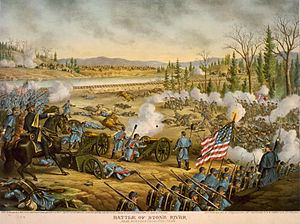
300px-Rosecrans_at_Stones_RiverDriving home last night, I heard a local historian on WDVX radio telling a story of the Civil War Battle of Stones River, near Murfeesboro, TN, not far from Knoxville where I live. This story for me seems metaphoric of the particular horror of Civil War, the heart pain of watching two brothers fighting.

The battle engaged 76,000 soldiers (“effectives,” is the term Wikipedia uses). This was New Years Eve, 1862, a cold night before certain battle. With the armies camped only 700 yards from each other, Union and Confederate bands started a musical war: “Battle Hymn of the Republic” against “Dixie”; “Hail Columbia” and “Yankee Doodle” against “The Bonnie Blue Flag.” Each camp tried to out-sing and out-play the other until one struck up “Home Sweet Home.” Now all the soldiers, North and South, sang. Nearly 80,000 voices. In 36 hours, said the historian, more than 18,000 would be killed or wounded. With soldiers captured or missing, more than 24,000 casualties. So many boys missing home.

Tagged with:
Posted in WWWS

Ancient Egyptians in Metuchen, NJ

images-3The first house my parents bought was in Metuchen, NJ., and after a 50s style cocktail party w/ Old Fashioneds and Martinis, they determined that the house needed an ancient Egyptian mural featuring all of us. My father had built my mother a darkroom for her photography; the room had a white wall; their friend Lorie was a fine artist, so of course . . . the mural.

Lorie worked quickly. The mural appeared. My father was the Pharoah, my mother the Pharoahess, her friends arranged vertically in sidewise sitting style, each with Ancient Egyptian (AE) coffee cups and saucers. I sidled sidewise with a large lotus flower. My brother, Chris, an adorable, round-cheeked 3, followed behind with a little blue hippo, about the size of a large cat. How wonderful to gaze at that mural and imagine us all coming to life in AE. Alas we moved soon after, and then again. Photographs of the mural burned in a house fire.

Is the mural still there? Did the new owners find it a tad odd and slather on paint, or in 60s style slap on ersatz Philippine mahogany paneling? I was in Metuchen some years ago and stopped at the house. The new owner was suspicious when I asked about an AE mural downstairs. A unique ruse to gain entry? Really, ma’am, an AE mural. Uh-huh. Sometime later I sent a letter to that address. No answer.

Lorie joined her daughter in Alaska, helped raise her grandchildren and died of brain cancer. My parents are both gone. My brother Chris, now called Emmet, has long lost his baby fat and has no blue hippo. I still see the mural, bright colors on white and me with a rose-colored lotus flower.

Tagged with:
Posted in WWWS

Editing & Gardening

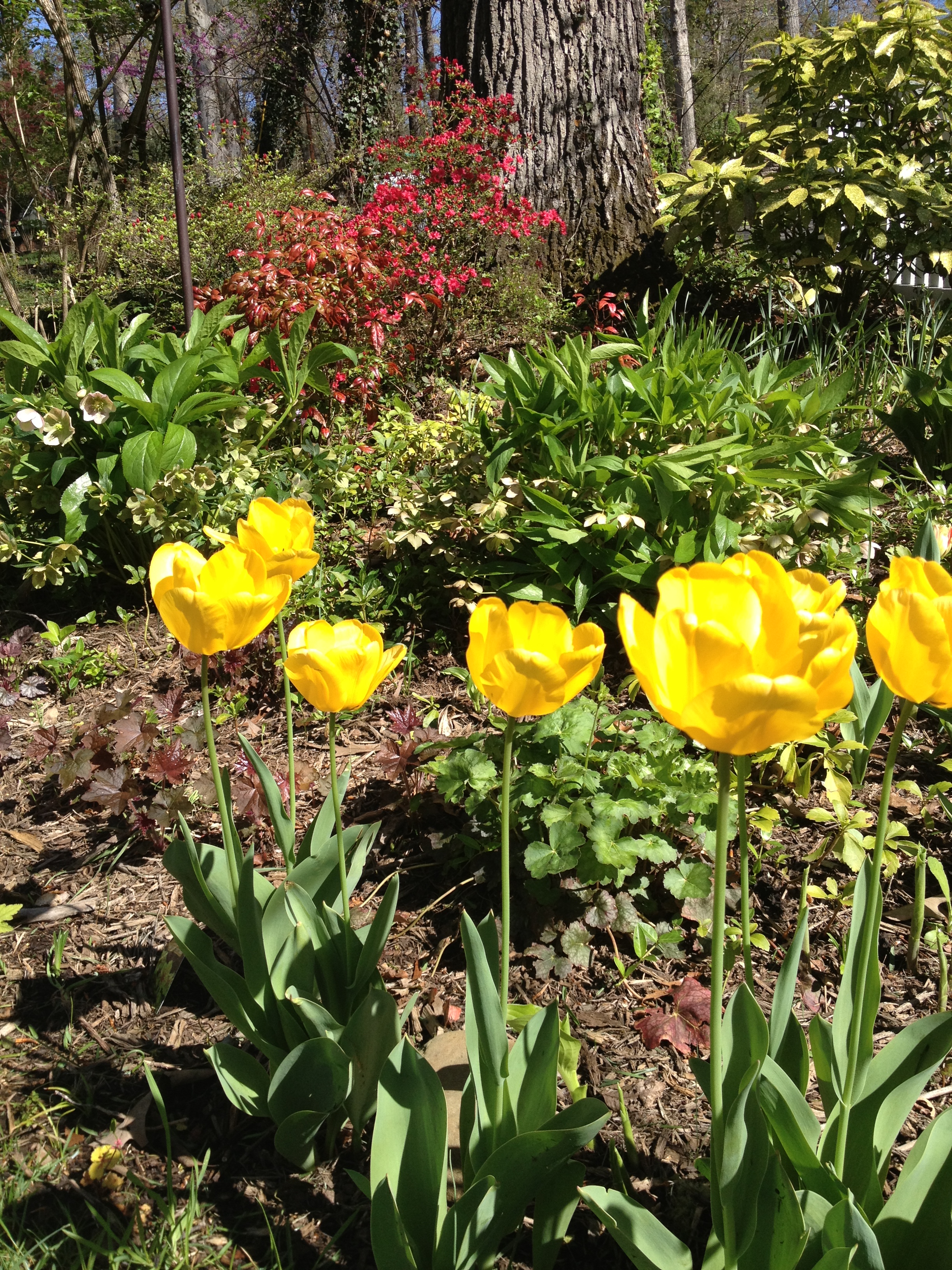
photoThere is an astonishing similarity between editing and spring gardening. In both, you can work happily for a couple hours and a disinterested observer, one’s partner for instance, may not see much difference. But you do. For instance:

  • The weeds choking a perennial: adjectives and adverbs, most often weeds.
  • And if that perennial is languishing: probably you need a stronger, active, more specific noun or verb.
  • The Japanese fern, lovely, but growing too near the hosta: a scene that needs to be someplace else, or a word, a “said,” for example, that needs moving.
  • Prune the rampant shrub: too many syllables in that phrase, or a “the” when there really needs to be “a.” Or if you’ve made your point in the dialogue line, don’t explain it in the tag. Or the sentence is just too long and floppy.
  • Too many volunteer hellebore volunteers sprouting near the mother plant: useless echoes of a word you need sprouting up in subsequent lines.
  • Cute little pansies around a scruffy, nowhere shrub, so fix the shrub and forget the pansies: make the scene stronger, more visual and cut out the fluffy adjectives, adverbs or explanatory narration.
  • Wrong plant in the wrong place: oops, wrong character name, continuity error, fact error, or just a useless “see I did my research” fact that doesn’t add to the story.
  • And so forth.
Tagged with:
Posted in WWWS

Philly weirdness, take 2

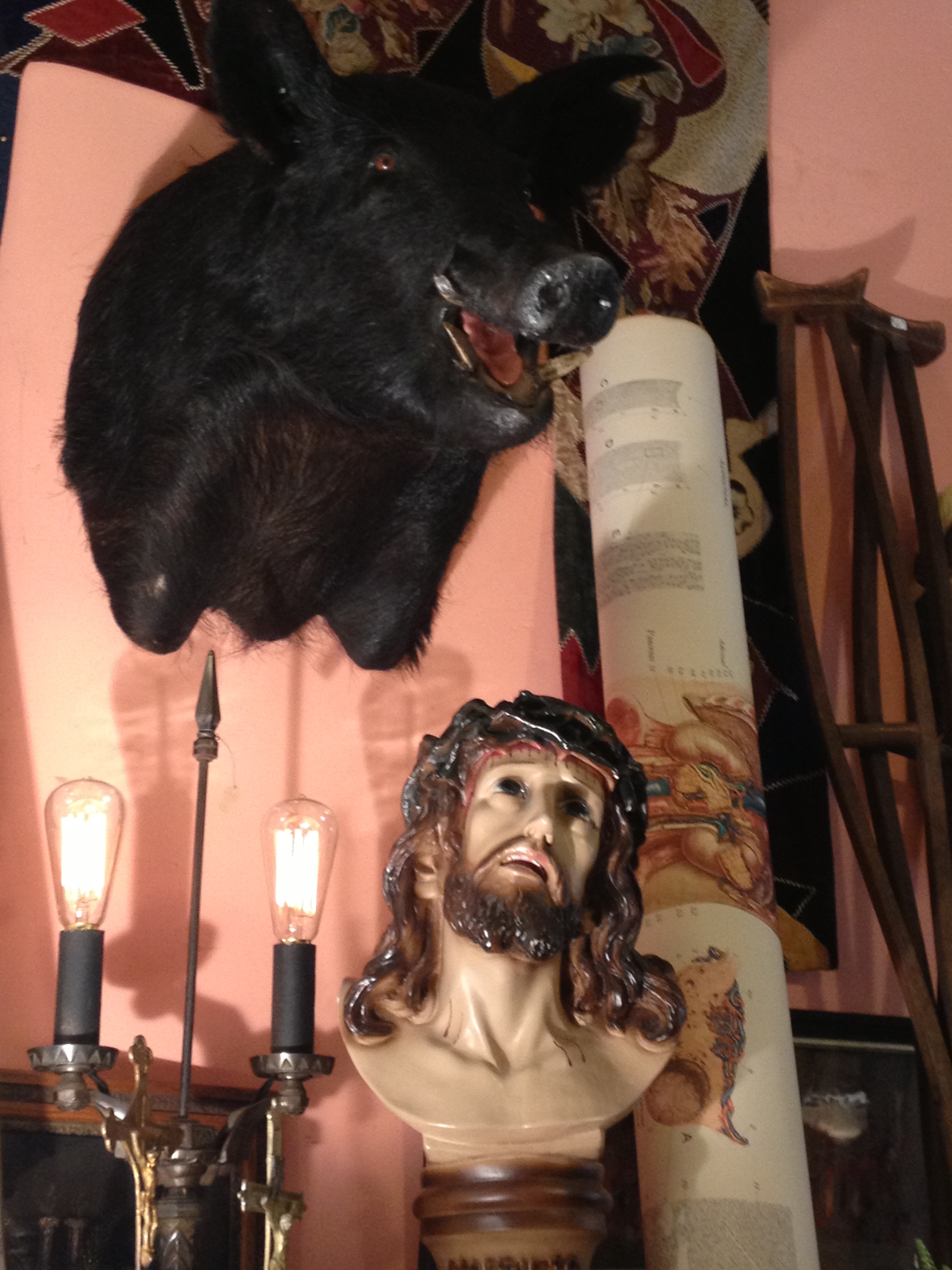
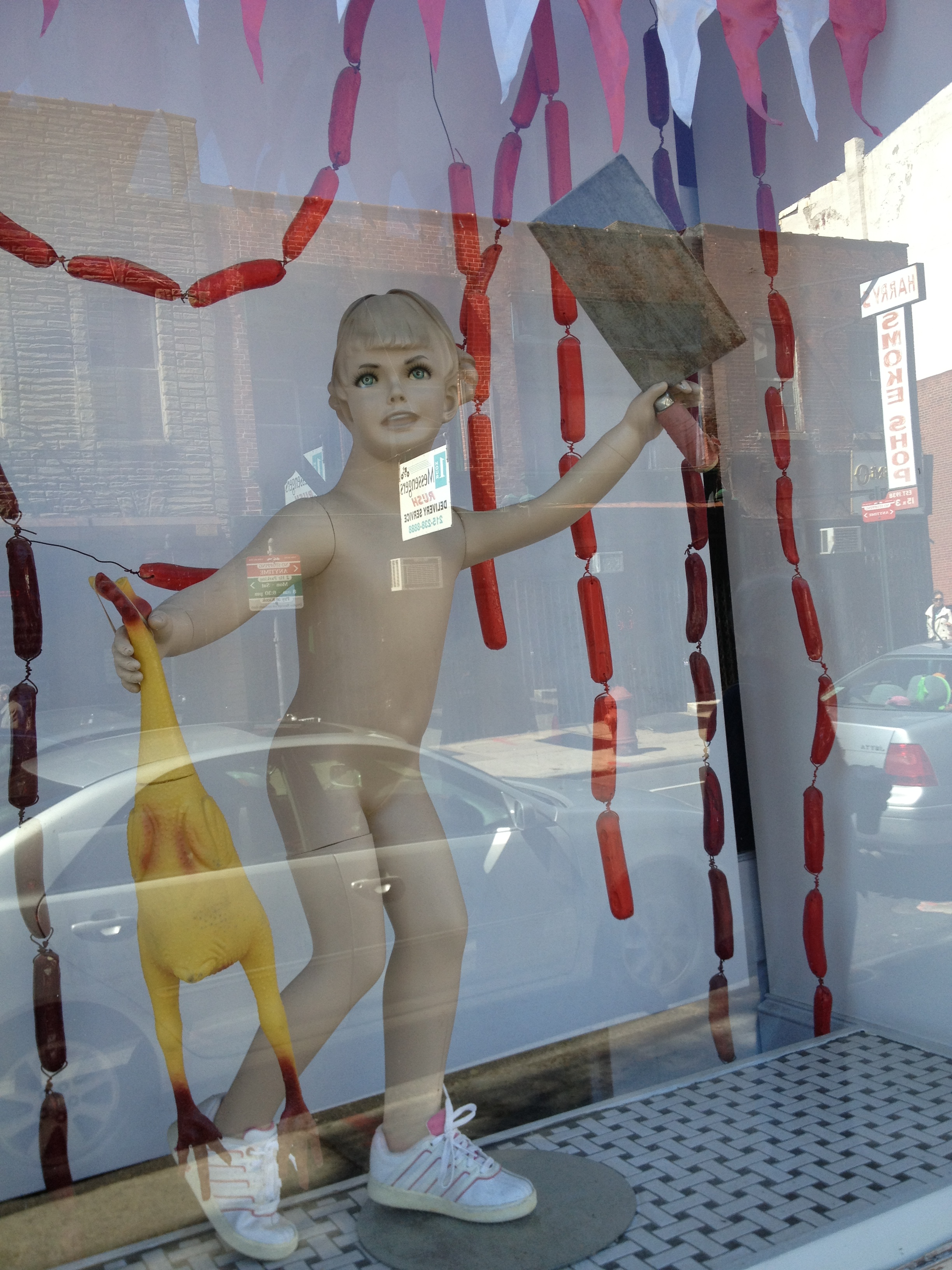
Apparently WordPress has a limit to picture inclusions. These are the ones that didn’t make it: a window on South Street and a religious statement in an antique store. photophoto 2

Tagged with:
Posted in WWWS

Essential weirdness of Philly

photoI went to graduate schools in Philadelphia (U of Penn in English literature and Temple U for radio-TV-film) and since my sister lives there, I return often. It’s a wonderful city, beautiful, wildly diverse neighborhoods, plenty of that history and culture stuff, affordable, and it’s got an essential weirdness that is just so great. Here are some examples. I will trust astute readers to match captions with the image: 1) a self-portrait in the Magic Garden on South Street, a wonderland of glass and found objects; 2) interior of the Garden; 3)  shop window display on, maybe N. 3rd, promoting I don’t know what; 4)  winter protection of a lamp post by a thoughtful Philadelphia citizen. photo 3photo 4Other examples coming soon.

photo 1

Tagged with:
Posted in WWWS

Smoke makes prosperity

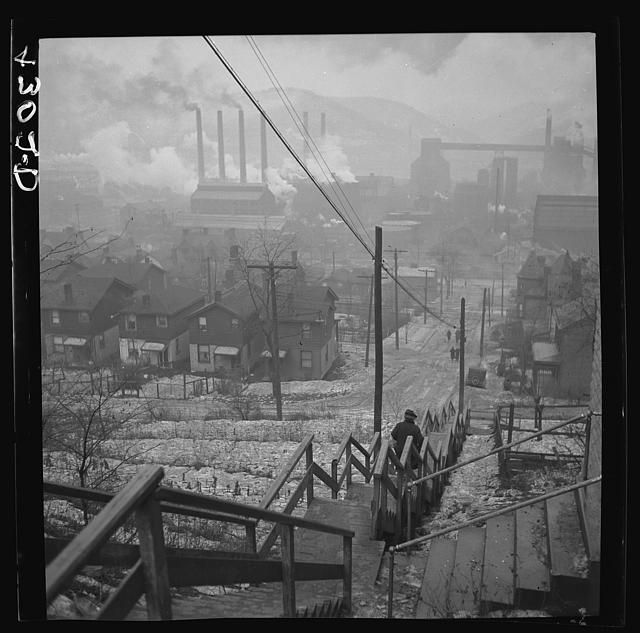
ar131853803012678My next book begins in Pittsburgh in 1914, the beginning of World War I, so I’ve been researching that world and came upon a remarkable documentary from the 1930s called “Smoke Makes Prosperity.” You can see it here. Not a pretty picture of life before the EPA.

Posted in WWWS
Recent Review
“Absorbing and layered with rich historical details, in Under the Same Blue Sky, Schoenewaldt weaves a tender and at times, heartbreaking story about German-Americans during World War I. With remarkable compassion, the author skillfully portrays conflicted loyalties, the search for belonging, the cruelty of war, and the resilience of the human spirit.”—Ann Weisgarber, author of The Promise and The Personal History of Rachel Dupree

Enter your email address to subscribe to this blog and receive notifications of new posts.

Join 122 other subscribers