Pushing Prohibition

imagesI’m in the Prohibition Era for my book in progress and found this charming, linguistic plan of the Women’s Christian Temperance Union to rid European immigrants of their nasty drinking ways and steer them straight to apple juice and Coca-Cola.

“We must have a regiment of American workers, who will learn the German language, love the German people, work among the German children and young people until we get them to love clear brains better than beer. There must be others who for the love of country and dear humanity will learn the Scandinavian language and be real neighbors to the many people of this nationality who have come to make homes in America. Again others must learn the French and Italian and various dialects, even, that the truths of personal purity and total abstinence be taught to these who dwell among us. We must feel it a duty to teach these people the English language to put them in sympathy with our purposes and our institutions.”

What d’ya think? Gonna work?


Tagged with: , ,
Posted in New novel

What’s cooking, 1910’s?

images-1

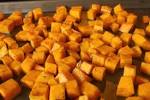
I’m developing my fourth novel, set after World War I, and as always, interested in finding out what people were eating. Here’s some of the new foods on the market and around town. In some cases, the dates are the appearance of a food in a major cookbook.
1914: Chicken fried steak, fettuccine Alfredo
1915: Hush puppies, peanut butter cookies
1916: Apple crisp
1917: Icebox cake, black cow, Moon Pies, Marshmallow Fluff, and 55 Ways to Save Eggs
1918: Fannie Farmer’s Boston Cooking School Cookbook
1919: Hostess Cup Cakes, chocolate truffles
1920’s: Comes the explosion: Egg creams, chiffon pie, Eskimo Pie, Good Humor ice creams, Yoo-hoo, cube steak, Wonderbread, zucchini (in the U.S.) Vegemite, Girl Scout cookies,Texas hot weiners, Kool-Aid, Jujyfruit, Twinkies, Jiffy, Heinz 57, Gerber’s, dry soup mix, cheese puffs, Vidalia onions, Frisbie Pies, tacos (in LA), sliced bread.

Which of these wonderful inventions are you most grateful for?

Tagged with: , ,
Posted in Food

“Why Men Drink,” p. 22

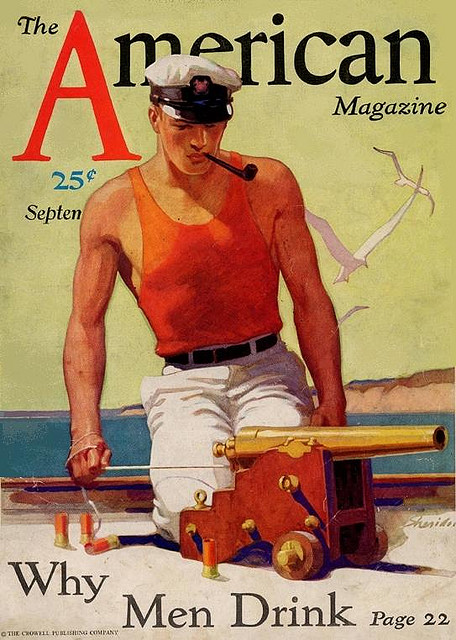
why-men-drinkIn research for my next book, I was looking for early 20th C magazines accepting fiction from unknowns. The American Magazine read submissions blind, and published many new writers along with some of the great writers of the day: Sherwood Anderson, Graham Greene, Arthur Conan Doyle, H.G. Wells, Upton Sinclair, etc. And they neatly answered vexing questions, like “Why men drink.” But alas, I can’t see page 22. Apparently it has to do with little cannons . . .

Tagged with:
Posted in New novel, Writing

Under the Same Blue Sky blurbs

51Sp1fJm5DL._AA160_I’m happy to share our first blurbs from advance copies of my coming-in-May third novel, Under the Same Blue Sky.
“From the smoke-filled streets of Pittsburgh to the war-ravaged landscape of Europe, Under the Same Blue Sky is the story of one woman’s wonderfully determined journey through a world at the edge of war to seek her family’s past and her own future.”—Jessica Brockmole, author of Letters from Skye
“The past returns in this story of the Great War, to tell of some who survived and some who didn’t. Hazel Renner is a hesitant healer, a young woman afraid of her gift. When the power to cure physical ailments deserts her, she tries instead to mend the human spirit. Rich in historical detail, this novel describes what it is to be gentle in a world gone terribly mad.” —Rita Legansky, author of The Silence of Bonaventure Arrow
Absorbing and layered with rich historical details, Schoenewaldt weaves a tender and at times, heartbreaking story about German-Americans during World War I.  With remarkable compassion, the author skillfully portrays conflicted loyalties, the search for belonging, the cruelty of war, and the resilience of the human spirit.”—Ann Weisgarber, author of The Promise and The Personal History of Rachel Dupree


Posted in Under the Same Blue Sky

“We struck oil!” he gushed.

images-1Preparing for a workshop on dialogue writing (2/28 in Knoxville), I’ve taken a wild detour into Tom Swifties, the fabulously inventive construction used by Dickens and perfected in the Tom Swift book series (1910 and onward) in which dialogue tags get subsumed into outrageous puns. There are hundreds, and hundreds more you can create with a few friends and some wine. Not that they’re recommended for high-style literary fiction, but they sure are fun. For more about the workshop (not Swifties), click here.

“I’ll have a martini,” Tom said dryly.
“That’s the last time I’ll stick my arm in a lion’s mouth,” the lion-tamer said off-handedly.
“I might as well be dead,” Tom croaked.
“They amputated at both ankles,” said Tom defeatedly.
“There’s room for one more,” he admitted.
“I gave him an haircut,” Tom said barbarously.
“I’m losing my hair,” Tom bawled.
“That is a whole lot of hay,” Tom said balefully.
“Now what did I want at the grocery store?” Tom asked listlessly.
“There must have been a power failure,” Tom said delightedly.
“I need a pencil sharpener,” Tom said bluntly.
“We have cause for a mutiny,” Tom said bountifully.
“Use your own toothbrush,” Tom bristled.
“It’s midnight,” Tom chimed.
“I find you guilty,” the judge said with conviction.
“But I didn’t go to Egypt,” said Tom, deep in denial.
“April was terrible and next month will be worse,” said Tom in dismay.

Tagged with: , ,
Posted in Under the Same Blue Sky, Writing

Squash, Shrimp & Cod Chowder

imagesHere’s a winter chowder culled and modified from several sources that can warm you while writing or whatever.

Squash and Cod Chowder
4 strips bacon, chopped
1 onion, chopped
1-2 cloves garlic, crushed
2-3 ribs celery, chopped
1/2 sweet pepper (whatever color you like) chopped
1/2 large butternut squash, peeled, seeded, chopped
2 medium potatoes, peeled and chopped
2 T flour
bay leaf
1 tsp thyme
salt & pepper
3 1/2 C vegetable broth
1 bottle (8 oz) clam juice
1 lb cod fillet, cut in pieces
handful of peeled shrimp
1/2 C half & half
1 T butter
A dash of white wine wouldn’t hurt anybody
paprika/thyme/parsley for decoration.

So . . . saute the bacon until almost crisp. Remove from grease, cut up and set aside. To the pan add garlic, onion, celery, and sweet pepper. Saute until softened. Add the squash and potato. Stir. Sprinkle in flour, stir for about a minute. Add bay leaf, thyme, broth and clam juice. Simmer until squash is nearly tender.

Add cod and shrimp. Simmer, covered, for about 4 minutes. It can sit and mind its own business for a bit. When ready to serve, remove bay leaf, add the half & half, butter, reserved bacon, wine if desired, heat to simmer, season to taste. Sprinkle on your herb of choice and serve.

Tagged with:
Posted in Food

“Dixie.” Really?

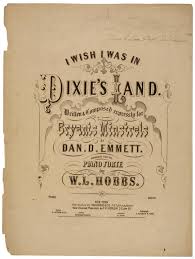
imagesChecking for the year of the song “Dixie,” I came upon the remarkable fact that the original conceit of this minstrel song was that a freed slave is pining for the land of his birth and servitude. Huh? I always assumed it was a transplanted white Southerner. Yes, nostalgia is powerful, but still . . .

Yet more discoveries in Wikipedialand: There were campfire parody versions: “Pork and cabbage in the pot, / It goes in cold and comes out hot.” And Union versions:

On! ye patriots to the battle,
Hear Fort Moultrie’s cannon rattle!
Then away, then away, then away to the fight!
Go meet those Southern traitors,
With iron will.
And should your courage falter, boys,
Remember Bunker Hill.

Hurrah! Hurrah! The Stars and Stripes forever!
Hurrah! Hurrah! Our Union shall not sever!

Despite the hard-to-fathom sense of the original (Did buckwheat cakes and ‘Injun batter’ really make fat slaves?), one can see why the Union song never made it to the big time, and why Abraham Lincoln made a point of having the original “Dixie” sung by is army band as soon as the war was over. It’s a great song, greater than its benighted conceit.

Posted in Just life

PTSD in Mesopotamia

_80485461_95088979

My research for Under the Same Blue Sky on shell shock (PTSD) in World War I uncovered constant references to generals and politicians being themselves shocked, shocked by the number of afflicted soldiers. Really? You send men into battle, enduring horrific conditions, and expect all roses and tra-la? A recent article by James Gallagher in the BBC Health News points to instances of PTSD recorded 3000 years ago. Here’s the article.

Post-traumatic shock “evident 1300 years ago

The team at Anglia Ruskin University analysed translations from ancient Iraq or Mesopotamia. Accounts of soldiers being visited by “ghosts they faced in battle” fitted with a modern diagnosis of PTSD. The condition was likely to be as old as human civilisation, the researchers concluded.

Prof Jamie Hacker Hughes, a former consultant clinical psychologist for the Ministry of Defence, said the first description of PTSD was often accredited to the Greek historian Herodotus. Referring to the warrior Epizelus during the battle of Marathon in 490BC he wrote: “He suddenly lost sight of both eyes, though nothing had touched him.” But Prof Hughes’ report – titled Nothing New Under the Sun – argues there are references in the Assyrian Dynasty in Mesopotamia between 1300BC and 609BC.

In that era men spent a year being toughened up by building roads, bridges and other projects, before spending a year at war and then returning to their families for a year before starting the cycle again.

Prof Hughes told the BBC News website: “The sorts of symptoms after battle were very clearly what we would call now post-traumatic stress symptoms. “They described hearing and seeing ghosts talking to them, who would be the ghosts of people they’d killed in battle – and that’s exactly the experience of modern-day soldiers who’ve been involved in close hand-to-hand combat.”

A diagnosis and understanding of post-traumatic stress disorder emerged after the Vietnam War. It was dismissed as shell shock in World War One. Prof Hughes said: “As long as there has been civilisation and as long as there has been warfare, there has been post-traumatic symptoms. It’s not a 21st Century thing.”

Tagged with: ,
Posted in Under the Same Blue Sky

Lessons in Soba Making

imagesRecently I was in a vast underground labyrinth of a Singapore shopping mall, waiting to meet a friend at a coffee shop and came upon this lesson in soba (noodle) making. There is a Japanese chain restaurant in which the all the restaurant’s soba noodles are either made behind glass in view of passers by or at least some of them are made in public view. A young soba maker was being instructed by the master, or anyway, someone a bit older and wiser to soba. You can see the student’s progress in the little videos. He’s a fast learner, I take it. although the difference in his actions is a bit subtle (It’s Japanese, after all).

Here’s the set up since you can’t see everything from where I could shoot. Step 1: You roll out dough made of buckwheat flour and fold it into a neat square (I’m sure in a ritual way) with a light flour dusting between the layers. The square is set on floured stone slab and on top of that is a square piece of wood, exactly the size of your soba-square. You press down on the wood in a carefully prescribed way, as you see, slightly moving the square but not the soba dough it to your left as you cut precisely even, parallel slices through the dough. Apparently there’s a lot to do with hips, shoulders, wrists. Then the soba noodles are trimmed and lightly tossed to separate them. I guess the finished noodles go in the box with the parchment (?) paper in the foreground but I had to leave to meet my friend.

So in the first pass, the Beginner, the student is not happy, although he looked pretty skilled to me. You don’t see the master’s face here but trust me, not happy. Then the Master commenced moving the student’s body around, explaining what he was doing wrong (apparently everything). It went on for awhile and I only got a bit of it. Finally, Finding the Way, voila’ (or however that is in Japanese), everybody was happy.

Posted in Food

Pigeon saves 194 men

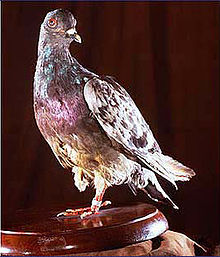
220px-Cher_Ami_croppedOnce I dove into World War I history, I found  too many stories for one novel. Here’s an amazing one: Cher Ami, a homing pigeon who saved 194 desperate  American soldiers in the Battle of Argonne, in October, 1918. The story is this.

Five hundred US Army Signal Corpsmen were trapped in a valley without food, ammunition, radio or other communication with headquarters. By the second day, 300 had died and they were receiving “friendly fire” from American forces who didn’t know their location. Major Charles Whittlesey had three homing pigeons donated by British pigeon trainers. He sent the first two with desperate pleas for help and cessation of friendly fire. Both were shot down. Only Cher Ami was left.

The message was put in his capsule and he was released, the last hope of the 200 men. Enemy troops saw him mount from the brush and opened fire, filling the air with bullets. He was hit and fell, but then, amazingly gathered strength, took off again, and flew through the bullets, reaching the division headquarters 25 miles away in 25 minutes. Message delivered, he collapsed, blood-soaked, blind in one eye, with a bullet in his breast and one leg hanging by a tendon. But he’d made it. The friendly fire was stopped and the now 194 survivors were rescued.

Army medics couldn’t save the leg, but tended his other wounds and he survived. When Cher Ami was able to travel, General Pershing saw him off in a new cage for the trip back home, where he earned a Croix de Guerre medal and Oak Leaf Cluster for heroism. I’m not sure how he wore them. He died a year later but has been stuffed and is on display at the Smithsonian.

So if pigeons annoy you in a city, think of Cher Ami.

Posted in Under the Same Blue Sky
Recent Review
“Absorbing and layered with rich historical details, in Under the Same Blue Sky, Schoenewaldt weaves a tender and at times, heartbreaking story about German-Americans during World War I. With remarkable compassion, the author skillfully portrays conflicted loyalties, the search for belonging, the cruelty of war, and the resilience of the human spirit.”—Ann Weisgarber, author of The Promise and The Personal History of Rachel Dupree

Enter your email address to subscribe to this blog and receive notifications of new posts.

Join 122 other subscribers