Elegance of Onion Sauce

images-1One wouldn’t think that a pasta sauce made mostly of onions would be so elegant, beguiling, and comforting too, but it is. With an abundance of onions this evening, I made a version of a heartier sauce I’d seen on menus in Naples. Here is a recipe for four people.


4 medium yellow onions, peeled & sliced thin

1 stick butter

chicken or vegetable broth

3/4 C heavy cream

Tagliatelle or fettuccine pasta, about 1 lb

Salt, freshly ground pepper, nutmeg, parsley

Parmesan

Saute the onions in the butter over low heat until soft but not brown. Covering the pan tightly, but stirring often helps to avoid  browning. Add enough broth to barely cover. Cook, covered, 15-20 minutes, again, watchful that the onions don’t brown. You don’t want brown. (Meanwhile, start heating salted water of pasta)  Add the cream to the onions. Puree the mixture. I used an immersion blender. The point is not to over-blend. You want some texture. Season to taste with salt, pepper and a bit of nutmeg (freshly grated if possible). Keep warm while the pasta cooks. Drain the pasta, Mix with warm sauce. Put in bowls, sprinkle on parsley. Pass the Parmesan. I added some pitted salt-cured black olives because I love them, but that does complicate the color theme of cream with a touch of green from the parsley.

For a rumination on cooking onions and the creative process, see my blog: “Onions & the Cost of Fiction.”
Tagged with: ,
Posted in Food

Onions & the Cost of Fiction

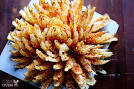
imagesSome years ago, I came across a recipe for onion flowers, saw therein a metaphor for the cost of writing fiction, and wrote about that. I made a simplified onion flower today and thought I’d share the original piece with you.

To make an onion flower

To make an onion flower, peel the onion well, removing all its paper skin, but keep the root end whole. Then slice top to toe in parallel, but don’t cut through the root. Now give the whole a quarter turn and make your cuts again. The bulb will open like a flower. Set aside and go on to the next. Working thus with onions, most likely you will cry. There are tricks of course, we all know tricks: rinse your knife in water, hold a match between your teeth, squeeze a lemon on the board. But if you make this dish for many friends, get a towel to wipe your eyes and go on with your work. Push cloves of garlic and bits of butter deep inside each onion flower, then nest them in a buttered pan and sprinkle all with chopped pecans. Now bake at least an hour, basting all the time. It takes time and care to make an onion sweet.

When your guests arrive and see what you’ve prepared, they may exclaim, “Look at that, she made us onion flowers!” Most likely they won’t ask you if you cried. It’s enough to see them eat and ask for more, even those who don’t like onions. If once-filled plates wink back at you, your dinner’s a success.

Soon good talk rolls in waves around the table, stories hooked on stories. Perhaps you’ll tell your own, but not the new ones with their flavors all un-mixed and raw. It’s better you reach back. “A man I lived with seemed so good, but then he turned,” you may begin, “it happened in a day.” Now suddenly you taste again the bitter stench of burned-up dreams, like salt in tea, like soured milk you drank as if you had no choice. You wouldn’t now, but you did it then. Still, telling this won’t make you cry as the living it once did, in that old house when no trick helped, no match held tight between the teeth. For rinsed or not, a knife cuts deep and it has taken years to season pain and serve it up for guests. The others listen, nod, and then go on. Another tale, dessert and drinks, then someone says, “Let’s have a game.” When both teams break the rules to win, the captains laugh and call a tie. Now one by one your guests go home, all kissing you good-bye. They’ve had a lovely time.

But late that night, while stacking dishes up to wash, if you raise your fingers to your face, there’s no mistake: the onion smell remains – enough to make you cry again. For that smell can never leave the cook who keeps the root end whole and peels off all the paper skin.


Tagged with: , , ,
Posted in Just life, Writing

What we share with oaks

images-1My interaction with the Knoxville Utilities Board over a big tree produced an illuminating view of mortality. It happened like this. We have a red oak near the street which had grown until its bark was rubbing against— actually stripping insulation from— the electrical cable. One day our neighbor noted huge sparks shooting out of the tree. Startling, to say the least.

As a good citizen, she called the Knoxville Utilities Board (KUB), which zipped over one of their technicians to tell me the dire consequences to neighbors and passers by. I was to sign a permission to have the tree removed. The tree was dying anyway, he added. I’d get, for my good (or enforced) citizenry, some safer dogwoods and/or red buds. So I signed. There seemed to be little else to do.

A couple days later, another KUB guy, an arborist came by, waving my document, which he had pulled from a stack. I had no need to sign it, he said. Mine was a fine oak tree and “the tech guys” could easily move the wires. He doubted that the tree was dying or even unhealthy.

At this point I called an arborist at the University of Tennessee who grilled me over the phone about the crown, the nature of the bark, the state of the leaves, how the roots met the earth, and so forth. My oak seemed to be passing every test for health, but the first KUB guy had been so sure.

“Well,” I asked finally. “Is my tree dying?”

Long pause. “Ma’am, of course it’s dying!”

“But . . .”

“Your tree is dying. No question. You’re dying, I’m dying. A newborn baby is dying. That’s the nature of organic things. They die!” Had I missed this fact? “Is your question whether your tree is dying faster than it ought to be?”

“Yes, I guess so.”

“No, it’s not dying faster than it ought to be. No reason to cut it down.”

My red oak tree is still there, with the cables moved away. I hope we’re all here for awhile more.

Tagged with: ,
Posted in Just life

Dangers of over-describing

imagesAt a recent literary conference, a speaker was warning of “drivers license descriptions.” That is, the character appears on the scene trailing specifics: “Tommy Lengley, 6’1″, blonde, tanned, well-built, with a faint scar on his left cheek . . . ” Which put me to wondering: do we really know what Elizabeth Bennett looked like? Thinking back to recent novels I admired, I remember intense connection to the character without necessarily having the tools to identify that character in a line-up.

Or, if a physical quality is necessary, rather than the opening catalog, couldn’t the salient quality be demonstrated? The tall guy bumps his head in a doorway; the scar gets carefully camouflaged every morning; at every personal crisis, our hero bolts to the gym for hours. And so forth. If nothing else, these descriptions slow down the action, particularly in a short story, when you have to get the plot engine revved right away.

Another issue: In teaching college fiction classes, I was so, so tired of all the blonde/chestnut/auburn/ebony-haired, perfectly coiffed, flawlessly-skinned, wholly toned heroines I was given, all with fine careers, many friends, and loving families. Pretty much makes the average reader hate these ladies before they even open their mouths. Not that every character has to be a monster, but still, you do want some identification with your characters and most of us aren’t cover girl/boy material.

There are plenty of templates for “getting to know your character” and constant advice to know what your character keeps in his/her pocket. And it’s good. The writer does need to know these things, but perhaps more to shape what the character does than to reel it out when the character walks on stage.

Anyway, those are my thoughts for the morning and I welcome commentary.

Tagged with: ,
Posted in Writing

Putting real people in stories

imagesIn writing workshops, the question often comes up: “What about putting people I know in stories? Is that ok?” It’s an interesting question, touching on issues of decency, law, human psychology, and the nature of narratives.

I don’t consciously import people from my life into stories. A character may be inspired by some quality of someone I know, but the push and pull of narrative structure, plot, and theme will start shaping the character far away from its model. I think that’s good. It’s how narratives work. Most successful fictive characters are amalgamations of characteristics you’ve seen and invented. If you want to be faithful to how Uncle Max “really was,” memoir is probably a better vehicle than fiction.

Which is not to say that people you know won’t see themselves in a character, especially a reasonably sympathetic one. I had an ex-pat female protagonist in a story set in Italy and lost count of the number of female ex-pat friends who assured me that I’d actually modeled my “Helen” character after them. Hum, news to me, but it made them happy. I’m sure every writer has had this experience.

But I do think it’s a problem if a writer starts playing the “I’m a writer” card to even a score with family members, ex-partners, or friends. As in “Robert did me wrong. I’ll write a story that shows everyone what a disgusting scumbag he is with a character called . . . hum . . . Rupert. After all, I’m a writer and I’m sharing my experience. So there.”

Without getting too far into the legal issue of libel, I think a fair moral test would be whether you’d give a free pass on public ridicule to someone on the grounds that s/he was a plumber or physician. Probably not. Being a writer doesn’t give you the right to be a creep.

Naturally, we are shaped by our experience, and the characters we create come from the world we’ve seen and imagined, but I do think that story telling is its own thing. It’s not about using your talent and craft to even a score.  That’s what diaries and journals are for. You can always dis your ex over drinks with a friend—in private. Anyway, a story that exists merely to show that a scumbag gets what’s coming to him/her is usually pretty lame anyway.


Tagged with: , ,
Posted in Writing

Novel writing & bridge building

imagesAt the Southern Literature Conference in Chattanooga yesterday, the wonderful novelist/short story writer, Alan Garganus, had a great analogy on novel (and I suppose short story) building.

Suppose you want to build a bridge over a canyon. You throw a ball tied to a string across the canyon. Then use that string to haul over heavier and heavier cords. In the same way, you identify your theme/main plot line or single defining sentence of your character’s journey. Then, when that’s set, you strengthen it with character, setting, and so forth, building the structure of your novel.

Seems reasonable to me. Writers are often divided into “pantsers” (writing by the seat of the pants, starting a novel without knowing where it ends) and “plotters” who start with the basic plot and build and build on that. I’m a plotter for sure. The canyon is huge and I don’t want to just leap and not know where I’m ending up.

For all three of my novels, I’ve had an image of the first and last scene in mind: who is there, what they’re doing, the mood, the voice. And I’ve got a picture of the first scene. Then to connect them. It’s still scary, but at least I know where the bridge is.

Tagged with: , ,
Posted in Writing

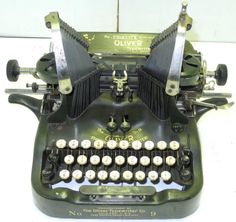
Carnivorous typewriter

cb9890464213aa3a0409dc130387356eAll in the line of research, I found an image of this carnivorous-looking typewriter, circa 1915. Writing is difficult enough, uncertain enough, and imagine if you had to be right up close to this scary thing hour after hour.

Doesn’t it look like something about to bite you, with those pearly teeth and terrible jutting-out slitty eyes?

I’m working on a new novel set about a century ago in East Tennessee, where I live now. My character is using a typewriter and I have made an executive decision that she will not be using this monster but one of the more benign models. I have to save her strength for troubles ahead.

Tagged with: ,
Posted in Writing

When Apple bonks writer

imagesMy agent Courtney says that her clients divide into pantsers (those who write by the seat of their pants) and planners (who ignore pants and plan). I’m a planner. By necessity. If I had to worry about plot at the same time as all the rest: theme, pacing, character, dialogue, imagery, setting, diction, etc, etc, I’d absolutely short circuit.

So I plan out what happens in each chapter (a couple lines for each), and then flesh out this into a few pages, sort of a list, before starting a new chapter. That way the first draft goes if not quickly, then more quickly.

I was working away, actually with good speed, on chapter 3 of book 4 when suddenly my Apple begins methodically underlining everything. Grammar wrong. Spelling wrong. In one wild paranoid moment, I took this as Apple’s judgement on the whole novel: it wouldn’t work at all. This is distressing.

I calmed down a tad and checked to see if maybe there was a language issue. Indeed, the language had set itself to Italian. Which is spooky since of all the scores of languages that Apple can be judgmental about, Italian is the only one I know. Except that (Hello, Apple!) I’m writing in English. So I select English (US) and set the default English, start writing, the underlining begins again, but now comes the dreaded whirling rainbow circle which means to the non-geek: “I am not responding to you. I don’t care about you. I will NEVER stop whirling.”

I figured I knew what to do. Shut down and start up. Same problem, response, shut down again. The third (or fourth) time, now Apple will be happy with nothing but Dutch. My first book was translated into Dutch. Does Apple know this?

Despondent, confused, a seat-of-the-pants Apple user, I unplugged and packed up the Apple with the idea that my smart friend Melissa I was meeting for lunch would figure this out. But when I started up the Apple in Yassim’s Falafel House, all was fixed. Was it the smell of falafel?

Come home, happy. But no. The same thing. Back to Italian. Very distressed. I will work on my iPad until my husband comes home. Writing is hard enough without an Apple on your case. To be continued.

Posted in Writing

Prompts for Awakening

imagesI just finished a four-session writing workshop on the theme of awakening with my magnificent poet-friend Linda Parsons Marion. She did two sessions on poetry and I did two on narrative. This being the beginning of spring and all, awakening seemed a good theme.
Here are some of the prompts I used for one exercise. The idea is connect one of these phrases to a moment of awakening in your life (or your character’s) life and write, just write for 10 minutes. Quantity is your goal. Try for a full page in ten minutes. Revise later and don’t pay any mind to that insidious critic voice in our heads. Just open the spigot and write. You’ll be amazed. Personally, I like free-writes with pen and paper—it feels more organic, but tastes differ. Have at it, and enjoy and if you feel moved to share the process or product, I’d be grateful.
I see him/her so differently now
Now I see why
I was so much younger then
This is what parenting really means
I can do this!
I’m free!
Now I’m in (or out of) this relationship
There’s a side of all this that I never saw before
NO! I won’t do this.
This may not look like the place, but it’s the place.
I never thought this would happen. It just did.

Tagged with: , , , ,
Posted in Writing

Our Irish-Bulgarian Cabbage Connection

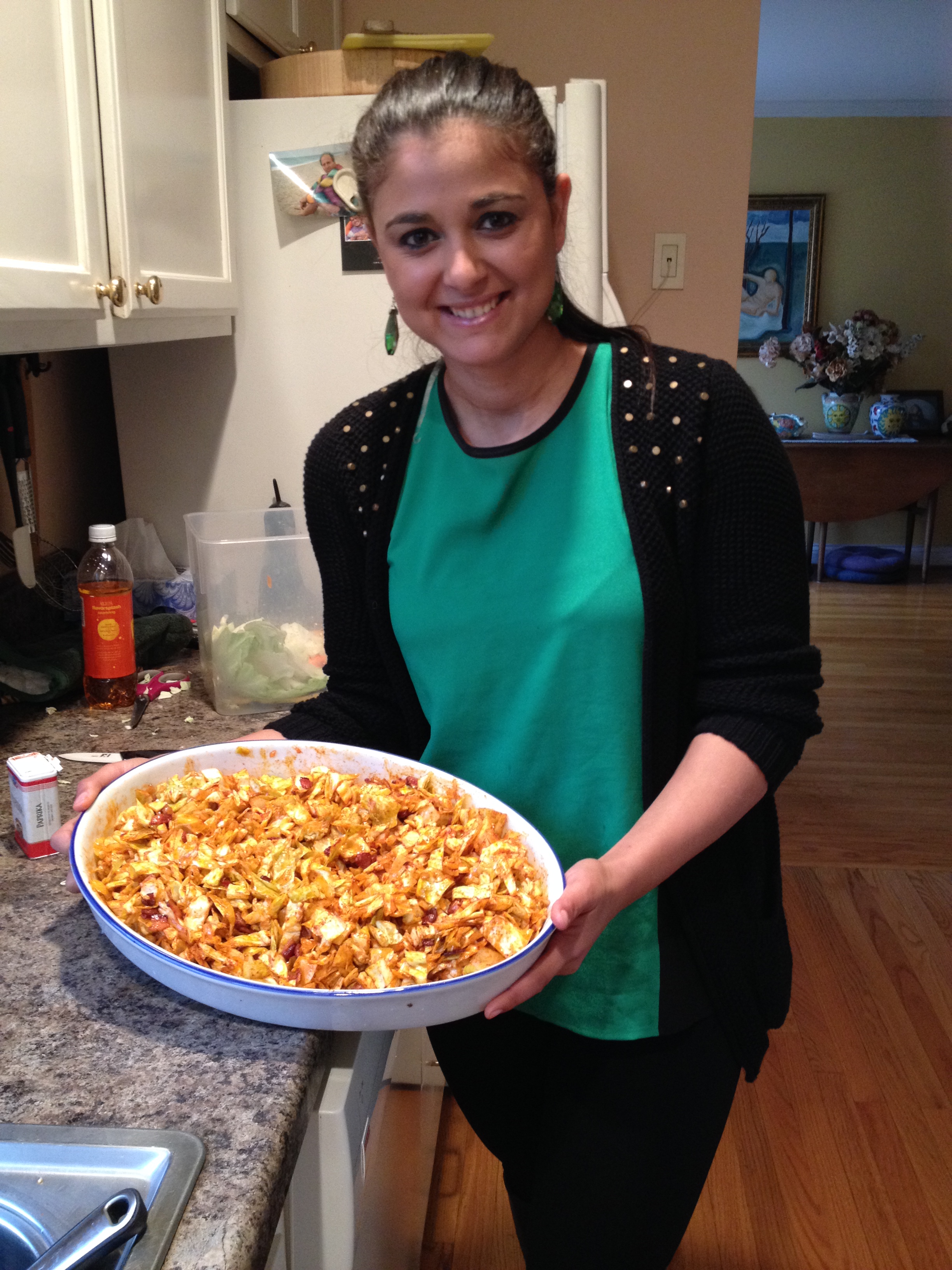
Are you pondering Sphotot. Patrick’s Day? I modestly propose a fusion pairing of Irish corned beef and Bulgarian cabbage. The recipe for the later was part of our daughter Emilia’s patrimony when we adopted her at age 10 from Bulgaria. With no English, she took us shopping for the ingredients in Austin, TX while we waited for her citizenship hearing (citizenship wasn’t automatic then). It was the first dish she cooked for us and we were quite impressed. The next time you’re hankering for Irish-Bulgarian Fusion, or just delicious winter food, try Emilia’s cabbage. You’ll need:
1 cabbage, chopped
1 onion, chopped
4-6 slices of thick, smoked bacon
4 T paprika
T Vegetable oil
2 T olive oil (optional)

Saute the onion in the oil. In a separate pan, saute the bacon. Chop the cabbage and put in large, flat baking dish. Mix with 2 T paprika. Add bacon and its grease and onion and its oil. Mix well with another 2 T paprika. I know, it’s a lot of paprika, but your goal is that the cabbage looks like the picture, sort of rosy. And this is Eastern Europe, remember. Paprika Land. Emilia drizzles on a couple more T of olive oil because she likes oil. You can do this or not. Bake for about an hour at 350, turning several times.

Tagged with: , ,
Posted in WWWS
Recent Review
“Absorbing and layered with rich historical details, in Under the Same Blue Sky, Schoenewaldt weaves a tender and at times, heartbreaking story about German-Americans during World War I. With remarkable compassion, the author skillfully portrays conflicted loyalties, the search for belonging, the cruelty of war, and the resilience of the human spirit.”—Ann Weisgarber, author of The Promise and The Personal History of Rachel Dupree

Enter your email address to subscribe to this blog and receive notifications of new posts.

Join 122 other subscribers