Joseph and His Brothers

My father adored Thomas Mann’s Joseph and His Brothers and read the whole (1200 pages mind you) at least twice. I’ve always been put off because it’s one heavy book (pounds and pounds) with big long sentences, huge paragraphs and not too much dialogue. I know, I sound like one of those “reluctant readers” who have to be cajoled into reading via vampire plots or graphic novels. I have his copy, the very one pictured here.

I flipped through and found one passage marked (my father wasn’t big on marking up books). It’s pretty nice. “Rest gently,” answered Joseph with feeling, “after the toil of day. May your soles, that are scorched from the heat of your path, move blissfully over the mosses of peace.” Doesn’t that make you want to go out and walk on moss? I’ll give it a try.

Tagged with:
Posted in WWWS

The Kalamazoo Corset Strike

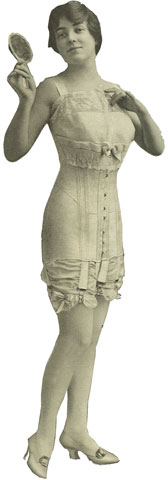
I might be including the Kalamazoo Corset Company Strike of 1912 in my next novel. You’ve heard of it? Kalamzoo, Michigan was churning out corsets at a great rate: 800 women produced 1.5 million per year when the U.S. population was 69 million. No whalebone stays. How old-fashioned. These advanced Kalamazoo models used  . . .  turkey feathers. Amazing the things one learns in novel-writing. Including that the company sponsored popular songs about their products, particularly the American Beauty line. Not what one imagines of 1912. Here is the cover for one of these songs. Sadly, I was unable to find the lyrics. They would be intriguing.

But happy corset songs didn’t relieve poor working conditions: long hours, unsanitary conditions and poor “moral conditions” endured by the women at the hands (literally) of the male foremen. With wide general support, conditions improved after the strike, although in a few years, demand for the product declined, much to the relief of many turkeys, and the company diversified.

Posted in WWWS

Lula’s Beer Cheese

Readers of When We Were Strangers may remember Lula, the cook and housekeeper for the Cleveland workhouse where Irma made collars. That was in the 1880’s. After the book came out, a suggestion was made by HarperCollins to write a sequel. For various reasons, I preferred a new cast of characters. My book in progress, though, is partially set in Cleveland. On the suggestion of our good friend Daniel, who’s an international agricultural economist but never hesitates to give advice on novel-writing, I’ve included Lula in this next novel.

Lula now has a tavern called (imagine!) Lula’s. She is kind to my protagonist, Lucia, who is especially fond of Lula’s beer cheese. This was a common tavern item in the early 20th Century. I’ve made it several times. It’s a great Christmas present or party offering. Of if you want to open a tavern, you might consider stocking it. Comfort with a kick.

Lula’s Beer Cheese

2 lbs sharp cheddar, room temperature
2-3 cloves garlic mashed (in a mortar & pestle if you have one)
3 T Worcestershire sauce
1 tsp. Dijon mustard
1/2 bottle beer (Bavarian if possible, not necessarily Pabst as in the photo)
1 tsp or more salt
dash of Tabasco

Grate the cheese. Put in food processor with garlic, Worcestershire, mustard and Tabasco and whirl until mixed. Drizzle in the beer, stopping when the consistency looks good for spreading. (You may not need all the beer. Drink what you don’t need for the cheese.) Stir in salt. Refrigerate.
Keeps a long time.

This is adapted from The Heritage of Southern Cooking, by Camille Glenn.

Tagged with:
Posted in WWWS

A metaphor of ants

A little domestic problem: little ants called “sweet ants” in our kitchen marching around on the counter. We tried mechanical means (squashing them) but more kept coming, lines and lines of ants. Thinking “better killing through chemistry,” I got out a package of that efficient anti-ant product, Terro, set it on a piece of aluminum foil and then baited the poison with some sugar in front of the plastic death palace.

Imagine the scene an hour later when still-healthy ants were bypassing the lovely sugar and clambering up over the bodies of their fallen comrades to get to the poison. And I was thinking, is there a metaphor here? One would think that with our significantly larger brains, homo sapiens would not be bypassing the good stuff to do ourselves harm with the bad.

Tagged with:
Posted in WWWS

Looking for Lucia in Ashtabula

One of my favorite lines of Bob Dylan is in his “You’re Gonna Make Me Lonesome When You Go” from Blood on the Tracks (1975). Never mind the Dylan-style defeatism of outlining a perfect partner, an effortlessly satisfying relationship to which of course the natural response is splitting up. Never mind that. The line I love is: “I’ll look for you in old Honolulu, San Francisco, Ashtabula.”

When I first heard the song, I was living near Ashtabula (which is on Lake Erie, near Cleveland, as everybody knows). So there was that frisson of recognition. But the outrageous coupling (or tripling) of the romantic Honolulu and San Francisco with the Iron Belt obscurity of Ashtabula got me. And just the sound of the name: I love the unpleasantness of “ash” and the soft exoticism of “tabula.” **

Anyway, the novel I’m writing now is set in Cleveland, circa 1910, and if Ashtabula had a heyday, it was circa then. This week I wrote the first draft of Chapter 11 and wrote up quite the little scene in which my main character, Lucia, wanders through Ashtabula on a summer day, drinks lemonade in the shade of a deep Victorian porch before the afternoon goes south. Alas, the scene was too long and too off-theme to stay and had to be cut way back. But it was so lovely to be looking for Lucia in Ashtabula.

** “Ashtabula” is Irquois for “River of Many Fish.” I guess that was awhile ago.

Posted in WWWS

What does “happily ever after” mean?

“And they lived happily ever after.” Most languages, I assume, have a similar, codified ending for the stories we call fairy tales. Pressed for what the expression “really means,” I suppose  for most of my life I would have said that our heroes live the rest of their lives in peaceful, prosperous kingdoms. No enemies, witches, ogres, evil stepmothers or bad spells beset them. They enjoy perfect health and produce whatever number of children is their ideal, of preferred sexes. All progeny are equally healthy, wise, beautiful and fortunate, appropriately employed and/or wed, doing their loving parents proud. In sunset years, our heroes move serenely toward their well-earned final rest, as much in love as the day they met.

In other words, living “happily ever after” is the result of happy things which keep happening, an ideal string of chance events over which one has minimal control. Could the meaning be otherwise? An encounter with a young man selling night crawlers made me think otherwise.

We were on our way to Laurel Lake, near Sweetwater, Tenn., for the weekend. Maurizio thought he’d do some fishing for which he needed bait. (A look at his personal history would suggest that buying/not buying bait or even fishing/not fishing produces equal amounts of caught fish, i.e. near zero, but I digress.) Back to our bait seller. He had a frank, open face and a cheerful, engaging manner, as if our appearance in his store that morning could only be the beginning of yet another wonderful day. Yes, he had night crawlers. Here they are! His mode of being was, in a word, “happy.” He seemed to be living happily.

Could it be that Cinderella and her prince live, literally, “happily ever after”? That’s how they did things. That’s how they acted, no matter what happened to happen to them — for ever after.

Posted in Just life

Married to a painted porch

When we moved to Knoxville, Tenn. from our apartment outside Naples, Italy, Maurizio and I were charmed by the white picket fence and white wooden porch of our new house. The reality of upkeep dawned soon enough. Surprise! Mildew creeps over white paint and must be bleached off. The paint itself must be redone by homeowners or those well-paid by homeowners. Porches must be regularly swept and washed. Who knew? The big drama were the painted steps. Truly dangerous when iced in winter or covered by wet leaves in the fall, stained by said leaves, cracked by the summer sun, clearly paint wasn’t working. “Scary” was a word oft used by our friends. Not a welcoming feature of one’s home.

“Mix sand with the paint,” said a painter. Wrong. The paint still cracked and got filthy because it shredded any cleaning cloth. I presented my problem at our local hardware store guru, brandishing a brochure showing a glistening painted wooden porch. “Why can’t ours look like this?”  With the Buddha-like calm which the profession entails, he said somberly, “Ma’am, if you want grandma’s front porch, you’re married to the project.”

Ah. To be a tad less married, I had composite material stairs put in and a ADA-approved handrail installed (you never know). Painters do the painting, I sweep and rinse regularly and a few times a year wash down the whole, a tedious but meditative project. I’ve had a painted front porch now more than half the years we’ve been married. Of course being married to a good person of whichever or the same sex has, not to put too fine a point on it, many more advantages than being married to a painted porch. But  I have to say that on a sunny summer day, a freshly washed porch is very nice.

Tagged with:
Posted in WWWS

Triangle Shirtwaist Factory Victims

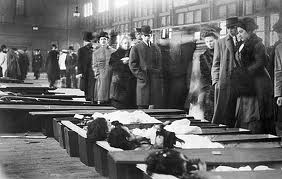
In researching garment worker conditions  in 1911 for my next novel, I came upon a list of the victims of the March 25, 1911 Triangle Shirtwaist Factory Fire in New York City and can’t get it out of my head. Read the litany of the 146 dead slowly, picturing the names and young ages of these workers. Some have notes:  tiny windows to the particularities of their tragedies.

Just the facts: Managers had locked the doors to prevent pilfering and authorized exits, a common practice at the time. When fire broke out, the trapped workers, mostly children and young women,  leaped from the 8th, 9th, and 10th floor windows. Most  died. It is the fourth largest industrial tragedy of this country, and the second largest in NYC until 2001. It is good to remember the labors of unions, particularly the ILGWU, OSHA and groups like Jobs with Justice that work so hard for worker safety. The list is from the University of Missouri, Kansas City pages on the tragedy. The images of the last four identified victims (not in the list below) are from the New York Times, “100 Years Later, the Roll of the Dead in a Factory Fire is Complete,” February 20, 2011.
Aberstein, Julia, 30
Adler, Lizzie, 24
Altman, Anna, 16
Ardito, Anna, 25
Astrowsky, Becky, 20
Bassino, Rosie, 31
Belatta, Vincenza, 16
Bellotta, Ignazia, Father identified by heel of shoe.
Benanti, Vincenza, 22
Bernstein, Essie, 19
Bernstein, Jacob, 28
Bernstein, Morris, 19
Bernstein, Moses
Bierman, Gussie, 22, Parents complained body stripped of rings.
Binevitz, Abraham, 20
Brenman, Rosie
Brenman, Surka (Sarah)
Brodsky, Ida, 16
Brodsky, Sarah, 21
Brooks, Ida, 18
Brunette, Laura, 17
Caputta, 17
Carlisi, Josep, 31
Caruso, Albina, 20
Carutto, Frances, 17
Castello, Josie, 21
Cirrito, Rosie
Cohen, Anna, 25
Colletti, Antonia (Annie). 30
Costello, Della
Crepo, Rose. 19
Denent, Grances, 20
Dichtenhultz (Fichtenhultz), Yetta, 18
Dockman (Dochman), Dora (Clara), 19
Dorman, K, Identified by registered letter.
Downic, Kalman, 24
Eisenberg, Celia, 17
Feibush, Rose
Feicisch (Feibish), Rebecca, 17, Died at hospital after jumping.
Feltzer, 40
Fitze, Mrs. Dosie Lopez, 24, Survived jump for day, then died.
Forrester, May, 25
Franco, Jennie, 16
Frank, Tina, 17
Gallo, Mrs. Mary, 23
Geib, Bertha, 25
Gernstein, Molly, 17
Gittlin, Celina, 17
Goldfield, Esther
Goldstein, Esther
Goldstein, Lena, 22
Goldstein, Mary, 11
Goldstein, Yetta, 20
Gorfield, Esther, 22
Grameattassio, Mrs. Irene, 24
Harris, Esther, 21, Broke back coming down elevator chute.
Herman, Mary, 40
Jakobowski, Ida
Kaplan (woman), 20
Kenowitch, Ida, 18
Keober, 30
Kessler, Becky, Tag read, “B Kessler, call for her tomorrow.”
Klein, Jacob, 23
Kupla, Sara, Jumped.  Survived five days after fire.
Launswold, Fannie, 24
Lefkowitz, Nettie, 28
Lehrer, Max, 19
Lehrer, Sam
Leone, Kate, 14
Lermack, Rosie D., 19
Leventhal, Mary, 22, Identified by gold-capped tooth.
Levin, Jennie, 19, Attractive woman who died with folded arms
Levine, Abe
Levine, Max
Levine, Pauline, 19
Maltese, Catherine, Mother of two victims below.
Maltese, Lucia, 20, One of three bodies identified by her brother.
Maltese, Rosalie(Rosari), 14
Manara, Mrs. Maria, 27
Manofsky, Rose, 22, Died at Bellevue Hospital.
Marciano, Mrs. Michela, 25
Mayer, Minnie
Meyers, Yetta, 19
Miale, Bettina,18, Identified by ring on her finger.
Miale, Frances, 21
Midolo, Gaetana, 16
Nebrerer, Becky, 19
Nicholas, Annie, 18
Nicolose, Nicolina  (Michelina)
Novobritsky, Annie, 20
Nussbaum (Nausbaum),  Sadie, 18, Lower half of body consumed by flame.
Oberstein, Julia, 19
Oringer, Rose, Died at St. Vincent’s Hospital.
Ozzo, Carrie, 22
Pack, Annie, 18
Panno, Mrs. Providenza, 48
Pasqualicca, Antonietta, 16
Pearl, Ida, 20
Pildescu, Jennie, 18
Pinello, Vincenza, 30
Poliny, Jennie, 20
Prato, Millie, 21
Reivers, Becky, 19
Rootstein, Emma
Robinowitz, Abraham
Rosen, Israel, 17, Sister identified body by ring.
Rosen, Julia (widow), 35, $842 found in her stocking.
Rosen, Mrs. Leob,, 38
Rosenbaum, Yetta, 22
Rosenberg, Jennie, 21
Rosenfeld, Gussie, 22
Rosenthal, Nettie, 21
Rother, R., 25
Rother, Theodore, 22
Sabasowitz, Sarah, 17
Salemi, Sophie, 24, Identified by a darn in her stocking.
Saracino, Sara
Saracino, Serafina, 25
Saracino, Tessie, 20
Schiffman, Gussie, 18
Schmidt, Mrs. Theresa, 32
Schneider, Mrs. Ethel
Schochep, Violet, 21
Schwartz, Margaret, Named victim in criminal case.
Selzer, Jacob, 33
Semmilio, Mrs. Annie, 30
Shapiro, Rosie, 17
Shena, Catherine, 30
Sklaver, Berel (Sklawer,  Bennie), 25
Sorkin, Rosie, 18
Spear
Sprunt
Spunt, Gussie, 19
Starr, Mrs. Annie, 30
Stein, Jennie, 18
Stellino, Jennie, 16
Stiglitz, Jennie, 22
Tabick, Samuel, 18
Terdanova (Terranova),  Clotilde, 22, Only victim to die on tenth floor; jumped.
Tortorella, Isabella, 17
Ullo, Mary, 20
Utal, Meyer, 23
Velakowsky,  Freda(Freida), 20, Survived jump for 3 days, then died.
Vivlania, Bessie, 15
Vovobritsky, Annie, 20
Weinduff, Sally, 17
Weiner, Rose, 23
Weintraub, Sally (Sarah?), 17
Weintraub, Celia
Welfowitz, Dora, 21
Wilson, Joseph, 21, Found by fiance; to have been wed in June.
Wisner, Tessie, 27
Wisotsky, Sonia, 17
Wondross, Bertha
Zeltner, 30, Died of internal injuries at St. Vincent’s.


Posted in WWWS

Factoids learned whilst writing

Now on the tenth chapter, maybe 60% through the plot of my next historical novel, due at HarperCollins in early November (very early, Nov.1), I discover that writing on a deadline is 1) very hard on the back; and 2) you learn a lot of little stuff which may or may not fit in your plot but feeds a writer’s lust for historical trivia. So I’ll share my random pickings with you.

1. Those lush and heavy pompadour hair style of the early 1900’s were plumped by folding the hair around wadded cotton or horsehair appealingly called “rats.”

2. The heavy post-Victorian hats were held on the above mentioned hair extravaganzas with hat pins as log as your (or my) arm. Some hats included stuffed birds.

3. In the early 1900’s only one in eight Americans finished high school.

4. Vaudeville theaters (figure heavily in my novel) had shows that ran continuously through the day, rather like our moving houses, but with live performers.

5. Anxious to attract a family audience, many vaudeville troupes invited Sunday School directors to view the show and give their approval of “wholesome entertainment.”

6. The 60’s hit “I’m Henery the Eighth” was a 1910 hit first. Who knew?

7. Passenger pigeons used to make flocks that were 300 miles long, darkening the sky.

8. In researching the age of the term “pony tail” I discovered that a recent U.K. research team has done mathematical modeling to predict the shape of a pony tail (a human’s pony tail) based on “various factors”. Why?

9. Cleveland, Ohio was once the second largest producer of women’s clothes.

10. The 50 hour work week was once a fond dream of American workers. Many said it would never happen. Unions thought otherwise.

11. Women earned half to two-thirds of men’s salary for the same work. Of course now we’re at 77%  . . . so history doesn’t advance on all fronts.

Posted in WWWS

Panna cotta, pure & simple

Some of the seeming classics of Italian post-dinner cuisine — tiramisu’, torta caprese, limoncello, and panna cotta (lit. “cooked cream”) are in fact rather late, post 1980’s entries on the popular culinary scene. Renaissance folks didn’t eat them. Little Sofia Loren didn’t even eat them, but they are delicious.

Panna cotta is a flan pared to essentials: cream, sugar, gelatin, vanilla, a bit of water. But it’s lovely, can sit, in fact likes to sit a day or two in the refrigerator, bothering nobody. Dressed up with a berry sauce (spiked, if you like), it’s lovely. You can make it in five minutes, the sauce another five. Then go back to your whatever you’re doing (in my case, finishing chapter 10). So . . .

Panna Cotta (8 custard cups)

2 C heavy cream, 2 C half and half.
1/2 C sugar
2 tsp vanilla extract
2 packets gelatin & 6 T cold water

Spray the inside of the cups with light oil if you are wanting to unmold the panna cotta for serving. Soften the gelatin in the cold water for about 10 minutes. Meanwhile heat the cream and sugar until the sugar is dissolved. Remove from heat and add vanilla. At that point, distressed by web comments of the panna cotta separating because the gelatin was put in too soon, I chilled the pan for 2 minutes by sitting it on ice. Not sure that’s necessary. Then whisk in the gelatin until the mixture is completely smooth. Divide in the cups. Cool to room temperature! Put the cups in the refrigerator. Recipes vary then, advising 4 to 10 hours of chilling. We tried at 10 and it was good, but very, very slightly grainy. The next evening even better. Unmold if you like. Dipping the cups briefly in hot water may help, and/or running a sharp knife around the edge but ours unmolded no problem. Add berry sauce. Enjoy yourself.

Berry sauce with Grand Marnier

I pkg. frozen raspberries or mixed berries
2 tsp. sugar
2 tsp. corn starch
bit of lemon juice, dash of Grand Marnier (or other orange liquer)

Heat the berries until bubbling with sugar. Thicken: put a bit of juice in a small bowl with the corn starch, mix until smooth, add back, bring to boil. Remove from heat, cool slightly, add lemon and Grand Marnier. Let sit until room temperature. You will be happy.

Tagged with:
Posted in WWWS
Recent Review
“Absorbing and layered with rich historical details, in Under the Same Blue Sky, Schoenewaldt weaves a tender and at times, heartbreaking story about German-Americans during World War I. With remarkable compassion, the author skillfully portrays conflicted loyalties, the search for belonging, the cruelty of war, and the resilience of the human spirit.”—Ann Weisgarber, author of The Promise and The Personal History of Rachel Dupree

Enter your email address to subscribe to this blog and receive notifications of new posts.

Join 122 other subscribers