
 When we moved to Knoxville in 2000 from my husband’s native Italy, Maurizio was quite fluent in English, but not, as we shall see, up on the American medical system. I was relating the adventures of my new friend Susan who had had assorted severe stomach issues. Fairly casually, Susan thought, the local doctor proposed removing her stomach to “avoid future problems” [aka cancer]. Being a take charge person, she determined to take herself to Mayo.
“To Mayo?” Maurizio interrupted incredulously.
“Yes, to Mayo,” I said, thinking, suddenly the patriot, that people go to Mayo from his precious Italy. Does Rome have someplace better? Humph. I barreled on with Susan’s adventures in getting herself seen at Mayo.
“But why Mayo?”
“Because they have very good diagnosticians,” I said, a little miffed, continuing that in fact, Susan would just need yearly gastroscopes for polyps —
“They told her this at MAYO?” And suddenly, looking into Maurizio’s horrified face, I saw, not three blocks from our house: Mayo Garden Center.
“I mean the Mayo Clinic, in Minnesota.”
“Ah,” pause. “So Susan can keep her stomach?” Yes, she can, and ah, the charms and diversions of a two-culture marriage.
Fast forward to now, and I’m a regular at Mayo (Garden Center), bringing various lawn problems to Margaret, my indefatigable diagnostician. She heard of my book, bought it, had various other Mayo staff buy it, and I left happily. A week later, bedeviled by brown spot fungus (in my lawn) I went to Mayo’s for help from Margaret. She came flying out to meet me. “Where does it come from?” she demanded and I’m thinking that if even Margaret can’t help my lawn . . . . Her voice raised a pitch and she shook her hands at me. “I mean, where does it all come from?”
“Brown spot?”
She pointed to my head. “I mean ‘it,’ all that stuff you wrote, where does it come from?”
Really, I don’t know. It comes, like brown spot, or flowers. Just comes. Or doesn’t. And needs a lot of taking care of, like a lawn.
“
Polyps, lawn problems, writing
Our document wars
 Immigration is difficult. Some cross deserts. Even those with the means and good fortune to attempt legal immigration, to get “in line” must affront seemingly trackless legal thickets. When I was a resident (but not citizen) of Italy, married to an Italian and seeking to adopt a Bulgarian child, two practiced INS lawyers told me that our case was the most complicated they’d seen in 30 years. If not for the loophole of the fact that I worked for the University of Maryland, European Division, the “easiest” way for me to have had Emilia become a citizen (this was before adoption automatically conferred citizenship) would have been to taken up residence for 6 months in a state with a short citizenship line, like North Dakota or Montana. And wait.
Just for Bulgaria, we had to present 21 documents besides the home study. Not just good health and financial stability. We had to swear not to rip the child’s vital organs out and sell them, not to sell her, to be “completely unable to have a child,” and so forth. Each document then had to go to the Questura (police station) in Naples for stamps and then to Rome for further stamping at the Bulgarian embassy (ca. $50 each). In a hearing before Italian officials for one document as fit parents, having waited 5 hours, standing in hot chambers for an audience, we were asked what our hobbies were. Maurizio answered listlessly, “Facciamo documenti” (We make documents).
One requirement which brought me to tears of frustration required a document proving my US citizenship which was NOT a passport or birth certificate and which, furthermore, was signed by an official whose signature was on deposit by the chief of police of the place of my residence (Naples, Italy). I was born in New York City. I offer a signed copy of my book to anyone who doesn’t know the story who can figure out the eventual byzantine solution to that one.
We finally had Emilia (age 10) in hand and a verified U.S. citizen. Now we had to now obtain her legal right to stay in Italy with us before her Italian adoption was complete (one year). We went to the Questura for her residence permit. Impossible. Not enough documents. We would need document A, which requires B and C, which we couldn’t get. So. . . . what? She goes back to the orphanage? Emilia, who didn’t speak Italian or English, must have grasped a crisis. She overheard someone call to a police officer named Emilia, somehow made the coincidence known and smiled charmingly, holding our hands (which she rarely did then). Suddenly the game shifted. Four bureaucrats huddled, puzzling out options. Finally they had it. On the short line for “motive for legal residence” an officer wrote in tiny script: “Minor child granted permission to stay in Italy for reason of family cohesion to the mother, a U.S. citizen, legally resident in Italy by reason of marriage to an Italian citizen.” The whole office was called over to admire this triumph of heart over legalism. Emilia the police officer kissed Emilia the child and said: “Benvenuta in Italian, bambina.” (Welcome to Italy, little girl).
Immigration rises and falls
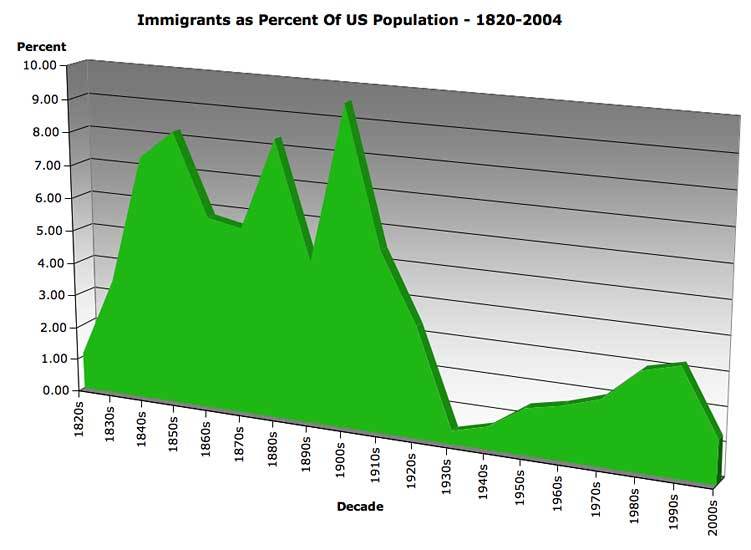 I found these charts of immigration from the U.S. Census Bureau. The green chart shows, among other things, the sudden drop in percentage of foreign born residents after 1910. Hostility to immigrants was reaching fever pitch, even among recent immigrants. The frontiers were filling up, the railroads were built and politicians found that restricting immigration made them very popular. Interesting note (I thought): in 1960, 13% of all foreign born Americans were Italian.
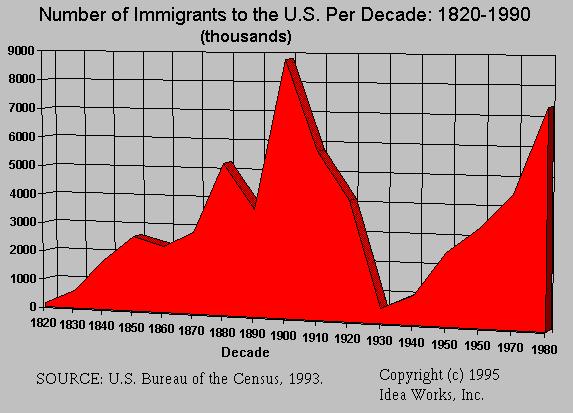 The second chart, in red, shows raw numbers of immigrants. We are, by this measure, above the levels of Irma’s time, but in fact our population is much greater. Each of these tiny red pixels is a story of translocation, searching and re-fashioning of home.
8 Tomato Truths
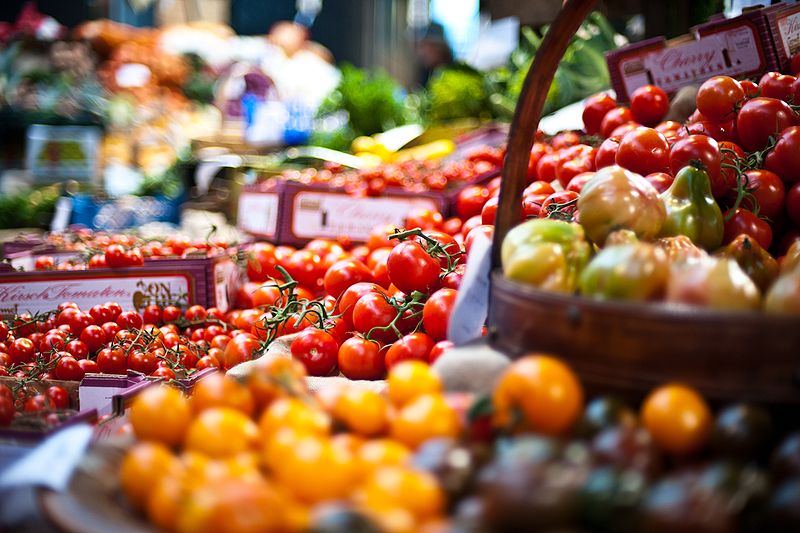 In Chapter 1, Irma’s father speaks scornfully of Americans’ habit of eating tomatoes. In fact, the tomato’s sanctified place on our tables came through a long trail of conquest, mis-information and tax shenanigans. I’ve gleaned some facts of that journey.
1. The genetic homeland of the tomato is the highlands of Peru, where it was a perennial green fruit, cultivated since about 700 C.E.
2. Our tomato moved north to Mexico, where Cortes celebrated his conquest of Tenochitlan in 1521 with a golden version of our hero. From this variety comes the modern Italian term, “pomodoro” (lit. “golden apple”).
3. In the late 1500s, English botanist, barber and surgeon John Gerard knew that Spaniards and Italians regularly ingested tomatoes but declared them quite poisonous for Englishmen, presumably because of their special, special GI tracts.
4. Even in Italy, though, many tomatoes appeared on the table only as decoration. In Florence of the 1700 and 1800s, the tomatoes were considered poison — for the rich. Rich people ate on pricey pewter with high lead content. Acid foods like the tomato leached out the lead, causing lead poisoning. The poor, eating on wooden trenchers, ate tomatoes with impunity.
5. When tomatoes entered Persia in 1840 via Turkey and Armenia, they were known as “Armenian eggplants.”
6. The classic pizza margarita, created in the late 1880s in Naples, was named for Queen Margarita. Its ingredients, tomato, mozzarella, and basil, celebrated the colors of the new Italian flag.
7. Back in the U.S., the tomato was classified as a fruit to avoid veggie taxes, but the Supreme Court ruled for the tomato/vegetable in the late 1800s and the fruit times so ended.
8. There are now 7500 varieties of tomato. Some are golden, like those that Cortes first savored.
Feasting on chaucroute garnie
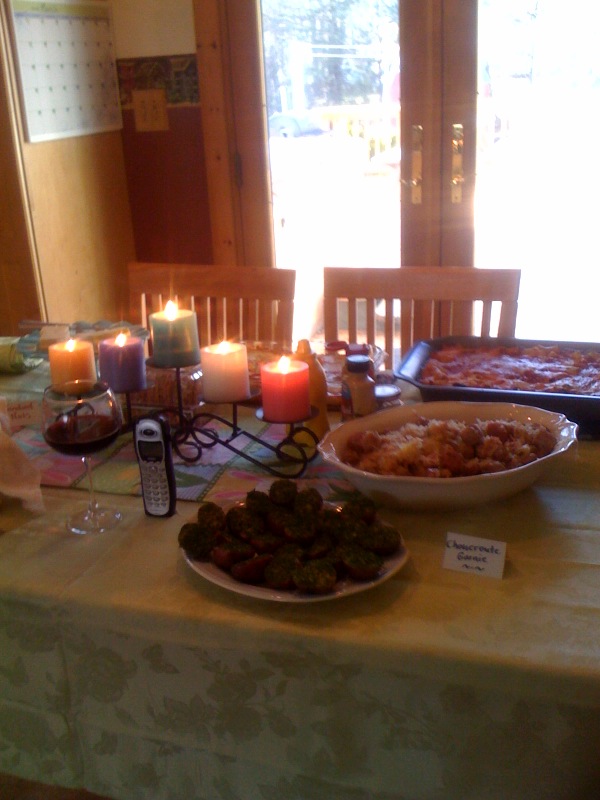
This Sunday afternoon I had the wonderful experience of speaking by phone with the “Eat, Drink, Laugh, and of course READ!!!!” book club of Connecticut which had read When We Were Strangers. As the organizer Shanon explained, the club typically creates a meal inspired by the book. They eschewed the bread and raw onions meals of Opi (for some reason) and went right for Irma’s going away feast in Chicago (pp. 258-259). From the look of this meal, it’s a wonder Irma didn’t stay in Chicago.
The choucroute garnie is a traditional hearty winter food of Alsace and while I don’t know the recipe used by Shanon’s group, here is one by Jacques Pepin.
And here are the pictures, shared by Shanon’s group, which is, she confirms “the BEST.”




Before Ellis Island
 Before Ellis Island, immigrants entered the U.S. through Castle Gardens in the New York Harbor. As the illustration shows, the feel of the place was neither “castle” nor particularly “garden.” First built as a fort to defend the harbor from the British in the War of 1812, the facility became a public cultural center and theater when the British were our pals and trading partners again. In 1855, Castle Gardens was transformed into an immigrant receiving station.
Irma entered America here. By 1890, eight million Americans had come through Castle Gardens, mostly from Germany, Ireland, England, Scotland, Sweden, Italy, Russia and Denmark. An estimated one in six of us are descended from someone who passed these gates. My great grandmother entered here, 16 years old and alone. It is possible to search free for entries between 1830 and 1890 or for a fee at New York Passenger Lists, 1851-1957.
The point was speed and sifting. Immigrants who might become a public charge were shunted back to their ship captains to be hauled home. Those headed out of New York were processed onto trains as quickly as possible since there were no overnight facilities.
As you see on these faces, people entered Castle Gardens with much of the dazed exhaustion visible at passport control in today’s international airports. By today’s standards, these were largely “undocumented aliens,” presenting themselves at the border with some minimal proof of identity and nationality, a destination, however vague, and willingness to work.
10 Notes on the National Park of Abruzzo, etc.
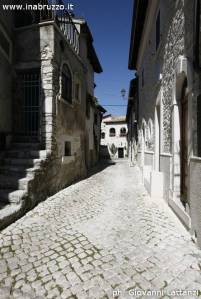
My story begins in Opi (see photo, left) in the heart of what is now the Parco Nazionale d’Abruzzo, Lazio e Molise (National Park of Abruzzo, Lazio and Molise). It is a lovely place of gentle wildness, not well enough known by those outside of Italy. Which is why I convey these facts.
1. The Park was founded just after World War I when (Irma’s) Opi leased 5 sq. km (not much) to a private federation to protect the land.
2. The Park grew rapidly to 300 sq. km, until the loveliness somehow threatened the Fascist regime which abolished it. Hard to figure what’s so subversive about a park, but Mussolini had his inscrutable ways.
3. In the high meadows, fields of crocus appear in late Spring. I knew they were native someplace, but the first sight of what seemed the iconic suburban flower in the wild was amazing.
4.  The sweet-faced Abruzzo bears, more correctly the Marsican Brown Bears, now number about 30. They are genetically isolated and very shy.
5. Also shy, the Italian wolf well known in legend, is slowly returning.
6. Other small mammals and the elegant chamois inhabit the park. There are badgers and porcupines, but no skunks. Small aside: when my husband first saw one in California and mistook it for a cat, I had to grab his shirt-tail and hold him back from close encounters with stinkiness.
7. Abruzzo is home to a delicious simple cookie, the Brutti ma Buoni (ugly but good) which you can replicate with the recipe.
8. The park holds some of the highest mountains in Italy, lush valleys, quiet towns and fine sheep cheese.
9. A new hiking map of the Park winds you past abbeys, streams, mills, castles, museums, up and down green mountains, through beech forests and romantic medieval hill towns.
10. Abruzzo is marvelously made for cross-country skiing of every level, with resorts as fancy or rustic as you choose.

The gender of books groups
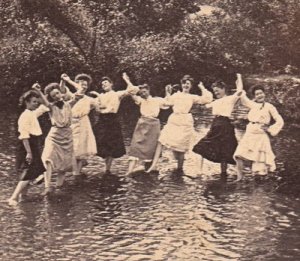 I’ve met quite a few book groups lately. Some gather in private rooms of restaurants that vary from modest to elegant. Some meet in coffee shops or church offices with no refreshments of any kind. Mine meets in a different house each time for low-bar refreshments (appetizers or soup and moderate wine, but lots of it). For others, it’s as much about the quality of food and vintage as it is about the book. I met with a group that was started in the Depression as way cash-strapped women could expand their libraries. In October I’ll read at the Centennial lunch of the “Friday Club” which has been meeting since 1911. My friend Ellen’s group has met for 11 years at monthly Sunday brunches. They have seen each other through their children’s adolescence and young adulthood. They have celebrated life changes and tended two members who lost beloved spouses. They are smart, opinionated, very different and as close as sisters.
In every one of these groups, even as I discuss my own work, I’m well aware that books are an excuse, a motive for community, the frame of a gathering of friends that is not really about content. And every one of these book clubs is exclusively female. “What about men’s book groups?” my husband demands. “What are we, chopped liver?” Amanda Bergeron, my highly informed editor at HarperCollins says she hasn’t heard of any men’s groups and she’s not sure why. After all, men do get together to play cards, watch games, fish, hunt and do other guy stuff that may involve a lot of talk and camaraderie. But the particular literary-social-emotional bonding of a books group seems particular to our sex, at least in Knoxville. It’s a great gift and I hope that Maurizio finds his group.
The Song of the Shirt
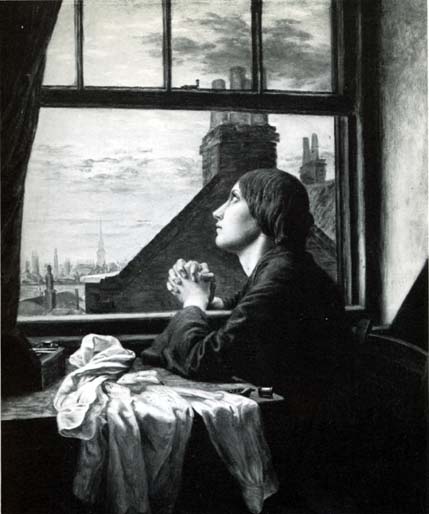 “The Song of the Shirt,” a dolorous Victorian poem by Thomas Hood (1843) was a lament against the exploitation of the seamstresses doing piecework, usually at home, “in unwomanly rags.” Irma struggles to avoid this fate and the helpless piety of the illustration (by Richard Redgrave).
With fingers weary and worn,
With eyelids heavy and red,
A woman sat in unwomanly rags,
Plying her needle and thread –
Stitch! Stitch! Stitch!
In poverty, hunger, and dirt,
And still with a voice of dolorous pitch
She sang ‘The Song of the Shirt!’
Irma on the Megabus
 Riding the Megabus across Virginia on the way to Maryland to see Ellen, my high school best friend. Her book group read my novel and it’s her birthday, reasons to go. The bus is cheap, $30 each round trip Knoxville to D.C. for Maurizio and me with wi-fi and comfortable seats. Now in the dark somewhere near Winchester, there’s the strange peace of public transportation at night – rolling through the darkness with someone else at the wheel.
I remember as a child, in the days before seat belts, tangled in the back of the car with my brother and sister coming back from somewhere, bickering briefly over who was more bony, whose elbows were in the way and then nestling like puppies in the warm nest of each other, watching the streetlights stream endlessly by as the headlights of approaching cars arched overhead, our parents quiet in the front seat, all well and safe and sometime we would be home. Now in the bus, we share the strange intimacy of strangers close together in the dark with a silent man driving, and one can fall to dreaming.
We are going east, the direction opposite to Irma’s path towards California. Once she and I we were so intimate. When my novel only existed in my mind and on this computer, I could add and subtract, sculpt and polish. We two seemed to work together, for at every turn I asked myself or her, “Is this right? Would you say or notice this? Would you do that? Will adding this sentence here demand a change somewhere else?” Now the novel is frozen on pages, being read (or not) here or there, and people I don’t know write to me, asking what happened to Carlo, did Molly ever marry. It’s good, it’s very good, it’s why one writes and yet the process seems so strange at this moment as I’m watching dark hills roll by. Stories that were as close as your breath float way like bubbles to be caught by other readers. They’re held, inhaled, sometimes folded into other hearts, sometimes floating away, like the headlights passing at night.
 pamelaschoenewaldt.com