Greek to me

We’re in Ancona, on the Adriatic in these days, staying with Maurizio’s family. On Thursday we’re going to Greece to visit  our friends Yiannis and Jo Ann Pantanizopoulos who have a house by the sea. Their handsome, kind and very droll son Niko was the inspiration for my Irma’s husband, also Niko. You see them in this picture taken at a recent Easter celebration.

Thinking of them brings back a vivid childhood memory. It was the years of brutal Greek dictatorship and my father was sharing his lab in Rahway, NJ, with a brilliant Greek research chemist, exiled from his country for reasons my father explained tersely were “his own business.” This Greek, whom I vaguely remembered was called George, had received a cassette from home via a circuitous chain of connections. But it was an unusual speed and size and he had no way to hear it.

We had a tape player. My father borrowed others and George came over with the cassette wrapped like a precious relic. I could stay with them in the living room, my father had agreed, on the condition that I not pester anybody with questions. After much discussion, the men rigged a system that slowly rendered the gibberish more human-sounding. At a certain point, George stiffed and said quietly, “One more.” My father carefully threaded a new tape and began the final transfer. A young man was speaking; I understood that much. “My brother,” George whispered. Then an older woman. He covered his eyes.

My father drew me into the kitchen. From there, peeking around the doorway, I could see George hunched motionless on the couch as more voices rose from the tape.

Tagged with:
Posted in WWWS

Lago Averno and ancient beasts

We lived in Lucrino, outside Naples, for nearly a year. It wasn’t the best of apartments. Built into a hill, only the living room and kitchen had windows, not the bedrooms. No heat or ventilation. In winter the cold was intense; guests wore coats to dinner and I wrote wrapped in wool while mildew slowly blackened our plaster walls. The summer steamed. But the terrace in front of us looked over the lovely and mysterious Lago Averno you see in the picture. It was crater of an ancient volcano, still so toxic in Roman times that birds avoided its waters. So Lago Averno was  clearly the entrance to the underworld. Virgil thought so. Temples to Jupiter and Apollo were here and wealthy Romans built magnificent summer villas on the gentle hills. It is believed to be the most archaeologically rich zone of Italy. Dig anywhere, they say, and you will find something. I never did but builders routinely turned over treasures. Unfortunately, the lake is now rimmed with discotheques owned by shady elements. On weekend nights, the circling road, in the 90’s at least, was lined with gently rocking cars whose windows were covered with newspaper to hide the heavily occupied couples inside. Housing is expensive and most dating couples lived with parents. Hence the assignations in cars. But we digress. You can visit the temples, the remains of the villas and museums bursting with marble, frescos, delicate glass vases, golden jewelry, mosaics, ivory — enough to re-create a buried world.

Now we live in East Tennessee where diggings turn up even older treasures. Recent road work at further east uncovered a sinkhole full of Miocene creatures now in Gray Fossil Museum: a red panda, rhinos, saber toothed tigers, camels, short-faced bear, shovel tusked elephants, sloths, hippos, extinct beavers and three-toed horses. I just heard about this museum today from my friend Doris Gove, naturalist and gifted interpreter of the natural world (see her books in the link). I remembered Lago Averno and how it glimmered beyond our terrace.

Tagged with:
Posted in WWWS

Cheesecake: rich, creamy, ancient

I recently made a cheesecake for a B-themed party for my friend Bingham. Guests brought burgundy, beer, green beans, salad with bleu cheese; I made cheesecake with blueberry topping, rather like the picture. Naturally, for these august occasions, one doesn’t want the dreaded Cheesecake Crack on top, exposing oneself to ridicule and shame on the part of partying foodies. The solution, intones the supremely confident Best Recipes by Cook’s Magazine, is to nest the spring form pan in a turkey roaster (of course), and carefully pour boiling water around the pan. Bake until jello-stage, then let sit in the oven for an hour with the door propped open by means of a long-handled wooden spoon. You may be sure that Cook’s tested many spoon options. Has to be wooden. And the cake was indeed, as promised, rich and creamy, artfully slivered for the populace by my friend and fine cook, Jim Harb.

But does Cook’s know how ancient the cheesecake ethos is? It’s very old. It’s very international. Which figures, cheese not having just fallen off the turnip truck itself. And thus follow some cheesecake and cream cheese thoughts.

  • The ancient Greek physician Aegimus wrote a book on the art of making cheesecakes
  • Cato the Elder’s De Agri Cultura  includes a recipe for “placenta,” which is not what you’re thinking but a crusted cheesecake.
  • The cheese of cheesecake varies by country: quark in Germany, cottage cheese in Sweden, ricotta in Italy (a blog to come on that romantic story-of-culinary origin). In Bulgaria there may be ground nuts in the crust. In Belgium, the cheesecake is elevated to celestial joy with bittersweet chocolate. If you ever wonder where you are in Europe, ask to taste a cheesecake.
  • The cheese we know as Philadelphia cream cheese was failed but fortuitous 1872 imitation of the French Neuchâtel by one William Lawrence of Chester, NY. Then Kraft came along in 1912, pasteurized Lawrence’s creation and thus we have Philadelphia cream cheese.
  •  When I was living in Italy there were TV commercials for cream cheese, commonly called “Filadelphia,” in which a family is hosting an attractive young Korean girl, evidently an exchange student. In the early seconds of the spot, she’s lonely and feeling far from home (which she is). Then she is shown how to make cunning appetizers with Filadelphia cream cheese and instantly becomes a happy girl, nesting into middle class Italian life.

So if you’re ever feeling displaced, far from home, eat some cream cheese or make a cheesecake. And you may feel better.

Tagged with:
Posted in WWWS

A bounty of buttons

Irma delights in buttons, the pewter buttons she is given on leaving Opi and the many different and wonderful kinds she sees in Madame Hélène’s dress shop. Which got me thinking in a button way and discovering that . . .

  • The first button-type objects were found in the Indus Valley, made about 3000 years BCE as ornaments and seals.
  • The first functional, fastening buttons were made in Germany in 1200’s, created to serve the new fashion of tight-fitting clothes.
  • Buttons as fasteners swept over Europe in the next century, doubtless hurrying along the Renaissance.

In this country, if you have a yen to see buttons, actually 10,0000 different kinds, go to the Mattatuck Museum in Waterbury, CT, home to the Waterbury Button Museum. You’ll find diminutive works of art in all imaginable materials: cinnabar from Asia, floral bouquets of human hair under glass, miniature terrariums, even buttons from George Washington’s sainted coat.

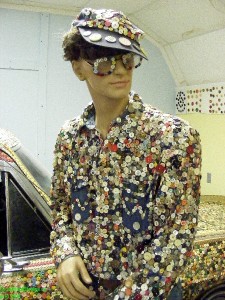
Then for true button mania, drive down to the Button Museum in Bishopville, SC, for a button-covered piano, car, coffin, hearse, suit and more, all fashioned by Dalton Stevens, aka the Button King, a man who loves gluing buttons on things.

A final thought. If you want to be happy, just keep repeating the word “button.” I don’t know why, but you can’t be sad saying, “button” over and over. People may look at you strangely but you won’t care.

Tagged with:
Posted in WWWS

Writing on the beach

Everybody’s got summer reading lists. Here’s some ways to astonish and delight yourself with your writer’s wealth in just ten minutes. Yes folks, it’s easy! It’s guaranteed. All you need is a writing implement and paper (or digital equivalent). Don’t bother with fancy moleskin or tooled leather – your words will be wonderful enough. Here’s how:

Pick a topic from the list below. Start writing and don’t stop for 10 minutes. Repeat your last phrase if you go blank. Don’t edit, critique, second-guess or bother with spelling or grammar. You’re just generating material here. Go with it. When time’s up, read what you have. Be amazed. Repeat if you like, or take a nap. Use sun screen.

10-minute summer writing topics

1. A walled garden, a child cries within
2. Enter the darkness; it will be better for you than any light, and safer than any known way.
3. The road turns, a castle appears, there on the hill.
4. You are given a box you must not open.
5. Two sisters or two brothers, but only one treasure
6. The wise child, the foolish child
7. Do not be afraid, a wild animal will guide you
8. You have been given great powers, on one condition.
9. What is the ugliest beast you can imagine? Now you must love him.
10. Three little objects, completely common. You take them on your journey. They save you.
11 An old man (woman/child) appears and says, “Follow me if you are lost.”
12. A furious storm. Suddenly it clears and you see yourself in a strange land.
13. Enemies rise up all around you. You have only what is in your hand.
14. “Take these,” s/he says. “They are all I have to give you and yet . . .”
15. You have made a promise to a powerful figure. You thought the promise was forgotten. It is not.
16. S/he seemed so strong (or weak). Look at him/her now.
17. You have become an animal (or a bird, insect, reptile). To return you must . . .
18. The beach stretches empty before you. And then it is not empty.
19. I dreamed the snow was burning, /I dreamed the fire froze over/And dreaming impossible things/ I dreamed you were my lover. Chilean folk song
20. I have always known/ That at last I would/Take this road, but yesterday/ I did not know that it would be today. Narihira

Tagged with:
Posted in WWWS

“She died of childbed fever”

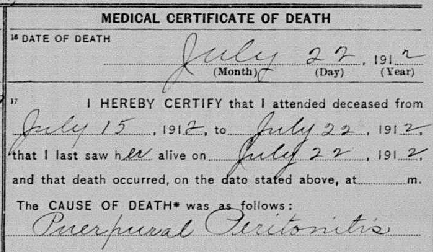
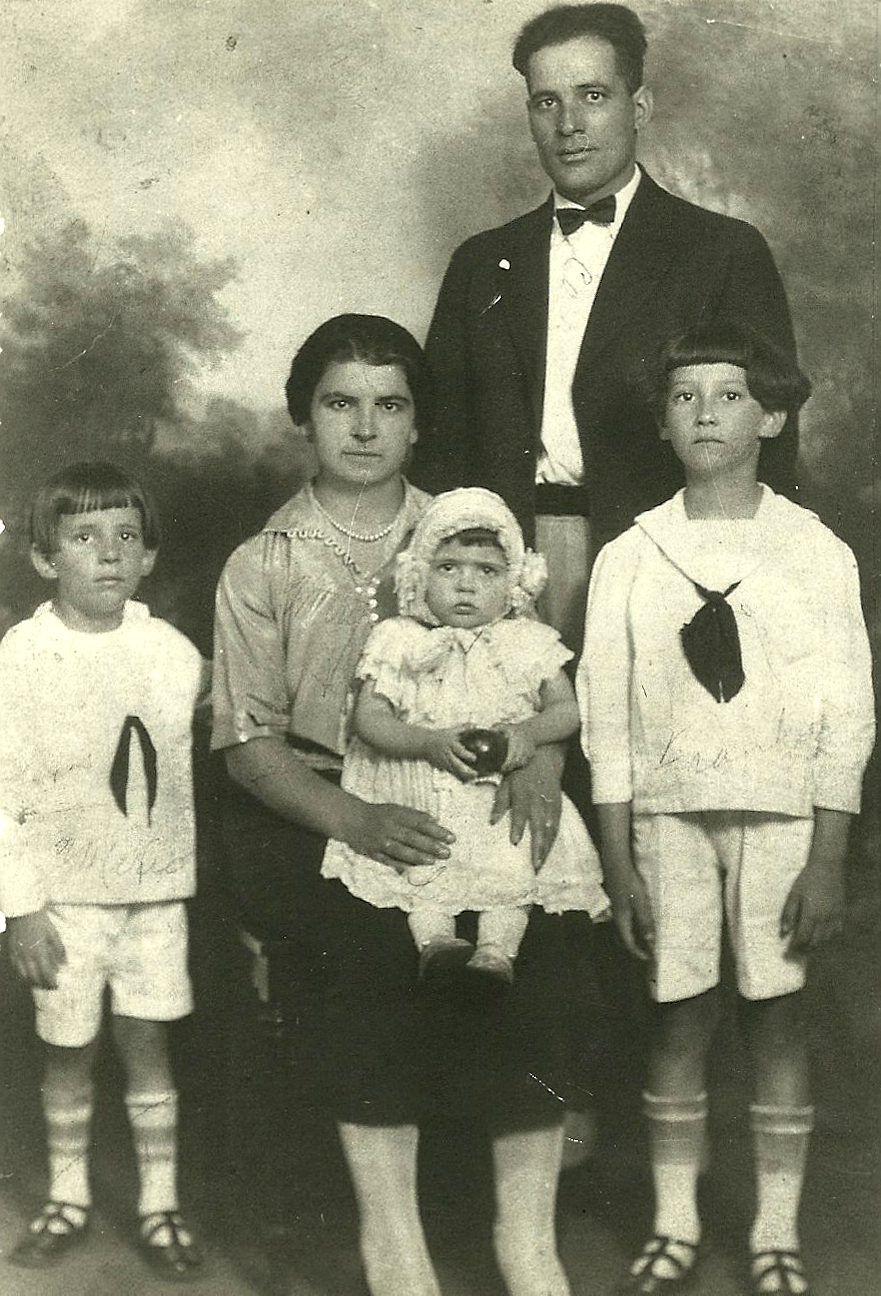
You can’t go far in reading fiction, biographies or family memoir written before modern sepsis and antibiotics without running into phrases like: “his/her mother/wife died at childbirth. . . died giving birth to . . . . died of childbed fever.” The young woman featured in my post “Coming from Turrivalignani,” is reader Toni Morre’s grandmother who married her grandfather when his first wife died giving birth to the toddler we see in the photograph.

Childbed/childbirth fever or puerperal sepsis stalked women after the 17th Century, an ironically tragic side effect of the increasing professionalization of obstetrics. Today about three  women in the U.S. die of puerperal sepsis for every 100,000 births. It was not always so.  Since the first recorded epidemic at the Hôtel-Dieu de Paris in 1646, European and American hospitals saw nearly 25% mortality by childbed fever. Epidemics could sweep away nearly 100% of a maternity ward.

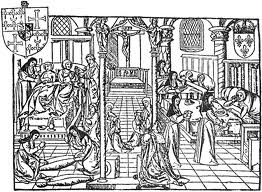
These “modern” wards did relieve obstructed labor by use of forceps, but death came from sepsis or bacterial infection spread by contaminated instruments, linens and dressings, putting women two to the bed as you see in the “lying -in ward” here, frequent vaginal exams and. . . doctors’ hands. Doctors, in a laudable attempt to learn anatomy, often alternated births with autopsies. They wore their blood-stiffened frock coats as badges of honor as their unwashed hands carried infection from one woman to her ward sisters, many in one day. Or that’s what we know now. Then, other theories were rife: new mothers died, many supposed, because of a mysterious miasma or their disturbed mental state, or the mechanical pressure of the uterus.

Some doctors, of course, intuited the cause (see little bacterial beasties in the mint-green field). Scotland’s Alexander Gordon wrote his mea culpa in 1795: “I myself was the means of carrying infection to a great number of women.” Fifty years later, the great Oliver Wendell Holmes wrote: “I had rather that those I esteemed the most should be delivered unaided, in a stable, by the manger-side, than that they should receive the best help, in the fairest apartment, but exposed to the vapors of this pitiless disease.” Washing hands with chlorine had dramatic effects, but doctors who blamed other doctors often lost friends and found ridicule.

  • Obstetricain Charles Meigs: “Doctors are gentlemen, and gentleman’s hands are clean.”
  • Sir Frederick Treves: “There was no object in being clean…Indeed, cleanliness was out of place. An executioner might as well manicure his nails before chopping off a head.”

Slowly, the profession accepted mounting evidence that standard cleanliness could reduce maternity ward mortality  from 18% to 3% within days. Childbed fever faded to small numbers and after 1930, antibiotics were dramatically effective in stopping puerperal fevers already in course. Until then,  poor and rural women relied on midwives like Sofia who attended one woman through the birthing process and washed her hands and tools afterwards. They often had better outcomes than their sisters who opted for the “modern” hospitals and great doctors.

Tagged with:
Posted in WWWS

A reading in Kentucky

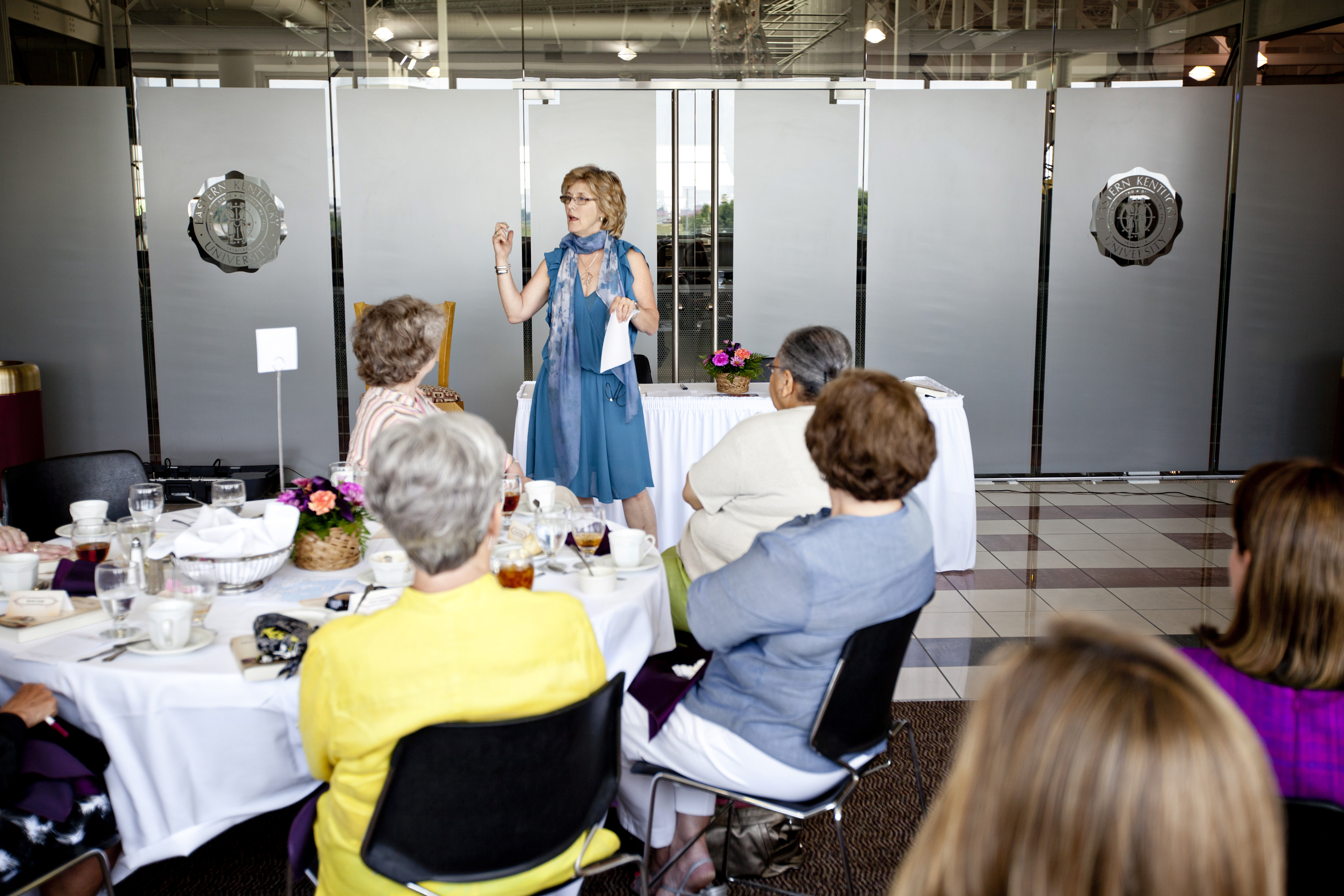
Recently I did a reading at Eastern Kentucky University in Richmond, KY for donors and supporters of the university library. Last year Amy Green, author of the marvelous first novel, Bloodroot, had come. The point, say the organizers, is to have the donors meet “real authors.” Whether I’m in that category or not isn’t the topic of this blog. It’s a great thing that a university is willing to support first time writers, to give us an audience, to distribute our books and have people come to share their experience of our words.

I’m thinking of when I first was in a room with a “real author.” Not until college, I think. My English department brought in writers and then had sherry and cheese cube receptions for us to meet them. Perhaps a tangential benefit to these readings was practice in one of the quintessential skills of a good English major — talking cogently about literature while slightly buzzed. I know this is true because in grad school at the University of Pennsylvania the training became more serious with bi-monthly readings and cocktail parties where  cheap hard liquor was liberally poured by an Irish medievalist, but I digress.

Where did I think writers lived before I began seeing them in the flesh? On Planet Writer, I suppose. Certainly I read a lot as a kid, riding my bike to the Westfield, NJ Public Library every week, filling the basket with books and the pushing bike and books up what seemed the Mt. Everest rise of Lawrence Avenue. Someone wrote all those books, obviously, but I think I never believed the book jacket photographs. It just didn’t seem possible that regular people did such work. It was all too marvelous. No grownups I knew did it. Somehow books just appeared, like Easter eggs.

My marvel, my “well, duh, of course” moment on meeting my first “real writer,” John Gardner, reminded me a good deal of going briefly to Paris when I was 17. I’d studied French in high school. On my first afternoon, with great trepidation I asked for a peach at a fruit stand and was given, amazingly, a peach. Look at that! Walking along, eating my peach, I heard two women talking behind me discussing their plans for the evening. They were actually speaking French! It struck me as a thunderclap that all through high school I must have had in the back of my mind that all those elegantly fitted-together grammar rules, all those vocabulary lists I painstakingly mastered, the books we read and halting essays scratched out were actually just an elaborate game devised by the high school teachers to keep us occupied and off the street. No, no, it was all real. And that is a great benefit of readings, I think, that someone in the audience will think, look at that, a real person did this. And if she can do it, so can I.

photo: Chris Radcliffe

Tagged with:
Posted in Writing

Coming from Turrivalignani

Sometimes readers tell me of their ancestors who came to America in Irma’s time but for any number of possible reasons could not or would not share this experience with their families. In those cases, if reading Irma’s story helps visualize that ancestor’s journey, I’m happy. Sometimes the “coming over” story has been told, re-told and treasured. At readings, I am sometimes shown photographs of grandparents or great-grandparents before the crossing, on boats, or freshly in America. I heard of one grandmother, Swedish I believe, who came as a seamstress like Irma and entered the medical field in Chicago like Irma. There’s a shiver of pleasure then, that my fiction mirrors a reality.
The other night I met by phone with the reading group Book Babes from Northern California. A colleague commented when I announced my coming “meeting”: “If this isn’t one fantastic group of women, then it’s a waste of a great name.” Suffice it to say, the great name wasn’t wasted. We had a lively conversation about the book and writing processes and our immigrant ancestors. I am privileged to share this photograph sent by one of the Book Babes, Toni, whose seamstress grandmother came from Turrivalignani, Abruzzo in the early 1900’s and often told stories of her village, including how she felt like a stranger when her father’s death brought her briefly home. Here we see her with her husband and his three children from an earlier marriage. His wife did not survive the birth of the little girl that Toni’s grandmother holds in her lap. At first her husband let it be known that he was marrying “down,” but he soon came to love his seamstress wife very much. Look in her eyes and you will see a woman of courage and grace. Perhaps Toni will write her grandmother’s story one day.

Tagged with:
Posted in WWWS

Mysteries of mozzarella di bufala

This weekend, an experiment in mozzarella making at our house produced a product which looked like mozzarella and tasted rather like the dry and rubbery balls one buys here in the supermarket. In the hierarchy of mozzarella, our homely balls would be at the bottom. At the top, floating in their milky water would be the gleaming globes of mozzarella di bufala, buffalo mozzarella. The difference is say from Chef Boy-ar-Dee canned pasta to the real thing, homemade.

So what about these buffalo? Mozzarella di bufala uses the milk of the water buffalo (see cute face, left), mixed with cow milk. I ventured into the contentious realms of history for my readers’ sakes to discover these truths from various sources, English and Italian.

1. The water buffalo was brought to Italy by the Goths (or the Visigoths) in the 7th Century C.E. Or the Lombards. Take your pick.
2. No, the water buffalo was used by Romans, even Greeks in pre-Christian Italy.
3. No, says the Consorzio per la Tutela del Formaggio Mozzarella di Bufala Camapana, the beasts came via the Normans in Sicily, who received them from the Arabs.
4. Or, says the Consorzio, the water buffalo, according to fossil evidence, are native to Italy after all.
5. No, Arabs brought them from India through Mesopotamia. Then pilgrims and returning crusaders brought them to Italy.
6. Or . . . all the above.

Wherever they came from, the mighty beasts were useful in plowing wetlands (the nice big hooves don’t sink in) and are happily resistant to malaria. Vague references to cheese made from their milk appeared first in the 12th Century, then, definitively by one Scappi, chef to popes in 1570.
The name comes from “mozzare” or “to cut off” since the latent cheese is kneaded by hand into a shiny paste, then a length cut off to make a ball or braid. Ideally made from the morning’s milking, eaten within hours, it is “oozing with freshness and richly flavored,” says one source.
But eat mozzarella di bufala or some fine cheese you must, for as one of my sources intoned, quoting the French gourmand and foodie Brillat-Savarin (1755-1826), “a meal without cheese is like a pretty woman without an eye.” And who wants that?

Note: our friend Francesco’s mother made wonderful salads with arugula, mozzarella di bufala, oil, vinegar and salt, marinated a few hours.

Tagged with:
Posted in WWWS

Dog swims underwater

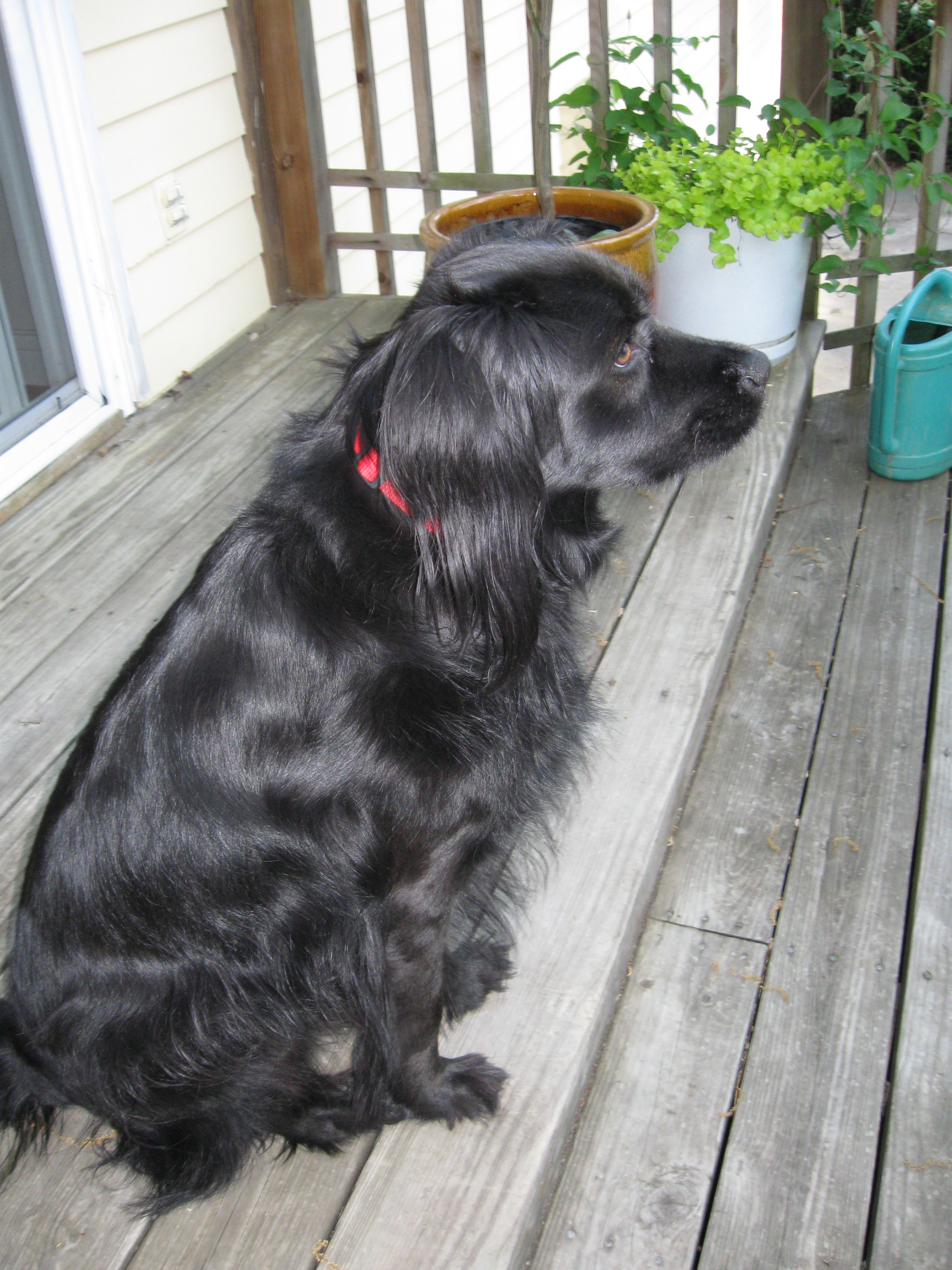
This is Jesse the dog, looking stately and wise (I think) in his preferred elegant ensemble of sleek black, accessorized in red. One particularity of Jesse is his terror of bodies of water larger than a water bowl. In the hottest summer, when other dogs splash, swim, dash and retrieve in the nearby Tennessee River, Jesse may wade in gingerly up to his doggie elbows and pant. On a midwinter visit to the Florida Panhandle, when the Gulf was smooth and the waves no more than a hand high languidly sliding to shore, a modest “plop” had Jesse airborne, spinning wildly on his leash.
As you can imagine, Jesse doesn’t swim. He can, we determined. Maurizio once carried him into a lake and he swam back, beeline, and might have continued his outraged trajectory far inland if I hadn’t corralled him. The idea of people he loves jumping (from his point of view falling) into water is horrifying. At friends’ lake houses he barks and howls frantically on the dock at every splash. Helpless to stop the calamity, he can at least call for help, like Lassie fetching the sheriff. “Lassie pulls the child to safety,” however, is not in Jesse’s script.
All this is a prelude to a dream I had recently of standing on a rocky coast with a quick drop off. It’s cold; the water is frigid, and suddenly I see Jesse just under the surface, swimming desperately. His head is underwater. “Lift your head up!” I call, but he doesn’t. He’s frantic. Buffeted by waves, he can’t endure much longer. Fully dressed, I jump in the icy water and haul him out. I wonder if this is a metaphor. So often we’re desperate when help is so close, just lifting our heads out of water. But fear keeps us down. I try to hold this little thought as I push through the outline for my next novel. Lift the head and swim. Lots of dogs can do it.

Tagged with:
Posted in WWWS
Recent Review
“Absorbing and layered with rich historical details, in Under the Same Blue Sky, Schoenewaldt weaves a tender and at times, heartbreaking story about German-Americans during World War I. With remarkable compassion, the author skillfully portrays conflicted loyalties, the search for belonging, the cruelty of war, and the resilience of the human spirit.”—Ann Weisgarber, author of The Promise and The Personal History of Rachel Dupree

Enter your email address to subscribe to this blog and receive notifications of new posts.

Join 122 other subscribers