Victorian spring cleaning

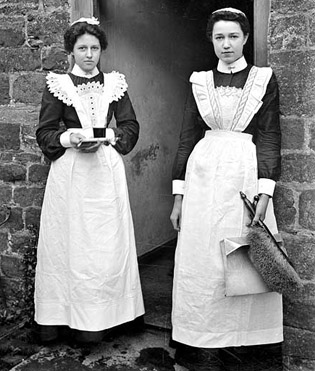
Reading this list of what spring cleaning meant in the well-run Victorian household makes me plenty glad to not live then with those standards. It’s from Country Gentlemen and apparently not the whole list, but the dizzying load of work gives the general idea. Also, I have no staff.

Now comes the season of general cleaning, when all the corners and closets are overturned and hidden things are brought to light. Early in the months before the moths-millers show themselves all the woolen sheets, blankets, etc., are to be washed, and the extra ones packed carefully away in deep chests, and cedar boughs strewn over them, or camphor gum.
If you possess a camphor-wood trunk, you can defy the moths, but without that convenience, special heed must be paid to their dislikes, or you may have your blankets destroyed.
Carpets that do not require to be taken up should be loosened at the edges, and with a dustpan and brush, all the dust can be removed; if there are any traces of moths, wash the floor with spirits of turpentine or benzine, put the carpet down quickly and the moths will have had their quietus. The disagreeable odor will soon disappear, if the windows are opened widely, and you can be certain that your carpets will not be ruined this summer. This same burning fluid will drive out and keep away the moths from upholstered furniture. It can be put on with a cloth, and if pure will leave no stain, but brighten the colors. Before applying it, brush out the cushions with a hand-brush and a damp cloth, to remove all the dust. Straw matting should be washed with a cloths dampened with salt water. Take care to wet it but little, for if the matting is soaked through it becomes brittle. If Indian meal is sprinkled over it, or damp sand, and then thoroughly swept out, it will also cleanse it finely.
In washing windows, a narrow-bladed wooden knife, sharply pointed, will take out the dust that hardens in the corners of the sash. Dry whiting will polish the glass panes nicely; and we find weak black tea with some alcohol the best liquid to wash the glasses. For a few days before the cleansing takes place, save all the tea grounds; then when needed, boil them in a tin pail with two quarts of water, and use the liquid on the windows. It takes off all dust and fly specks. If applied with a newspaper, and rubbed off with another paper, they look far better than if cloth is used.
If there are old feather beds in the house, and no steam renovator at hand, put them out in the first heavy, drenching rain that falls. Let them become thoroughly wet, and turn the bed several times; then dry them in the sun, and when one side is perfectly dry, beat it with sticks to lighten up the feathers, and turn up the other side to dry; either placing boards under it, or putting the beds on the piazza roof, if one is at hand.
To take out stains from either mattresses or feather beds, make a paste of soft soap and starch, and spread over the spots; when dry, scrape it off with a knife, washing it with a damp sponge, as it falls off if not clean, put on another paste. This application, if repeated frequently, until all discolorations are gone, will purify any bedding. Cockroaches can be kept away with powdered borax. Keep it in a tin pepper box and sprinkle it wherever they go. Paris green is recommended, but it is a poison; while borax is harmless. Sprigs of wintergreen, or ground ivy, will drive away small red ants, and branches of wormwood will make black ants ?vamose the ranch.? Scald your bedsteads in the hottest soap-suds you can apply; if there are traces of bugs apply kerosene with a small paint brush. It is a sure cure. Tenants of city houses are often annoyed by bugs, and can not tell whence they came. Perhaps the border of the wall-paper might divulge their source, or the cornices of the windows disclose their haunts. Again apply kerosene and they will no longer trouble you. Carbolic acid may be applied; if pure the odor is not as disagreeable as that of coal oil. Papering and painting are best done in cold weather, especially the latter, for the wood absorbs the oil of paint much more than in warm weather, while in cold weather it hardens on the outside, making a coat, which will protect the wood instead of soaking into it.
In papering walls, be sure to remove all the old paper and paste, and scrape them perfectly smooth. Dampen the old paper with cloths wet in saleratus water, and it will come off easily; fill up the cracks with plaster of Paris, and if there are any traces of bugs, wash the wall all over with a weak solution of carbolic acid and water; this will purify the air and destroy all mold and vermin. The best paste is made out of rye flour, with two ounces of glue dissolved in each quart of paste; half an ounce of powdered borax will snake the paste better. People now generally understand how dangerous it is to paper a wall over old paper and paste. Many deaths have arisen from this cause; the air of many sleeping-rooms has been thus poisoned. In some old houses three or four layers of paper have been found upon the walls of the rooms, and their inmates have died, and no doctor could tell whence came the disease.
In whitewashing, a pound of glue dissolved in hot water and diluted with four gallons of cold water, to which is added six pounds of whiting, will be found to answer a better purpose titan common lime. Woodwork can be washed with this glue size, and one coat of paint on it would last for years. A little chrome yellow will give a light lemon-colored tint to the wash. A cheap paint for the floor can be made, which a strong, smart woman could apply to any floor: five pounds of French ochre; one fourth of a pound of glue, and a gallon of hot water. Dissolve the glue in a small quantity of hot water; when wholly melted add the rest of it, stirring it slowly until well mixed. Then stir in the ochre, and apply while hot, with a good-sized paint-brush. When well dried apply one or two coats of boiled linseed-oil. This paint dries very quickly, hardening in fifteen to twenty-four hours. It is very cheap; the glue is about twenty-five cents per pound, the ochre ten cents, the oil about seventy-five cents per gallon. So it is within the reach of any woman. An oaken hue can be given to new pine floors and tables by washing them in a solution of copperas dissolved in strong lye, a pound of the former to a gallon of the latter.
When dry this should be oiled, and it will look well for a year or two; then renew the oiling. Grease can be extracted from floors by applying a paste of wood ashes and quicklime, to be kept on for several days and then washed off. Stains on wall paper can be cut out with a sharp penknife, and a piece of paper so nicely inserted that no one can see the patch.
Ink stains on wood can be removed by a solution of oxalic acid. Cover the spots with bits of the acid, turn on a spoonful of water and place a heated flat-iron over it; when the hissing ceases the ink will have disappeared.
Kerosene and powdered lime whiting, or wood ashes, will scour tin with the least labor. Kerosene and whiting will also cleanse silver-ware, door-knobs, hinges, etc. Wet the flannel slightly in oil, dip in the whiting, and rub hard; wash off with a chamois skin or newspaper. Wash the glasses of pictures with a damp newspaper, dipped in whiting, then rub with a dry paper. Spots can be taken out of marble with finely powdered pumice-stone. Mix it with verjuice, cover the spots with it, and let it remain for twelve hours; then rub clean with a damp sponge; rinse with clean water, and wipe dry, with a cloth. Soapstone hearths are first washed in pure water and then rubbed with powdered marble or soapstone, put on with a piece of the same stone. Gray marble hearths can be rubbed with linseed-oil and no spots will show.
If gilt frames are varnished with copal varnish, they can be washed with cold water without injury. Lace curtains should never be ironed. Wash and starch them, using in the rinsing water a tablespoonful of powdered borax. This makes them very stiff. When wet spread on a sheet, either on the floor or bed, and pin down every two or three inches. Let them dry for several-days and they will look very nice ~ Country Gentlemen
Taken from The Manufacturer and Builder May 1872

Posted in WWWS

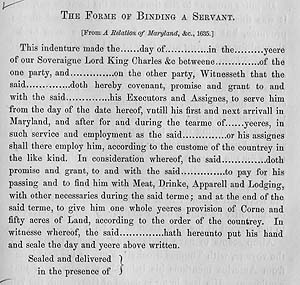
80% of American colonists

You remember the history lesson/s: how “our forefathers came to the New World searching for religious and political freedom” and so forth? Ain’t necessarily so, or if so, those lofty yearnings were tangential. In fact 80% of all white (mostly British & German) immigrants before 1800 came as indentured servants. That is, they sold their freedom to masters for three to seven years. In return they received passage to America (worth 4-5 years of unskilled labor), room, board and clothes. Those who survived (many didn’t) got a new suit of clothes and a small payment called “freedom dues.” Women who had the misfortune to become pregnant, willingly or not, had their terms increased to discourage this practice. Contracts could be bought and sold, so the difference between indenture and slavery was pretty darn slim.

I remember reading about indentured servants in history class as a kid. I assumed they were a small group of unfortunates. But no. And many U.S. citizens who trace their ancestry here generations back may assume that their ancestors were so very different from those today who take desperate measures to come to the U.S. Statistically, probably not. People left home because they had to, and they did what it took to survive.

Tagged with:
Posted in WWWS

Some faces speak

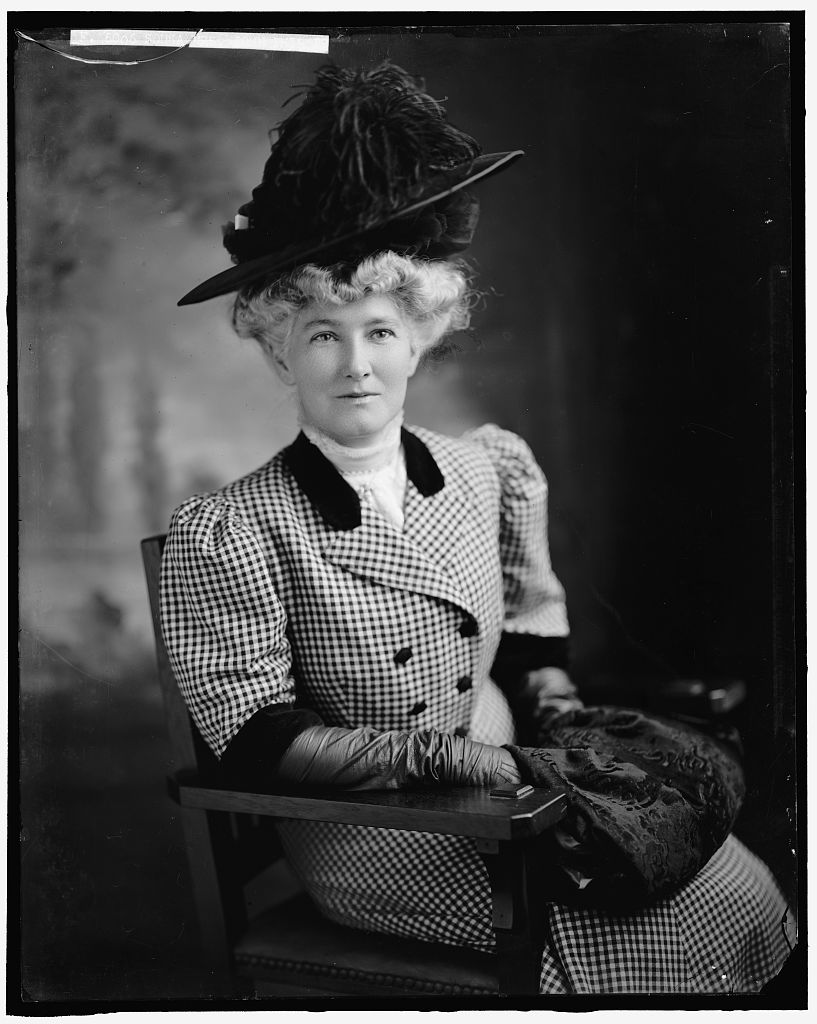
Some faces just speak to you. You want to meet the person, drink wine together, take a walk, hear them talk. This is Mrs. John Philip Sousa (aka Jane van Middlesworth Bellis Sousa, 1862-1944). She has nada to do with my book in progress but I saw her image while researching women’s hats of circa 1906 and she certainly was into them.

Look at that face. Not beautiful, exactly, but compelling. That tilt, that mouth about to speak, that curious mix of softness and strength.

But now that I’m here, I’m wondering about life in the Sousa household with little John Philip Jr., Jane Priscilla & Helen (no middle name). Did they march to dinner? Did JPS wake them with a Sousaphone? Did Jane mind that her husband, being independently wealthy, donated his entire salary as lieutenant commander in the Naval Reserve (minus one dollar) to the Sailors’ and Marines’ Relief Fund? Or was it her idea? Would she have preferred a waltz to all those marches? Did she polish brass?

Factoids: He had absolute pitch and she was in the D.A.R.

Posted in WWWS

Humorous Phases of Funny Faces

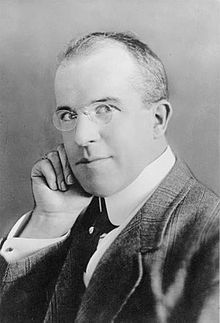
In researching vaudeville acts for my next novel, I came upon J. Stuart Blackton, here pictured, who came to America from Yorkshire in 1894, gifted in rapid charicature, and created an act called the “Komikal Kartoonist.” As KK, he was a flop, but as a journalist reporting on Thomas Edison’s Vitascope, he saw some entertainment possibilities. Drawing on the recent, fortuitous discovery of stop-action photography, he created this a little ditty with a lovely name: Humorous Phases of Funny Faces.


Humorous Phases of Funny Faces. 

Posted in WWWS

1900 predicts the year 2000

Predictions of the Year 2000
The Ladies Home Journal from December 1900, contained predictions by John Elfreth Watkins, Jr. of “What May Happen in the Next Hundred Years”. Mr. Watkins wrote: “These prophecies will seem strange, almost impossible. Yet, they have come from the most learned and conservative minds in America.” I have trimmed the entries a bit, but no editing. Remarkable — but where are the giant strawberries?

 Prediction #1: There will probably be from 350,000,000 to 500,000,000 people in America and its possessions. Nicaragua will ask for admission to our Union after the completion of the great canal. Mexico will be next.

Prediction #2: The American will be taller by from one to two inches. He will live fifty years instead of thirty-five as at present – for he will reside in the suburbs. The trip from suburban home to office will require a few minutes only. A penny will pay the fare.

Prediction #3:  Exercise will be compulsory in the schools. Every school, college and community will have a complete gymnasium. All cities will have public gymnasiums. A man or woman unable to walk ten miles at a stretch will be regarded as a weakling.

Prediction #4:  There Will Be No Street Cars in Our Large Cities. All hurry traffic will be below or high above ground when brought within city limits. Cities, therefore, will be free from all noises.

Prediction #5:  Trains will run two miles a minute, normally; express trains one hundred and fifty miles an hour. Along the railroads there will be no smoke, no cinders, because coal will neither be carried nor burned.

Prediction #6:  Automobiles will be cheaper than horses are today. A one-pound motor in one of these vehicles will do the work of a pair of horses or more. Children will ride in automobile sleighs in winter.

Prediction #7:  There will be air-ships, but they will not successfully compete with surface cars and water vessels for passenger or freight traffic. They will be maintained as deadly war-vessels by all military nations.

Prediction #8:  Aerial War-Ships and Forts on Wheels. Giant guns will shoot twenty-five miles or more, and will hurl anywhere within such a radius shells exploding and destroying whole cities. Submarine boats submerged for days will be capable of wiping a whole navy off the face of the deep. Balloons and flying machines will carry telescopes of one-hundred-mile vision with camera attachments, photographing an enemy within that radius.

Prediction #9:  Photographs will be telegraphed from any distance. If there be a battle in China a hundred years hence snapshots of its most striking events will be published in the newspapers an hour later. Photographs will reproduce all of Nature’s colors.

Prediction #10:  Man will See Around the World. Persons and things of all kinds will be brought within focus of cameras connected electrically with screens at opposite ends of circuits. American audiences in their theatres will view upon huge curtains before them the coronations of kings in Europe or the progress of battles in the Orient. Thus the lips of a remote actor or singer will be heard to utter words or music when seen to move.

Prediction #11: No Mosquitoes nor Flies.  Insect screens will be unnecessary.  Mosquitoes, house-flies and roaches will have been practically exterminated.

Prediction #12:  Peas as Large as Beets.  Plants will be made proof against disease microbes just as readily as man is to-day against smallpox.  The soil will be kept enriched by plants which take their nutrition from the air and give fertility to the earth.

Prediction #13:  Strawberries as Large as Apples will be eaten by our great-great-grandchildren for their Christmas dinners a hundred years hence.  Raspberries and blackberries will be as large.  One will suffice for the fruit course of each person. Melons, cherries, grapes, plums, apples, pears, peaches and all berries will be seedless.  Figs will be cultivated over the entire United States.

Prediction #14:  Black, Blue and Green Roses.  Roses will be as large as cabbage heads.  Violets will grow to the size of orchids.  A pansy will be as large in diameter as a sunflower.  Prediction #15:  No Foods will be Exposed.  Storekeepers who expose food to air breathed out by patrons or to the atmosphere of the busy streets will be arrested with those who sell stale or adulterated produce.  Liquid-air refrigerators will keep great quantities of food fresh for long intervals.

Prediction #16: There will be No C, X or Q in our every-day alphabet. Spelling by sound will have been adopted, first by the newspapers. English will be a language of condensed words expressing condensed ideas, and will be more extensively spoken than any other. Russian will rank second.

Prediction #17:  A university education will be free to every man and woman. Poor students will be given free board, free clothing and free books if ambitious. Medical inspectors regularly visiting the public schools will furnish poor children free eyeglasses, free dentistry and free medical attention of every kind. The very poor will, when necessary, get free rides to and from school and free lunches between sessions. In vacation time poor children will be taken on trips to various parts of the world. Etiquette and housekeeping will be important studies in the public schools.

Prediction #18: Telephones Around the World. Wireless telephone and telegraph circuits will span the world. A husband in the middle of the Atlantic will be able to converse with his wife sitting in her boudoir in Chicago. We will be able to telephone to China quite as readily as we now talk from New York to Brooklyn. By an automatic signal they will connect with any circuit in their locality without the intervention of a “hello girl”.

Prediction #19:  Grand Opera will be telephoned to private homes. Automatic instruments reproducing original airs exactly will bring the best music to the families of the untalented. The piano will be capable of changing its tone from cheerful to sad. Many devises will add to the emotional effect of music.

Prediction #20: Coal will not be used for heating or cooking. It will be scarce, but not entirely exhausted. Man will have found electricity manufactured by waterpower to be much cheaper. Every river or creek with any suitable fall will be equipped with water-motors, turning dynamos, making electricity.

Prediction #21: Hot and Cold Air from Spigots. Hot or cold air will be turned on from spigots to regulate the temperature of a house. Central plants will supply this cool air and heat to city houses in the same way as now our gas or electricity is furnished. Rising early to build the furnace fire will be a task of the olden times. Homes will have no chimneys, because no smoke will be created within their walls.

Prediction #22: Store Purchases by Tube. Pneumatic tubes, instead of store wagons, will deliver packages and bundles. These tubes will collect, deliver and transport mail over certain distances, perhaps for hundreds of miles. They will at first connect with the private houses of the wealthy; then with all homes.

Prediction #23: Ready-cooked meals will be bought from establishments similar to our bakeries of today. Food will be served hot or cold to private houses in pneumatic tubes or automobile wagons. The meal being over, the dishes used will be packed and returned to the cooking establishments where they will be washed. These laboratories will be equipped with electric stoves, and all sorts of electric devices, such as coffee-grinders, egg-beaters, stirrers, shakers, parers, meat-choppers, meat-saws, potato-mashers, lemon-squeezers, dish-washers, dish-dryers and the like.

Prediction #24: Vegetables Grown by Electricity. Winter will be turned into summer and night into day by the farmer. He will also grow large gardens under glass. At night his vegetables will be bathed in powerful electric light, serving, like sunlight, to hasten their growth. Electric currents applied to the soil will make valuable plants grow larger and faster.

Prediction #25: Delicious oranges will be grown in the suburbs of Philadelphia.

Prediction #26: Few drugs will be swallowed or taken into the stomach unless needed for the direct treatment of that organ itself. Drugs needed by the lungs, for instance, will be applied directly to those organs through the skin and flesh. They will be carried with the electric current applied without pain to the outside skin of the body. The living body will to all medical purposes be transparent. Not only will it be possible for a physician to actually see a living, throbbing heart inside the chest, but he will be able to magnify and photograph any part of it. This work will be done with rays of invisible light.

Prediction #27: There will be no wild animals except in menageries. Rats and mice will have been exterminated. The horse will have become practically extinct. Food animals will be bred to expend practically all of their life energy in producing meat, milk, wool and other by-products. Horns, bones, muscles and lungs will have been neglected.

Prediction #28: To England in Two Days. Fast electric ships, crossing the ocean at more than a mile a minute, will go from New York to Liverpool in two days. The bodies of these ships will be built above the waves. They will be supported upon runners, somewhat like those of the sleigh. Ships with cabins artificially cooled will be entirely fireproof. In storm they will dive below the water and there await fair weather.


Posted in WWWS

Italian deer inherit the land

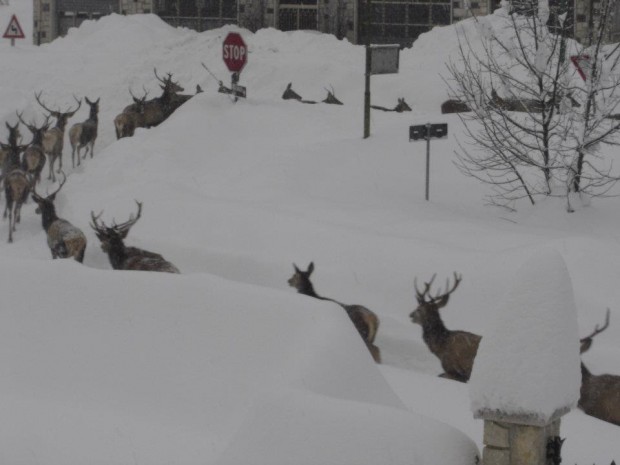
Some images work on your mind, whispering “story” or “metaphor” or “fable” or “warning.” Italy is freezing this winter, blanketed with quantities of snow unseen in many years. Here in the village of Alfedana in the mountainous spine of Italy, desperate deer have left the mountains to search for food where humans dwell. So that’s the basic story from the newspaper La Repubblica, where I found the image. But, you know, it could be otherwise:

1. A post-apocalyptic nuclear winter. Our species is gone and the beasts inherit the earth.
2. Santa’s reindeer enjoy a well-deserved vacation in a lovely mountain resort.
3. We’ve entered the world of the Brothers Grimm when the human-animal border was more permeable.
4. An Italian Wind in the Willows in which animals live in cunning little houses.
5. Someone with magic powers has called to the deer and they have answered, despite their fear of mankind.
6. The deer are just sick and tired of our taking their habitat and they are coming to get it back. Notice that they don’t stop at the stop sign. They don’t have to. They’re big and there are lots of them.
7. A scene from a little known Hitchock film, The Deer.
7. Some other possibility which I hope you’ll share with me.

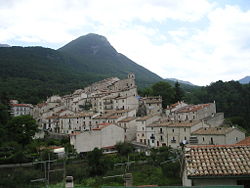
In case you are wondering what Alfedana looks like in more typical times, here is a picture. A lovely village, very like Opi. Notice how the roof lines in the background mirror the slope of the mountain in the distance. Italian design — just can’t beat it.

Tagged with:
Posted in WWWS

Which side are you on?

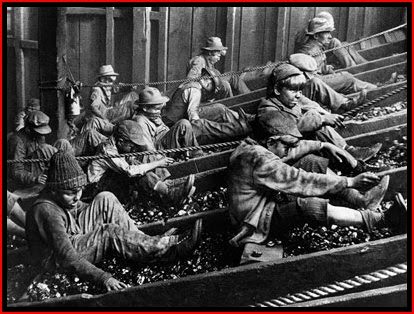
The new Ani DiFranco album, “Which Side Are You On?” calls to the great union song of the same title, written by Florence Reece, wife of Sam Reece, a coal miner and organizer during the bloody strike of 1931 in Harlan County. Since the (still untitled) novel I’m writing now culminates in the 1911 garment workers strike, I’m drawn to the song.

Pete Seeger’s liner notes for a recording tell of its genesis. Sam Reece had been warned that Sheriff J.H. Blair, hired by the mine owners, was coming for him. Sam left out the back door and soon after, the sheriff’s men burst in the front, jabbing their guns into beds, closets, even piles of laundry. One of the little girls started crying and the sheriff snapped: “What are you crying for? We’re not after you, we’re after your old man.” When the men left, Florence Reece tore off a calendar page and wrote the song to an old Baptist hymn.

Here’s Pete Seeger singing “Which side are you on?” with memorable images, good to remember when workers’ rights are so widely dismissed.

Which Side Are You On?

Come all of you good workers,
Good news to you I’ll tell,
Of how that good old union
Has come in here to dwell.

chorus
Which side are you on?

My daddy was a miner,
And I’m a miner’s son,
And I’ll stick with the union,
Till every battle’s won.

They say in Harlan County,
There are no neutrals there.
You’ll either be a union man,
Or a thug for J.H. Blair.

Oh, workers can you stand it?
Oh, tell me how you can.
Will you be a lousy scab,
Or will you be a man ?

Don’t scab for the bosses,
Don’t listen to their lies.
Us poor folks haven’t got a chance,
Unless we organize.

Posted in WWWS

Italian waiter, with attitude

Sometime in the 90’s, while I lived in Italy, American restaurant service style changed. I came back in 2000 and now all wait persons had names they needed to share. Go to a restaurant and be “taken care of.” Managers (doubtless) force a hovering style: “Is everything alright?” “Is everything still alright?” “Still?” Or, more pointed, “Is everything delicious/yummy?” “Do you need anything?”

Not that way Over There. Italian waiters (mostly male) are mostly professional and don’t work for tips. You don’t need to know their names. They bring you good food and tell you what you need to know, sometimes with refreshing attitude.

For instance, we were out to dinner with American friends and their 4-year old. They ordered for her penne arrabbiata (lit: angry penne pasta — “angry” as in “very spicy”). The waiter (whose name he didn’t share) voiced his disapproval, that is: “It’s the wrong pasta for a little girl.” Pasta al sugo (plain tomato sauce) would be better. They wanted the arrabbiata. He shrugged. In due time he brought our plates and the child’s. She took a bite, gagged, and spit it out. “Yuck! It’s spicy and crunchy!” Maurizio, of course, was explaining that pasta should be al dente,  not overcooked alla Americana, but when our young friend was vociferous on the “crunchy” quality, we did all try. Yup, very spicy, and pretty much out of the box crunchy.

The waiter was brought over and told the pasta was inedible. Suppressing a smile, he agreed. He could have it cooked more but, he noted blandly, that would be “a long time to wait for a little girl.” About that time I noticed a plate of pasta al sugo sitting on his staging table. He offered to bring the child “something else” right away. Which he did — that plate of pasta al sugo. Which she loved and afterwards during the vacation invariably asked for pasta al sugo, “not that spicy stuff.” So he did, after all, “take care” of us. And we’ll never know his name.

Tagged with:
Posted in WWWS

The wonder of boiled dinner

When Maurizio and I were first dating, he proposed a “cena bollita” (boiled dinner), a.k.a. “cena della mamma” (Mom’s dinner) on a cold winter night. Posed thus, with the aura of “la Mamma” and being the new girlfriend, naturally I said: “Oh, sounds wonderful.” Actually it sounded . . . basic. “Spartan” came to mind. Carrots, celery and onions cut in half. Potatoes, whole, cut in half. Zucchini in thirds. A certain geometrical interest, but I’m expecting some Italian magic. Pasta, lovely cheese, wine, herbs at least. “We have tomatoes,”  I offered, but Maurizio gave me The Look of culinary indulgence, as if I’d suggested a true heresy, like Parmesan on fish. So . . . no tomatoes. “Broth?” I suggested. No, plain water was enough. Italy was quite poor for centuries, of course. Was this stone soup, Italian style? We did put out some left over rice, cold.

Next step: boiling salted water. “Now we boil the vegetables,” Maurizio explained. I was expecting some elaboration but no, not much. Maybe a bay leaf. Vegetables boil in water, barely enough to cover them. When the vegetables were soft but still intact, he broke two eggs in the pot and poached them. That’s it. Boiled vegetables, poached egg with their broth in soup bowls, a dose of good olive oil. A bit more salt. Rice if you want it in your bowl. And here’s the magic: it’s delicious.

On a cold winter day, perhaps you’ve got a touch of a cold, or ate the wrong stuff the night before, there’s nothing like cena della mamma. Simple food, but very good.

Tagged with:
Posted in WWWS

The lady, unicorn, gorgon and manticore

During the Great Depression, a single woman in her 30’s, the sole heir of a very wealthy landowner in Kentucky inherited a palatial Victorian estate in a small town, surrounded by acres of immaculate gardens and hidden behind a high iron fence. There she lived with faithful retainers for forty years. She never married and rarely socialized with the townspeople. She kept her gardens and dogs and was driven about in gleaming black Packard. Imagine the rumors. Was she half-mad? Bitter or broken over a lost love? A miser? What dark secret did she hold? Why did she lock up her estate so tightly that it could never be sold? Why the death-grip on this brooding Victorian palace?

A portrait now appears of a woman, certainly wealthy and without romantic connections, but content and quietly busy with garden, family chronicles, dogs and discrete local charities, astonishingly well-read, a kind and generous employer. In a word, serene.

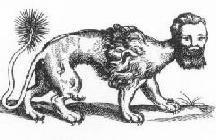
The story reminds me of the operetta The Unicorn, the Gorgon and the Manticore by Gian Carlo Menotti, which begins:

There once lived a Man in a Castle, and a strange man was he.
He shunned the Countess’ parties; he yawned at town meetings;
he would not let the doctor take his pulse; he did not go to church on Sundays.
Oh what a strange man is the Man in the Castle

Well, our man, called (hint) The Poet, is seen by the good people walking with a unicorn. At first horrified, they then one by one acquire their own unicorns. Then he is seen with a gorgon. What happened to the lovely unicorn? Presently they slay their unicorns and buy themselves gorgons. The same with the manticore. Then the Poet is seen no more. Righteously storming the castle, they find The Poet on his death bed, tended by his beloved unicorn, gorgon and manticore, representing, successively, his youth, middle and old age. How could he wish any of them harm? O foolish people. And so forth.

Impressed by this fable, my brother and sister and I acted it out in the living room. Since we were three and the principals four (plus foolish people and the beasts), considerable ingenuity was required in playing multiple roles with stand-ins. Fortunately we were indulgent critics of our own work.  I wonder if Emma, our Kentucky heiress, knew of this tale.

Tagged with:
Posted in WWWS
Recent Review
“Absorbing and layered with rich historical details, in Under the Same Blue Sky, Schoenewaldt weaves a tender and at times, heartbreaking story about German-Americans during World War I. With remarkable compassion, the author skillfully portrays conflicted loyalties, the search for belonging, the cruelty of war, and the resilience of the human spirit.”—Ann Weisgarber, author of The Promise and The Personal History of Rachel Dupree

Enter your email address to subscribe to this blog and receive notifications of new posts.

Join 122 other subscribers