
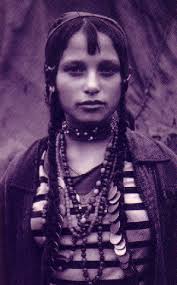
 I had my thoughts about Gypsies or Rom peoples. This haunting simple video puts faces from a huge family spanning decades to captivating vocals and music. Watch a little and dream of a very different culture.
Faces of Gypsies
Posted in WWWS
Everywhere a flood myth
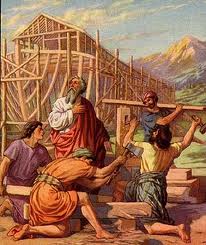 I was recently cajoled, bamboozled, shanghaied, flattered into leading two Sunday morning studies of the Noah story. Not that I know much about the Old Testament, but my bamboozler presented as the ultimate argument: “We know you can tell stories.” Actually, I’m glad I agreed. I found out a lot.
Like anyone who ever brushed past Joseph Campbell, I knew, or rather suspected that many cultures have flood myths. Why not? These are dramatic, often terrifyingly sudden events, surely acts of an angry or inscrutable god, sparing some, destroying many. The mind screams “Why?” Then the sun comes out. The rainbow. The earth takes back her water.
But I had no idea, none, zilch of just how many cultures have a flood myth. With a slight bit of sleuthing, I came upon The Talk Origins Archive and quite literally, OMG. Here they are, divided by continents. I didn’t know there there this many cultures. Check out the list. Is it complete?
Europe
Greek, Arcadian, Samothrace
Roman
Scandinavian, German
Celtic, Welsh
Lithuanian, Transylvanian Gypsy
Turkey
Near East
Sumerian
Egypt, Babylonian, Assyrian, Chaldean, Hebrew, Islamic
Persian, Zoroastrian
Africa
Cameroon
Masai (East Africa), Komililo Nandi, Kwaya (Lake Victoria)
Southwest Tanzania, Pygmy, Ababua (northern Zaire), Kikuyu (Kenya), Bakongo (west Zaire), Bachokwe? (southern Zaire), Lower Congo, Basonge, Bena-Lulua (Congo River, southeast Zaire)
Yoruba (southwest Nigeria), Efik-Ibibio (Nigeria), Ekoi (Nigeria)
Mandingo (Ivory Coast)
Asia
Vogul
Samoyed (north Siberia)
Yenisey-Ostyak (north central Siberia), Kamchadale (northeast Siberia)
Altaic (central Asia), Tuvinian (Soyot) (north of Mongolia)
Mongolia, Buryat (eastern Siberia)
Sagaiye (eastern Siberia)
Russian
Hindu, Bhil (central India), Kamar (Raipur District, Central India), Assam
Tamil (southern India)
Lepcha (Sikkim), Tibet, Singpho (Assam), Lushai (Assam), Lisu (northwest Yunnan, China), Lolo (southwestern China), Jino (southern Yunnan, China), Karen (Burma), Chingpaw (Upper Burma)
China
Korea
Munda (north-central India), Santal (Bengal), Ho (southwestern Bengal)
Bahnar (Cochin China), Kammu (northern Thailand)
Andaman Islands (Bay of Bengal)
Zhuang (China), Sui (southern Guizhou, China), Shan (Burma)
Tsuwo (Formosa interior), Bunun (Formosa interior), Ami (eastern Taiwan)
Benua-Jakun (Malay Peninsula), Kelantan (Malay Peninsula), Ifugao (Philippines), Kiangan Ifugao, Atá (Philippines), Mandaya (Philippines), Tinguian (Luzon, Philippines)
Batak (Sumatra), Nias (an island west of Sumatra), Engano (another island west of Sumatra), Dusun (British North Borneo), Dyak (Borneo), Ot-Danom (Dutch Borneo), Toradja (central Celebes), Alfoor (between Celebes and New Guinea), Rotti (southwest of Timor), Nage (Flores)
Australia
Arnhem Land (northern Northern Territory)
Maung (Goulburn Islands, Arnhem Land), Gunwinggu (northern Arnhem Land)
Gumaidj (Arnhem Land)
Manger (Arnhem Land)
Fitzroy River area (Western Australia)
Australian, Mount Elliot (coastal Queensland), Western Australia, Andingari (South Australia), Wiranggu (South Australia), Narrinyeri (South Australia), Victoria, Lake Tyres (Victoria), Kurnai (Gippsland, Victoria), southeast Australian
Maori (New Zealand)
Pacific Islands
Kabadi (New Guinea), Valman (northern New Guinea), Mamberao River (Irian Jaya), Samo-Kubo (western Papua New Guinea), Papua New Guinea
Palau Islands (Micronesia), western Carolines
New Hebrides, Lifou (one of the Loyalty Islands), Fiji
Samoa, Nanumanga (Tuvalu, South Pacific), Mangaia (Cook Islands), Rakaanga (Cook Islands), Raiatea (Leeward Group, French Polynesia), Tahiti, Hawaii
North America
Innuit, Eskimo (Orowignarak, Alaska), Norton Sound Eskimo, Central Eskimo, Tchiglit Eskimo (Arctic Ocean), Herschel Island Eskimo, Netsilik Eskimo, Greenlander
Tlingit (southern Alaska coast), Hareskin (Alaska), Tinneh (Alaska and south), Loucheux (Dindjie) (Alaska), Dogrib and Slave (Tinneh tribes), Kaska (northern inland British Columbia), Thompson Indians (British Columbia), Sarcee (Alberta), Tsetsaut
Haida (Queen Charlotte Is., British Columbia), Tsimshian (British Columbia)
Kwakiutl (British Columbia)
Kootenay (southeast British Columbia), Squamish (British Columbia), Bella Coola (British Columbia), Lillooet (Green River, British Columbia), Makah (Cape Flattery, Washington), Klallam (northwest Washington), Skokomish (Washington), Skagit (Washington), Quillayute (Washington), Nisqually (Washington), Twana (Puget Sound, Washington), Kathlamet
Cascade Mountains
Spokana, Nez Perce, Cayuse (eastern Washington), Yakima (Washington), Warm Springs (Oregon), Joshua (southern Oregon), Smith River (northern California coast), Wintu (north central California), Maidu (central California), Northern Miwok (central California), Tuleyome Miwok (near Clear Lake, California), Olamentko Miwok (Bodega Bay, California) Ohlone (San Francisco to Monterey, California)
Kato (Mendocino County, California)
Shasta (northern California interior), Pomo (north central California), Salinan (California), Yuma (western Arizona, southern California), Havasupai (lower Colorado River)
Ashochimi (California)
Yurok (north California coast), Blackfoot (Alberta and Montana), Cree (Canada), Timagami Ojibway (Canada), Chippewa (Ontario, Minnesota, Wisconsin), Ottawa, Menomini (Wisconsin-Michigan border), Cheyenne (Minnesota), Yellowstone, Montagnais (northern Gulf of St. Lawrence), Micmac (eastern Maritime Canada), Algonquin (upper Ottowa River), Lenape (Delaware) (Delaware to New York)
Cherokee (Great Lakes area; eastern Tennessee)
Mandan (North Dakota), Lakota
Choctaw (Mississippi), Natchez (Lower Mississippi)
Chitimacha (Southern Louisiana)
Caddo (Oklahoma, Arkansas), Pawnee (Nebraska)
Navajo (Four Corners area), Jicarilla Apache (northeastern New Mexico)
Sia (northeast Arizona)
Acagchemem (near San Juan Capistrano, California), Luiseño (Southern California), Pima (southwest Arizona), Papago (Arizona), Hopi (northeast Arizona), Zuni (New Mexico)
Central America
Tarascan (northern Michoacan, Mexico), Michoacan (Mexico)
Yaqui (Sonoran, Northern Mexico), Tarahumara (Northern Mexico), Huichol (western Mexico), Cora (east of the Huichols), Tepecano (southeast of the Huichols), Tepehua (eastern Mexico), Toltec (Mexico), Nahua (central Mexico), Tlaxcalan (central Mexico)
Tlapanec (south central Mexico), Mixtec (northern Oaxaca, Mexico), Zapotec (Oaxaca, southern Mexico), Trique (Oaxaca, southern Mexico)
Totonac (eastern Mexico)
Chol (southern Mexico), Tzeltal (Chiapas, southern Mexico), Quiché (Guatemala), Maya (southern Mexico and Guatemala)
Popoluca (Veracruz, Mexico)
Nicaragua, Panama
Carib (Antilles)
South America
Acawai (Orinoco), Arekuna (Guyana), Makiritare (Venezuela), Macusi (British Guyana)
Muysca (Colombia), Yaruro (southern Venezuela)
Yanomamö (southern Venezuela)
Tamanaque (Orinoco), Arawak (Guyana), Pamary, Abedery, and Kataushy (Purus R., Brazil), Ipurina (Upper Amazon)
Jivaro (eastern Ecuador), Shuar (Andes)
Murato (eastern Ecuador)
Cañari (Quito, Ecuador)
Guanca and Chiquito (Peru)
Ancasmarca (near Cuzco, Peru), Canelos Quechua, Quechua, Inca (Peru), Colla (high Andes)
Chiriguano (southeast Bolivia)
Chorote (Eastern Paraguay)
Eastern Brazil (Rio de Janiero region), Eastern Brazil (Cape Frio region), Caraya (Araguaia River, central Brazil), Coroado (south Brazil)
Araucania (coastal Chile)
Toba (northern Argentina)
Selk’nam (southern tip of Argentina)
Yamana (Tierra del Fuego)
Fears for a new book
 I’ve done a treatment for my third novel, more than 1000 words, done research (many pages, multiple documents), a character sketch, a “plot sequence.” Even sketched out the first chapter and have a first line. So . . . let’s begin, no?
But starting a project this big has its terrors. Therefore this morning I’ve also done some gardening, walked the dog, neatened a book case, looked on Craig’s List, considered menu for Easter. What’s so scary? Where to begin?
Is the topic/character even interesting?
Is there enough challenge for the character there?
A credible crisis?
Is the main character going to change? How?
Jeepers, a lot of research. Can I do it?
Maybe I just don’t even know what I don’t know so how can I research?
I’ve done two other novels but suppose . . .
Shouldn’t it be more like the last novel?
Should it be less like the last novel?
Once you start, your options narrow with each page. Why not spend another month or so with sketches.
Should it be way more like the last novel I read and loved?
Should I straighten another bookcase?
Could I just jump to the scenes I want to write?
And so forth.
Our lives as fiction
 Don’t you sometimes feel that the standard disclaimer for historical fiction could also be true of Life?:
This is a work of fiction. References to real people, events, establishments, organizations, or locales are intended only to provide a sense of authenticity, and are used fictitiously. All other characters, and all incidents and dialogue, are drawn from the author’s imagination and are not to be construed as real.
Ever have that thought?
Helen Keller, farsighted activist
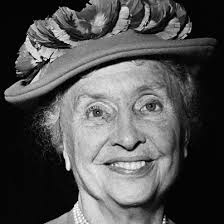 I stumbled on this letter from Helen Keller. Knocked my socks off.
“So long as I confine my activities to social service and the blind, they compliment me extravagantly, calling me ‘arch priestess of the sightless,’ ‘wonder woman,’ and a ‘modern miracle.’
But when it comes to a discussion of poverty, and I maintain that it is the result of wrong economics — that the industrial system under which we live is at the root of much of the physical deafness and blindness in the world — that is a different matter!
It is laudable to give aid to the handicapped.Superficial charities make smooth the way of the prosperous; but to advocate that all human beings should have leisure and comfort, the decencies and refinements of life, is a Utopian dream, and one who seriously contemplates its realization indeed must be deaf, dumb, and blind.” — Helen Keller (letter to Senator Robert La Follette, 1924)
The Six and Twenty Book Club
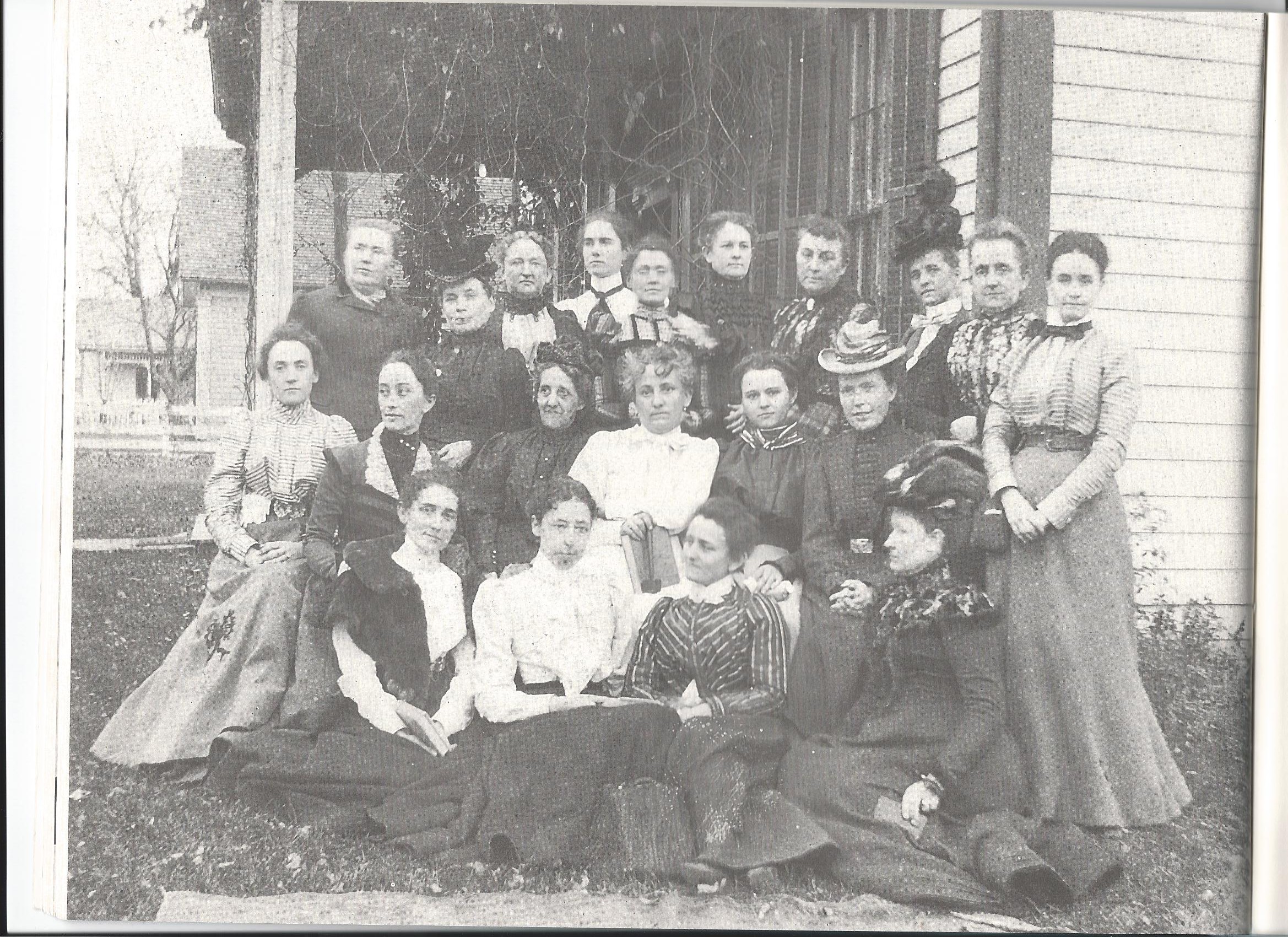 One of the pleasures of promoting your book is meeting book clubs. Many have remarkable histories. For example, the Six and Twenty Club of Wilmington, Ohio, has been meeting regularly since 1898. Here is a photograph of the club in its first year (1899). Why the name? Because they meet every other week (26 weeks/year) and there are always 26 regular members. Some in the current group have been “Six and Twentyers” for 50 years.
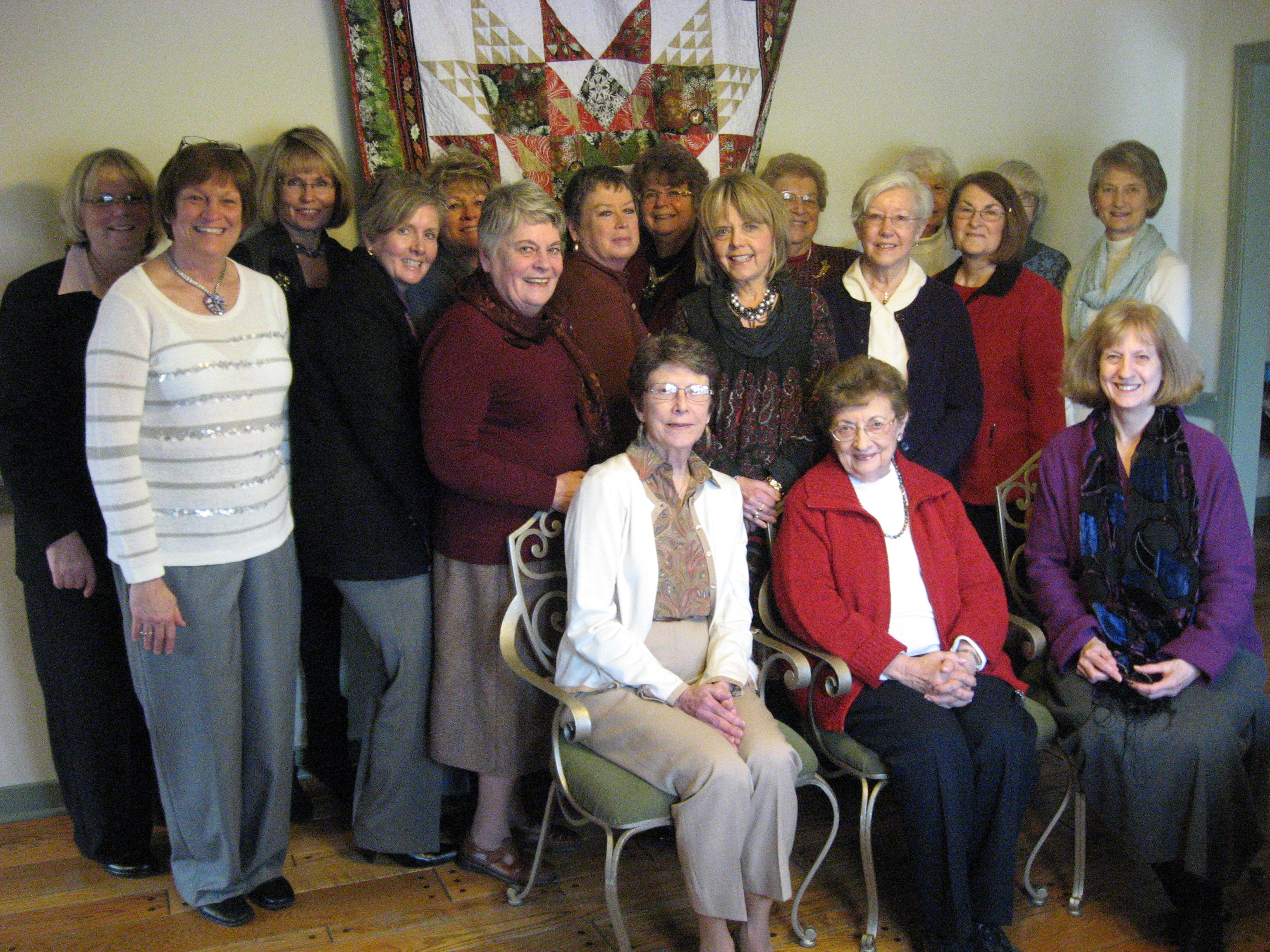 I discovered this club when I presented When We Were Strangers at Hiram College (my alma mater) this fall and had the pleasure of speaking with a lively journalism class orchestrated by Audrey Wagstaff Cunningham, whose mother (master quilter and reader) Marsha Wagstaff is one of the current 26. I signed a book for Marsha, the club read it and sent me a photograph of their photogenic selves along with permission to “publish.”
I think of all that has happened since 1898 and every two weeks, a slowly evolving group of women has been living their lives, sharing triumphs and challenges, and reading together into their third century. To be part of this passage is an honor and a joy.
Down with the hyphenates!
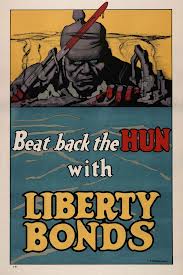
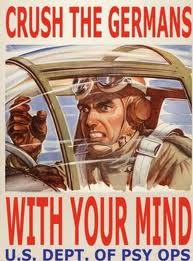 My next novel deals with, among other things, the raging prejudice against the pestilent “hyphenates” during World War I. And what were hyphenates? German-Americans, Hungarian-Americans, Polish-Americans. Those folks. Particularly the first group, spurred by the lurid posters you see here.
Posted in Third novel
Migraines and the Kaiser
 The peculiarities of migraines are constantly amazing. There I was this morning at the reference desk of the Knoxville Public Library, asking where I could find an illustrated history of Prussia, since a couple chapters of my next novel will be set there. And suddenly — oh no — the librarian’s face becomes a smear of sparkles and waves. I managed to hold on for the magic slip of paper with call number, got to the stacks and with some difficulty actually found the call number for the book in a swimming swirl of sparkles.
Fellow travelers in migraine land know the sequence: the sparkles, waves, speech difficulty, pain. While waiting to be rescued by my heroic husband, the sparkles subsided and I was able to read a bit about the tortured history of that land, moving the book to an unaffected quadrant of my vision field. Photographs of Napoleon’s headquarters, various generals, oppression of Poles, here’s the Kaiser in his funny pointed hat. So I was coherent.
Then the cognitive wall. A sentence began “By far the most . . . ” and on to some point about the League of Nations which, strangely, I did understand. The stopping point was “By far.” Particularly the word f-a-r. What could that possibly mean? I wondered if it was perchance German. Or a typo. And for that matter, what was B-y? And together, “By far”? Were there English words with only two or three letters? Was that allowed? So strange how the mind works, to be thinking these thought which seemed coherent enough but not understanding the word “far.” Not getting stuck on “the.” And to be actually puzzling it out calmly without getting that the fault was not on the page but in my brain. But not to worry, I’ve figured it out. I know what “by far” means and can go on with finding out about Prussia.
I can’t be the only one with strange migraine stories. What are yours?
Posted in WWWS
You add the vampires
 Lots of free, good-hearted advice comes your way as a writer, as in: “I have a great story. Let me tell it to you and you write it.” Or “You’re writing about X. Be sure to put in Y.” My husband Maurizio and our friend Daniel have often, often suggested that I slip some vampires in my novel. Surely sales would increase. Who cares, really, about historical fiction? And they may be right, but I guess I’m just not the vampire type. Which doesn’t mean the suggestions stop rolling. As I start my third novel, here come the vampire ideas again.
Which leads to my challenge. They should write about vampires. Maurizio is a medical physicist specializing in positron emission tomography (PET) imaging. He writes many thrilling articles on this topic for professional journals with devoted readership. He could (and should) slip in: “Male, 46 years, vampire, presenting with multiple tumors” or “Female, 31, not a vampire, history of seizures.” Daniel’s work in issues of environmental and economic sustainability of biofuels production and impact of international trade on food security presents a small challenge in vampire application. But not insurmountable. How will future trade agreements on blood tariffs impact vampire food supply? Can blood byproducts aid in biofuel production? We don’t know, do we? Could vampires grow beans in their spare time? Stay tuned. I’m thinking of an appropriate gift for the first vampire inclusion and meanwhile I’m working away on my own story.
German shepherds & novel research
 My first published creative pieces were short stories that warped in some way from my own life. I didn’t realize the generative power of research and assumed that for historical fiction, you read sources and took notes, rather as for a term paper, searching for factoids to plug into a frame, as if the creative process were somehow different from the research process. I’m not so sure now.
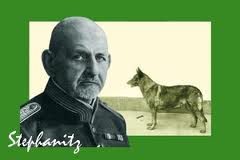
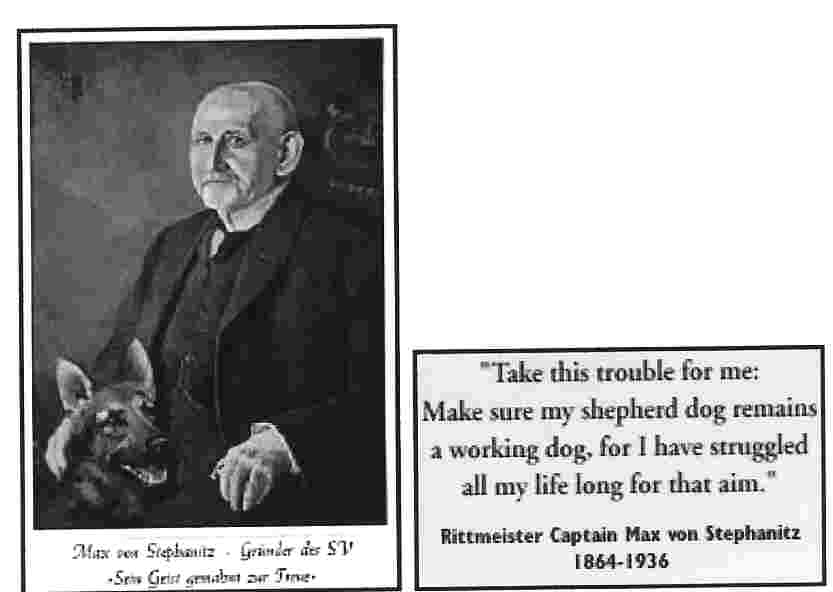
For example, as I begin roughing out my third novel, I’ve got a character who is German in New Jersey just before World War I. I wanted to give him a dog. Maybe a German Shepherd (why not?). So for distraction I read about German Shepherds. That was fun. I found out that the breed was created by former cavalry officer Max von Stephanitz from Berlin who had acquired a working dog in 1899 and conceived of a new breed derived from this one male: intelligent, strong, courageous, agile, territorial, tempered for constant work, loyal and obedient. He began a process of judicious breeding and inbreeding with a discrete admixture of wolf blood, eliminating with extreme prejudice any offspring that strayed from his ideal. It wasn’t until 1919 that the German Shepherd was registered in kennel clubs. Therefore it’s quite possible that in a small town in the U.S before the war some people would never have seen a German Shepherd. Imagine their astonishment: an animal so powerfully wolf-like and yet obeying his master like a dog. Did that master have some special power? You could easily think so if you’d never seen Rin Tin Tin. So this research opened up a line of both character and plot and now the dog element is getting bigger in my story.
Of course the risk, the lure is to go on and on with research and never start to write. Sooner or later, the fingers have to hit the keys.
 pamelaschoenewaldt.com